Newspaper Sections

Special Series

Publications

About SSFP

Science

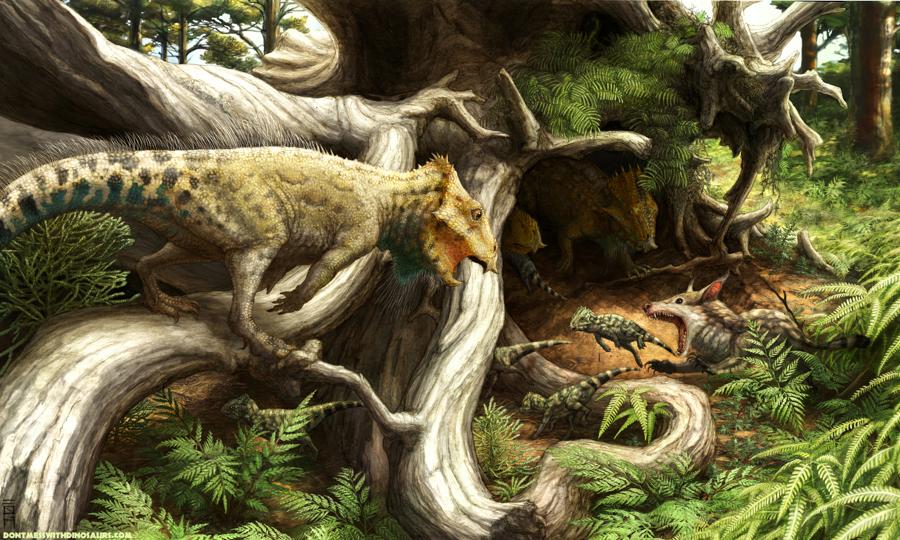
How Dinosaurs and Mammals Evolved on Planet Earth

by John Agbo, age 14

A long-held belief that dinosaurs suppressed mammals has been debunked. Recent fossil discoveries and new research show that mammals were better off than scientists originally thought.

There was a significant boom in reptile evolution during the Mesozoic Era, which was also when the earliest mammals emerged. Early mammals were small insectivores with big eyes, hinting that they were nocturnal.

It was only after the Cretaceous Period that mammals grew larger than house cats. Most scientists once considered dinosaurs “sluggish, dim-witted, and even freakish," they saw mammals as evolutionary underdogs, painting them as a superior order oppressed by the “tyranny of cold-blooded reptiles,” according to paleontologist and science writer Riley Black. Some scientists think this antagonistic relationship might have contributed to the extinction of dinosaurs. [Read More]

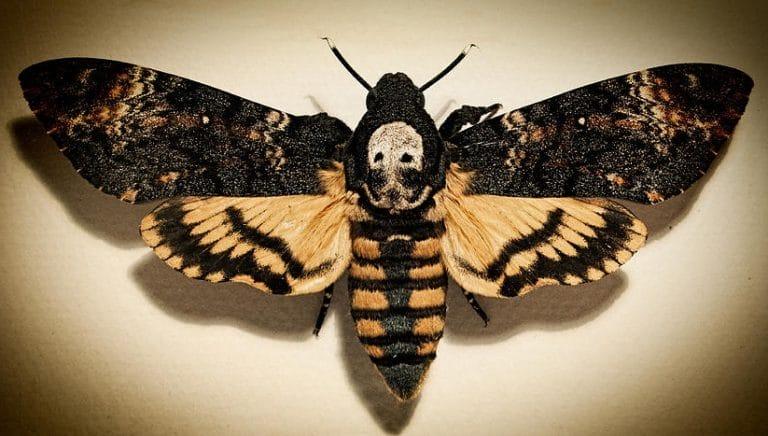
This Moth Is Known for Its Skull Marking and Dark Myths

by Bridgett McPark, age 12

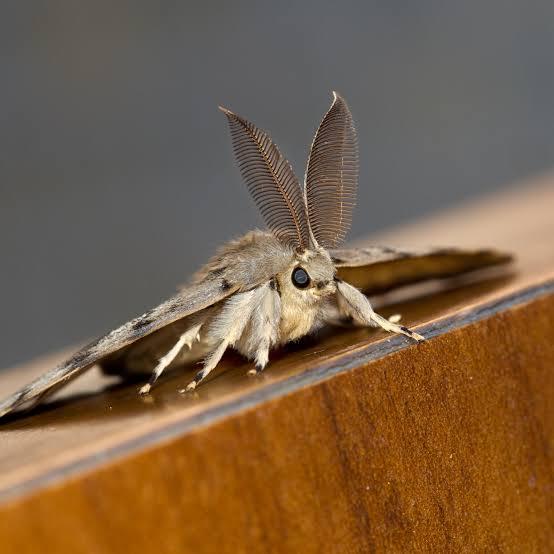
Death’s-head hawkmoths are large, dark, and fluffy moths that are seen as an omen of death.

The moths live mostly in Southern Europe and are even spotted as far north as the Shetlands of England and in Ireland. This moth is one of the largest moths that migrates to the United Kingdom. They usually arrive in the UK during late summer and return to Southern Europe in October. Caterpillars are usually found in gardens and potato fields. They eat potatoes, tomatoes, flowers, and other plants such as the deadly nightshade.

The moth’s scientific name is Acherontia atropos, which is connected to the belief that the moth summons immense misfortune and even death to the house where it flies into. The scientific name is linked to Greek mythology. Acherontia relates to Acheron, a river in hell, while Atropos is one of the three Fates, who controls the destinies of all beings. The moths were also thought to contribute to King George III becoming unstable, since large moths were found in his bedroom, and rumors circulated that they were put there to drive him mad. [Read More]

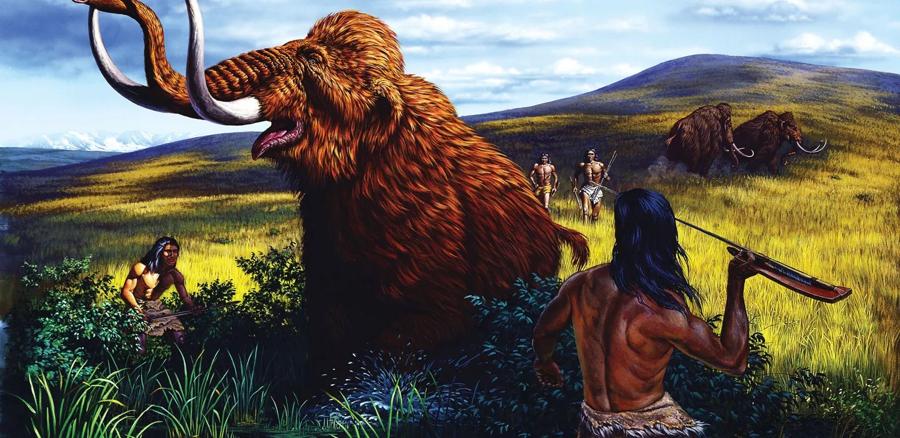
New Research Shows Ancient Clovis Hunters Were “Megafaunal Specialists”

by Elim Eyobed, age 14

Imagine stalking mammoths across frozen tundras. This is how the Clovis people survived the Ice Age, hunting mammoths, bison, and other animals to thrive in a harsh, frozen world.

The Clovis people originated in Siberia and crossed the Bering Land Bridge to the Americas during the last Ice Age. Clovis is a term used to represent a whole culture known primarily for their stone tools, one of which was a weapon called the Clovis Point. This culture hunted large animals such as mammoths, but they also consumed other creatures such as bison and small animals. Research shows that they had an average of 12,800 calories per day, consisting of 21% bison and 79% mammoths and other small to medium animals.

Researchers from McMaster University in Canada and the University of Alaska Fairbanks have been trying to figure out who the Clovis people were and learn more about their culture to see how humans influenced the extinction of large mammals during the Ice Age. The researchers found that the tools they used had a large influence on their lives. Specifically, these tools determined their diet via limitations in the size, species, and quantity of the animals they could hunt based on their weapons. [Read More]

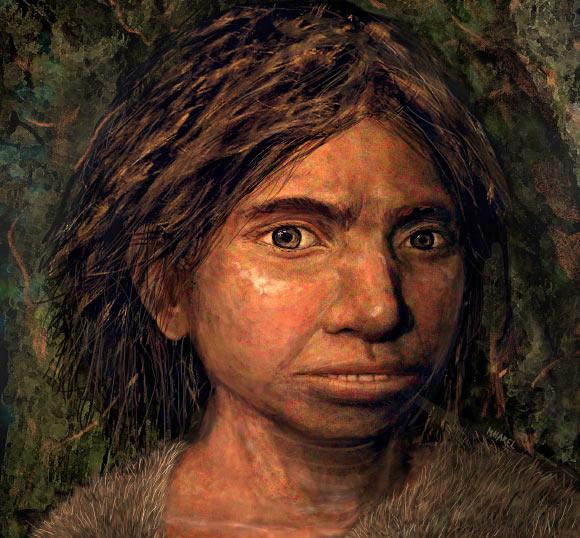
Homo juluensis: Possible 'New Ancient Human' Identified

by Dayanara Flores, age 17

A group of scientists has discovered an ancient human species while digging for fossils in East Asia. This newly discovered species is called ‘Homo juluensis.’

There is only one surviving species of hominin: Homo Sapiens, or modern human beings. However, there were other hominin species related to humans, which scientists are still trying to understand.

The species name Homo juluensis, meaning ‘big head,’ was chosen due to the notably large skulls of this hominin. In fact, scientists found that Homo juluensis has larger skulls and teeth than Neanderthals and Homo Sapiens. The fossils of Homo juluensis include several pieces of skull that break easily. Only 16 individual fossils of Homo juluensis have been discovered. [Read More]

Dark Oxygen Discovered in Deep Ocean Environments

by Ayelen Flores Ruiz, age 14

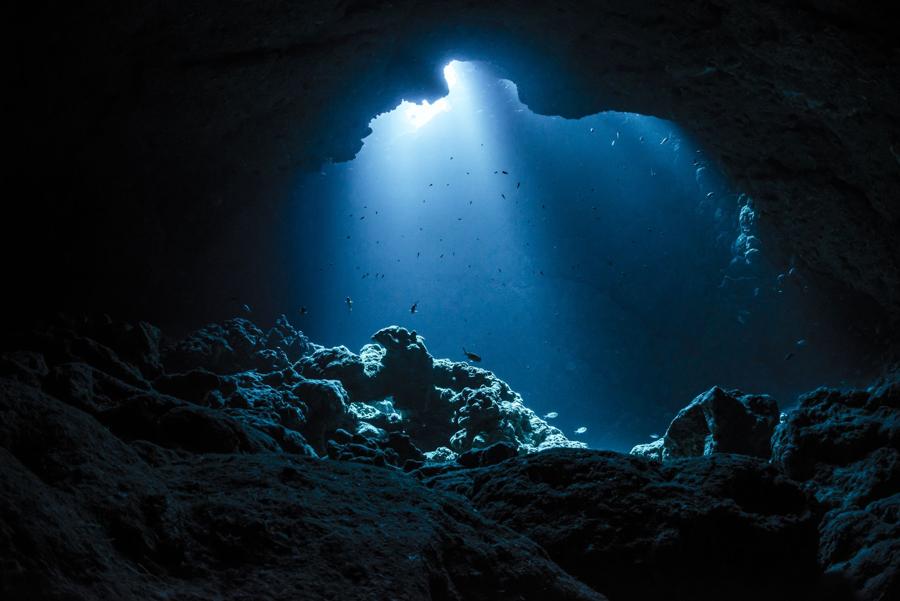
Researchers exploring the Pacific Ocean have discovered what they call “dark oxygen,” created in the absence of sunlight. This discovery, found in deep ocean environments where sunlight cannot reach, raises new questions about how oxygen can be produced without photosynthesis.

Photosynthesis occurs when plants use sunlight, water, and carbon dioxide to create sugars and oxygen. Scientists previously believed photosynthesis was the only way to produce oxygen. However, this discovery challenges that theory. Andrew Sweetman, a professor from the Scottish Association for Marine Science, led the team that found the "dark oxygen." He said, “I think we therefore need to revisit questions like: Where could aerobic life have begun?”

Although it's not yet clear how oxygen is created in deep, dark environments, researchers believe it might be connected to electrically charged minerals on the ocean floor known as polymetallic nodules. These nodules, which can vary in size up to that of a potato, may act like batteries, generating electrical charges that break down seawater and release oxygen. By linking multiple nodules together, researchers hypothesize they could produce higher voltages and increase oxygen levels. Tests conducted on the ocean floor have shown oxygen levels rising near these nodules. [Read More]

Robots and Ethics, Teaching AI to Make the Right Choices

by Will DeFour, age 14

In some nursing homes, robots help people with medications and health issues. In other scenarios, robots learn to distinguish between what is dangerous and what is not, such as grabbing a sharp knife or similar tool.

Robots have extraordinary abilities, allowing them to perform advanced tasks and work tirelessly. However, humans have many advantages over robots. One of those is the ability to make ethical choices. Engineers and philosophers are now working together to teach robots how to make the right decisions in different situations.

People make ethical choices daily; they don’t even think about it. They consider what will happen and the cost of changing their decision before deciding. These choices are easy for the brain because the human mind is an advanced organ that evolved over billions of years. Robots, on the other hand, are just complex algorithms that can’t make ethical choices. [Read More]

The World’s Population is Now 8 billion

by Jonah Smith, age 13

If you looked up on Google how many people were on Earth, the answer would be 7.8 billion people. But according to a recent United Nations report, in late 2022 our population finally hit 8 billion. The population is still rising, but the rate of growth has slowed. The rate the U.N. based their last predictions on was the rate of growth from 2017. At that time, the U.N. predicted that the world’s population could reach 11.2 billion people by the year 2100. With this new data, the population is now expected to peak during the 2080s at 10.4 billion people. Once it peaks, the numbers will plateau until 2100.

This new information also highlights the challenges linked with population growth, said Maria-Francesca Spatolisano of the U.N. during a news conference on July 11th, 2022. These challenges include meeting people's social and economic needs (food, water, shelter, etc.), as well as how people use Earth’s resources and alter the environment.

The population will grow differently across various areas. For example, high-income countries, which have low birth rates, will grow due to more people moving there, a U.N. report predicts. In low-income countries, populations will rise as there are more births than deaths. This report also states that in 61 countries, populations are expected to drop by one percent or more between now and 2050. The net effect is that overall, populations are still expected to rise. [Read More]

Anna’s Hummingbird Are Nature’s Flying Jewel

by Edna Torres, age 7

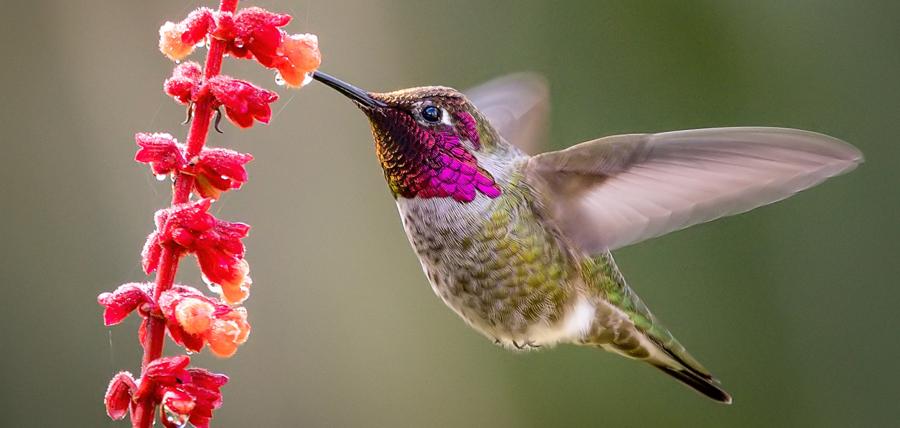
Anna’s hummingbirds are fascinating creatures with an outstanding appearance.

Adult males have a rose-red throat and crown. Females are green, dingy gray, and have small red spots on their throats. These hummingbirds are commonly seen in streams, side groves, gardens, and city parks throughout parts of the western United States and Canada.

A hummingbird’s diet consists of nectar and tiny insects. When feeding from flowers, they extend their long tongues deep into the center to extract nectar. To catch insects, they may snatch them mid-air or pluck them from leaves and bark. A fun fact about hummingbirds is that planting exotic flowering trees near their habitats can help expand their breeding range. [Read More]

El Reloj del Apocalipsis está ahora a 89 segundos de la medianoche

por Sofia Zapata, edad 15

La extinción de la humanidad puede estar más cerca que nunca. El Reloj del Apocalipsis se posicionó a 89 segundos de la medianoche el 28 de Enero, lo cual es lo más bajo que ha estado. Este reloj es un aviso a la humanidad para que tome control de las acciones que pueden llevar el mundo a su fin.

El Reloj del Apocalipsis fue creado en 1947 con el propósito de representar que tan cerca está la humanidad de destruir el mundo con tecnologías peligrosas. El posicionamiento del reloj es controlado por 18 expertos con diferentes antecedentes que son parte del Boletín del Consejo de Seguridad y Científicos Atómicos. Se reúnen dos veces al año para analizar acontecimientos, políticas y tendencias. En 1947, consideraron la amenaza que representaban las armas nucleares ser el mayor peligro para la humanidad, lo que utilizaron para poner en hora el reloj. Sin embargo, en 2007 comenzaron a incluir en sus decisiones las perturbaciones catastróficas derivadas del cambio climático.

En 1947, el reloj se fijó por primera vez en siete minutos, pero dentro de dos años se redujo a tres minutos, debido a la peligrosa carrera armamentística. A medida que pasaron los años, más acontecimientos comenzaron a preocupar a los científicos. Esto los llevó a continuar la cuenta regresiva hasta este año, fijándose en 89 segundos. Grandes amenazas a la humanidad están haciendo que el reloj siga acercándose a la "medianoche," esto incluye armas nucleares, cambio climático, e inteligencia artificial. [Read More]

Scientists Study Sleep-Deprived Mosquitoes to Prevent the Spread of Deadly Diseases

by Emily Rodriguez Lima, age 13

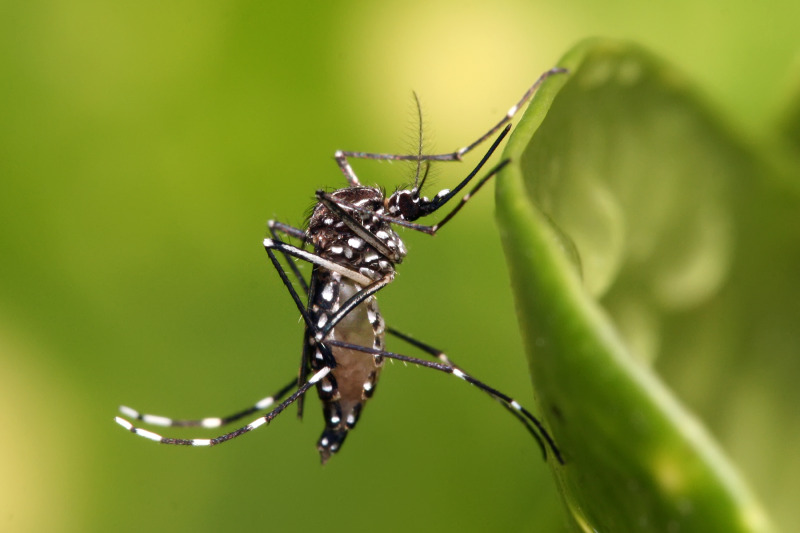
Humans and mosquitoes are more alike than you may want to believe; new research suggests mosquitoes prefer sleep over food when sleep-deprived.

As we all know, mosquitoes can be deadly, carrying diseases like Zika, Dengue, and Malaria. These diseases can cause death upon adults and even young children. Since most mosquitoes are active at night, people place nets over their beds for protection. Researchers are interested in mosquito sleep cycles, as awareness of sleep cycles can help predict diseases.

The presence of food can rouse a relaxing mosquito. It can be difficult sometimes to tell when they are asleep because they look similar to when they are simply relaxed. To better understand it, scientists track their behavior. Mosquitoes that have a long rests are more likely to land on people than mosquitoes that barely get any sleep. Oluwasuen Ajayi was part of a research team on mosquitos from the University of Ohio-Cincinnati. [Read More]

Scientists Discover the Largest Snake Lurking in the Amazon Rainforest

by Elim Eyobed, age 13

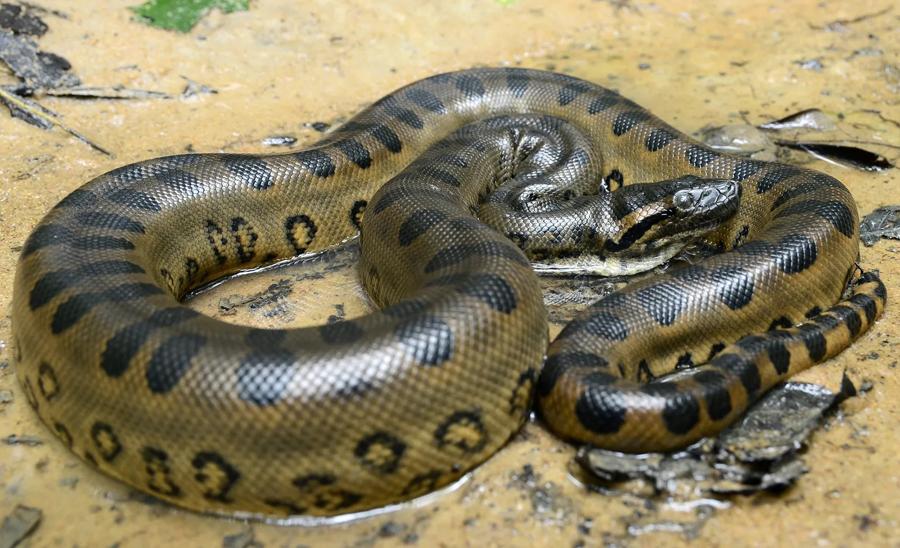
The northern green anaconda is a species that has been recently discovered in the Amazon rainforest. The anaconda is also known as the giant anaconda, emerald anaconda, common water boa, or southern green anaconda.

Many people thought there was only one kind of green anaconda, however, the scientific journal “Diversity” recently wrote that the “northern green anaconda” is a new species. The anaconda, as well as other big snakes, are considered “indicator species'' because they mostly signal the health of a whole ecosystem.

The green anaconda can reach up to 30 feet in length and weigh up to 550 pounds. Female anacondas are much larger than their male counterparts. Anacondas are usually dark green or brown on the outside, with darker spots going down their backs. The average lifespan of these snakes in the wild is about 10 years, but they can live twice as long in captivity. [Read More]

Doctors Transplant Pig Heart in Human Recipient

by Dayanara Flores, age 16

In a groundbreaking medical achievement, surgeons performed the second-ever pig heart transplant into a human. This remarkable surgery took place on September 20, 2023, at the University of Maryland Medical Center and was carried out by the same team responsible for the initial pig-to-human heart transplant.

The recipient of this pioneering procedure was Lawrence Faucette, a 58-year-old man facing a life-threatening heart disease and internal bleeding, which disqualified him from a standard heart transplant. Following the surgery, doctors reported that Faucette was able to breathe independently without requiring any external support.

This type of transplant is known as a xenotransplant, a procedure involving the transfer, implantation, or infusion of organs or tissues from non-human or animal sources into a human recipient. It's typically considered a last-resort option when a patient's condition is severe or life-threatening, leaving relatively untested treatments as the only alternative. [Read More]

100 Foot Jump Breaks World Record

by Moore Vang, age 13

What can jump as high as the eyes of the Statue of Liberty? Well, the jumping robot can! The robot was designed by Elliot Hawkes, a mechanical engineer from University of California, Santa Barbara. With the ability to jump three times higher than any other jumping robot, it can also out-jump any living animal.

Hawkes has been working on the robot for seven years. “It started out as a stick with weights and rubber bands,” he said. Nobody would’ve called it a robot at the start of its creation because it didn’t have anything electronic or any motors on it, he recalls. This got him and his colleagues determined to find out, “Just how high can it go?” After many years of work, the robot reached heights as high as 100 feet. Hawkes and his team recorded this on the website Nature on April 23, 2022.

Various researchers studied how different types of animals jump. Hawkes didn’t want to copy any of the animals so instead, his team learned the types of features of certain animal jumpers and how to find ways around it. Muscles in the body of many animals including humans provide energy for jumping. These muscles pull on stretchy hamstrings that react just like a spring, launching the body high into the air. A muscle can only tense up and release once per jump. Weight is also a factor due to large muscles making the animal or human heavier. Typically, the heavier the animal, the harder it is to move against the force of gravity. [Read More]

The International Space Station Is Retiring, What Does this Mean for Space Exploration?

by Theodore Morrison, age 14

The International Space Station is considered a constant symbol of humanity's achievements in the fields of space science and diplomacy. Many will be shocked to learn that the National Aeronautics and Space Administration (NASA) has plans to retire and crash the station straight into the ocean in 2031.

According to The International Space Station Report, NASA is aiming to crash the ISS into the Pacific Ocean at a location called Point Nemo, the farthest point at sea from any landmass. To put the distance in perspective, it is 2,000 miles North of Antarctica and 3,000 miles East of New Zealand. The ISS will, probably, rest forever at a point known as the spacecraft graveyard.

This retirement isn’t without merit, though, as NASA confirms that they intend to use the ISS as an “analog for a Mars transit mission,” according to a NASA report. The ISS was a point for which science could advance, which has included 3D printing an item on the orbiting station, producing the fifth state of matter, growing organic food in space, and sequencing DNA. [Read More]

There’s a Chance the Black Hole at the Center of Our Galaxy Is Actually a Wormhole

by Allison Torres, age 14

Writers that love science fiction like the idea of wormholes. Go in a wormhole, and it might transfer you to another place in time.

Physicists have taken the time to study and talk about what it might actually look like inside a black hole. There could be a wormhole in the middle of our galaxy. One way scientists are able to confirm that wormholes exist would be to go through a black hole and see if there is a hidden bridge. Although, this would be a rare occurrence, since the Milky Way is more of a door than a dead end. They could also probably figure out if there is any presence of existing life on the other side.

Researchers have found that orbits of stars, such as S2, have been orbiting a giant black hole for years. Scientists say that if this star or other stars feel existence on the other side of a black hole then the star would perform a peculiar dance. [Read More]

Webb Space Telescope Sends New Images to Scientists on Planet Earth

by Ashley Mercado, age 13

NASA has finally revealed the first set of beautiful images taken from a new space telescope, the James Webb Space Telescope. The first picture from the Space Telescope was a plethora of distant galaxies that go deeper than scientists have ever seen. NASA says the new Webb Telescope will eventually replace the Hubble Telescope. Some of Webb’s images show areas of the universe Hubble has already studied, and some show areas Hubble could not reach.

Webb used infrared light which allowed scientists to obtain a clearer images and show places they have not yet studied. NASA administrator Bill Nelson said, “Every image is a new discovery and each will give humanity a view of the universe that we’ve never seen before.” In the new images, astronomers are looking for two nebulae: the Southern Ring Nebula and the Carina Nebula. They are also looking for five galaxies, known as Stephan’s Quintet, as well as the recently discovered gas planet called WASP-96b. 0[Read More]

Unmasking the Age of Fingerprints: Unlocking Forensic Mysteries with Chemical Analysis

by Emily Rodriguez Lima, age 14

When you are done doing something involving your hands, they tend to get sweaty. Sweat is actually an oily chemical that is constantly being produced by your hands. This chemical helps forensic teams to identify peoples’ fingerprints during crime scene investigations. Scientists are using the chemical in these fingerprints left at crime scenes to reveal the age of the prints, but there is still an issue: scientists can't tell how old the prints are.

The oily chemical that fingerprints produce reacts with oxygen in the air. Examining the changes and degradation of the chemical after oxygen exposure helps scientists calculate the age of a fingerprint.

When researchers analyze prints, they use something called mass spectrometry. This technique is used to identify atoms and molecules in fingerprints by their mass. The chemical from each print changes differently, from one day to the next. Some even show changes within seven days. [Read More]

NASA's Osiris-REx Returns with Asteroid Samples to Avert Future Earth Collisions

by Valeria Moreno Lopez, age 17

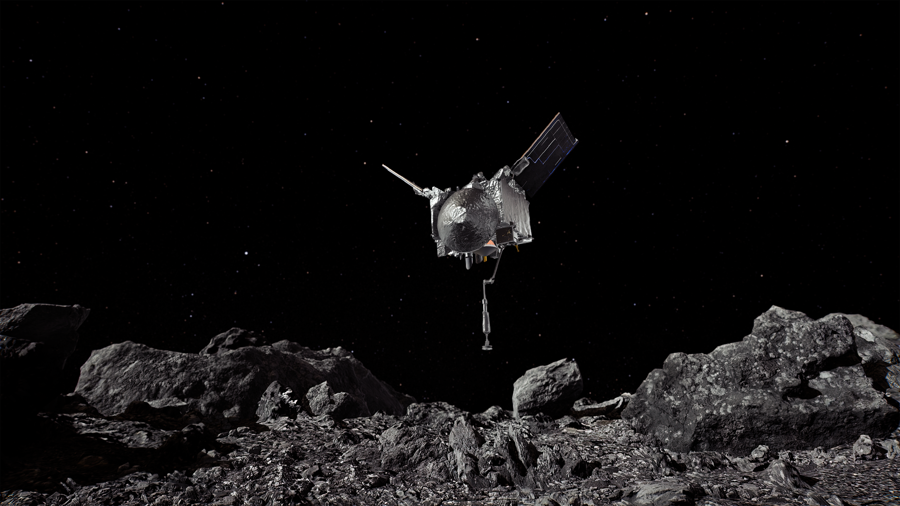
A NASA spacecraft unleashed its sample findings that could help prevent a collision on Earth. After a seven-year expedition of observing the asteroid Bennu, a sample container landed in a Utah desert this past September. The sample is predicted to contain 250 grams of high-carbon dust and rocks from the asteroid.

In 2016, Osiris-REx, NASA’s third deep-space robotic mission, departed into space, costing over $1 billion. After two years of searching, the spacecraft landed on Bennu to gather material that has been dated back to 4.5 million years ago. Researchers will use this new data to improve the understanding of planet and life formation. To acquire the material, Osiris-REx inserted a stick vacuum connected to a container into the asteroid. However, much more dust and rocks were gathered than expected. This damaged the spacecraft’s container and lost a significant quantity of material. More than 100 grams were collected from extra material that was stuck on the outside of the container, bypassing the original goal of 60 grams.

From more than 500,000 asteroids that orbit our solar system, Bennu was chosen for the mission because of its elements. Its length is equal to one-third of a mile and it weighs nearly 172 billion pounds. The asteroid is 50 million miles away from Earth, but scientists found a concerning possibility that Bennu could hit Earth by 2182. They hope to use the sample data to prevent pocket collisions on our planet. One way is to change the trajectory using kinetic impactors. Dante Lauretta, the mission’s leader from the University of Arizona, said, “With each revelation from Bennu, we draw closer to unraveling the mysteries of our cosmic heritage.” [Read More]

From Moon to Mars: NASA's Ambitious Artemis Mission Set to Propel Human Exploration

by Will DeFour, age 13

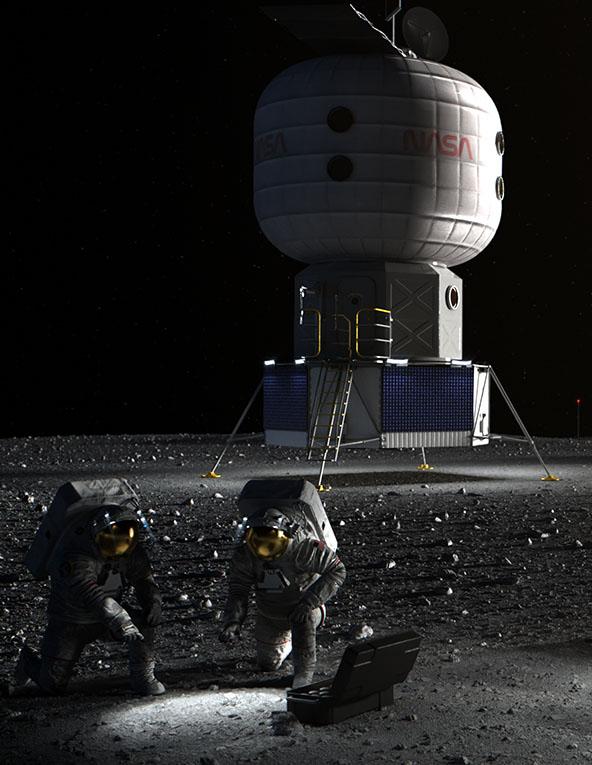
Over 50 years ago, Neil Armstrong became the first man to walk on the moon. Now, half a century later, another explorer will leave Earth's orbit and take another adventure, our first encounter with our closest friend, Mars. NASA plans to use the Artemis mission to return to the moon and reach Mars, some 140 million miles away, for the first time. To get there safely, first, it plans to use the moon to test new life support and spacecraft for the Mars mission.

Artemis II is a mission designed to orbit the moon, and then return. However, nobody is stepping on the moon again until the next mission, Artemis III. Those will be the first woman and first person of color to walk on the moon. Artemis II is going to be the first flight of Orion, the spacecraft designed to get astronauts to Mars. But how does a single spacecraft go that far? The answer is the Gateway.

The Gateway will be a manned station that orbits the moon. It has multiple purposes, such as refueling spacecraft, testing equipment, and researching how zero gravity affects people over long periods. The Habitation and Logistics Outpost also referred to as HALO, not only is a living quarters, but also a laboratory, which enables them to conduct experiments without returning to Earth. [Read More]

Revolutionizing Data Transmission: Researchers Achieve Unprecedented Speeds Using Microcombs

by Daniel Li, age 15

A team of Danish researchers and physicists recently discovered a way to transfer almost 1.84 petabits of data per second - which is equivalent to nearly 100 million Netflix movies playing simultaneously - using only one small chip. In recent years, achieving this would have required more power and more chips, even though the previous record for the highest data transmission rate using one chip was only set in 2020.

The team used a relatively discovery as the basis for their development. In 2005, the Nobel Prize in physics was awarded to a team of researchers who discovered a way to convert laser light into a special type of rainbow, called an optical frequency comb. To accomplish this, a laser is shined through a special chamber, which produces a rainbow with all of its colors spread out evenly. However, this process involved massive machines, larger than a standard refrigerator. Two years later, another team built on this discovery, and was able to achieve a similar effect, but with much smaller chips, dubbed “microcombs.”

Microcombs can be used in various fields to detect diseases, provide information about unknown planets, build more accurate clocks, and even efficiently transmit data. Compared to conventional fiber optic cables, microcombs are far better at transmitting large amounts of data at once. [Read More]

Search for the Origins of Life Takes Scientists to the Ocean Floor

by Shalmat Shalom, age 14

There is an oil drilling ship that has been drilling near the Earth's mantle for decades in order to discover new information about how our planet has evolved. Scientists and engineers are excited about what they may discover. Many different scientists such as geologists and microbiologists plan to sail this ship in April from Portugal.

The oil drill ship is a machine that can dig deep into the Earth specifically below sea. It has helped scientists discover what is inside the Earth for many years. This machine helped dig a 6,750 foot hole 20 years ago in the Atlantic Ocean.

Scientists discovered a 14,000 foot underwater mountain. The mountain could have evolved by tectonic plates spreading apart. This will push close to the mantle, and “plump deeper layers of ocean crust that have not been reached before.” If they succeed, they could be the first in history. [Read More]

Secrets of the Ice: Archaeologists Discover Ancient Arrowhead inside a Melting Glacier

by Camila Cruz, age 15

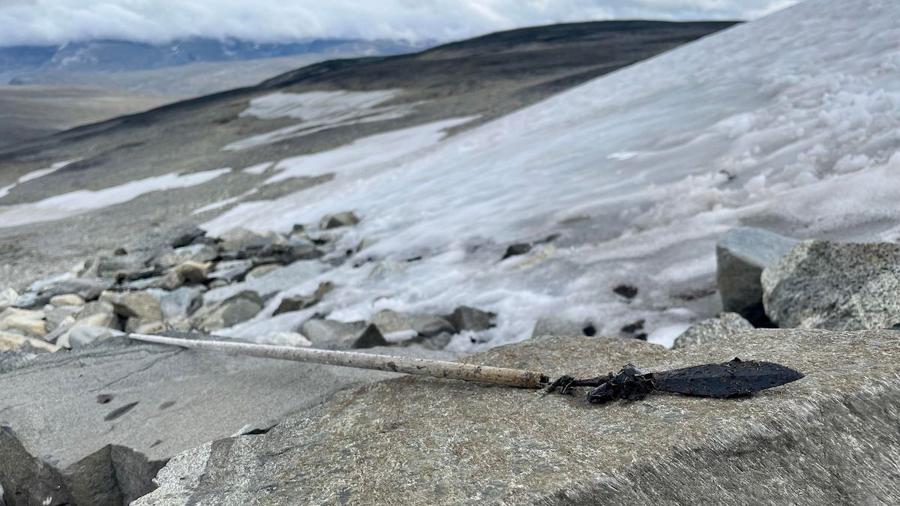
As glaciers begin to melt, archaeologists in Scandinavia are discovering artifacts that help them learn more about the past. Recently, researchers found a well-preserved 1,500-year-old arrow, in what they believe is an ancient hunting ground.

The archaeologists who discovered the arrow are part of “Secrets Of The Ice”, a group of scientists and glacial archaeologists in Norway who explore and pinpoint glaciers. This arrow is not just any arrow. Not only is it believed to be older than the Vikings that inhabited the land from roughly 800-1100 AD, but it is also extremely well preserved.

The arrow was found between two rocks in Norway in an area where ancient people likely hunted reindeer. The archeologists think that the arrow was lost in the snow when one of the hunters missed a shot. Archaeologists believe the arrow was frozen into a glacier, and when the glacier melted it made its way down to where it was found. The fletching which helps stabilize the arrow while it’s flying is gone, but the arrowhead is still attached to the shaft, which is a unique discovery. [Read More]

Unveiling the Dangers of Light Pollution

by Valeria Moreno Lopez, age 16

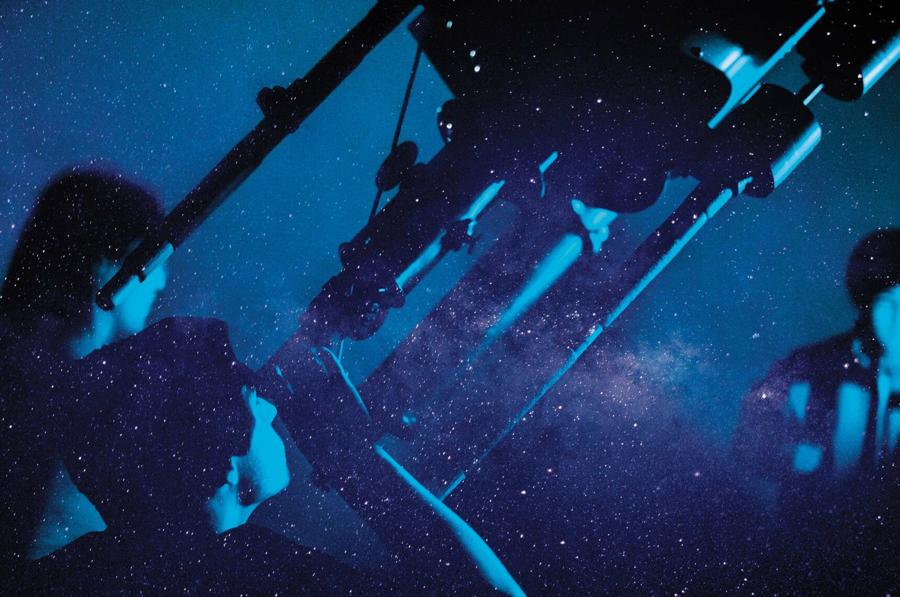
Human activity has been a continuous danger to the environment and all living things. Right now, mounting research has put the spotlight on light pollution – the unrestrained and unnecessary use of artificial light. This type of pollution affects more than 80% of the world's population, with Singapore taking the lead.

Scientists have reported four main types of light pollution: sky glow, clutter, light trespass, and glare. Sky glow is the excessive brightness of the urban night sky caused by streetlamps, car lights, and factories. Living with high levels of this type of pollution makes it difficult to see stars at night, as it redirects their light and can obstruct the views of stars for astronomers and observers. Clutter is the unnatural grouping of lights, which are normally bright billboards and flashy tourist attractions. Since moonlight leads animals to their migration patterns, this often confuses animals and causes them to stray from their normal patterns. Light trespassing is light that reaches into an undesired space; such as light from a streetlamp seeping into a bedroom window. Lastly, glare is light that can cause discomfort and annoyance while driving, walking, or doing other daily tasks.

Beyond everyday tasks, light pollution is detrimental to human health and behavior. Light trespass, in particular, can disturb sleep and melatonin production, which requires surroundings to be fully dark to work properly. If not, many health issues develop, including fatigue, anxiety, stress, and sleep deprivation. Blue light, found in cell phones, computers, and even in popular LED light bulbs, also exposes people to the same damaging threats. Furthermore, studies reveal lower melatonin production is linked to cancer. As a result of this study, the American Medical Association advocates to control light pollution and discover the additional risks of nocturnal light. [Read More]

Why it's Important to Brush Your Teeth

by Jonah Smith, age 14

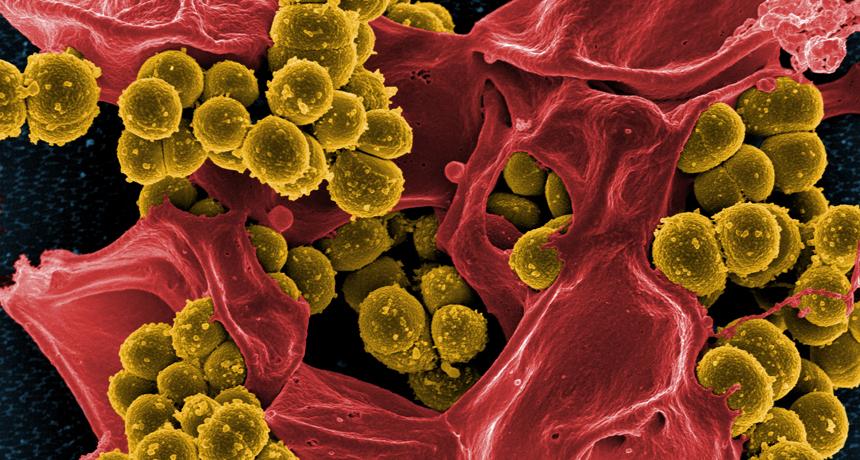
Your dentist will always tell you to brush your teeth. But why? Not brushing your teeth can cause tooth decay, an infectious disease caused by sugar-loving microbes that live in the mouth. A new study, however, might want to make you brush your teeth even more. Researchers have found that these tiny mouth microbes can combine to cause more damage than expected.

Damage from dental plaques causes cavities. Plaque coats the teeth in acid which breaks down the tooth’s hard enamel covering. Dental plaques are a type of biofilm and many types of microbes can form biofilms in the mouth. Young children who have severe tooth decay have a specific type of biofilm: the bacterium Streptococcus mutants and the fungus Candida Albicans. This fungus is a type of yeast that can cause infection in the human body.

To gather some more information, researchers collected 44 saliva and dental plaque samples from young children. Fourteen had healthy teeth and thirty had severe tooth decay. The scientists studied these samples to see what kind of germs lived in their mouths. The children with healthy teeth had bacteria, but no yeast, and children with tooth decay had both. [Read More]

Mars Rover Microphone Captures Sound from the Red Planet

by Sedona Afeworki, age 14

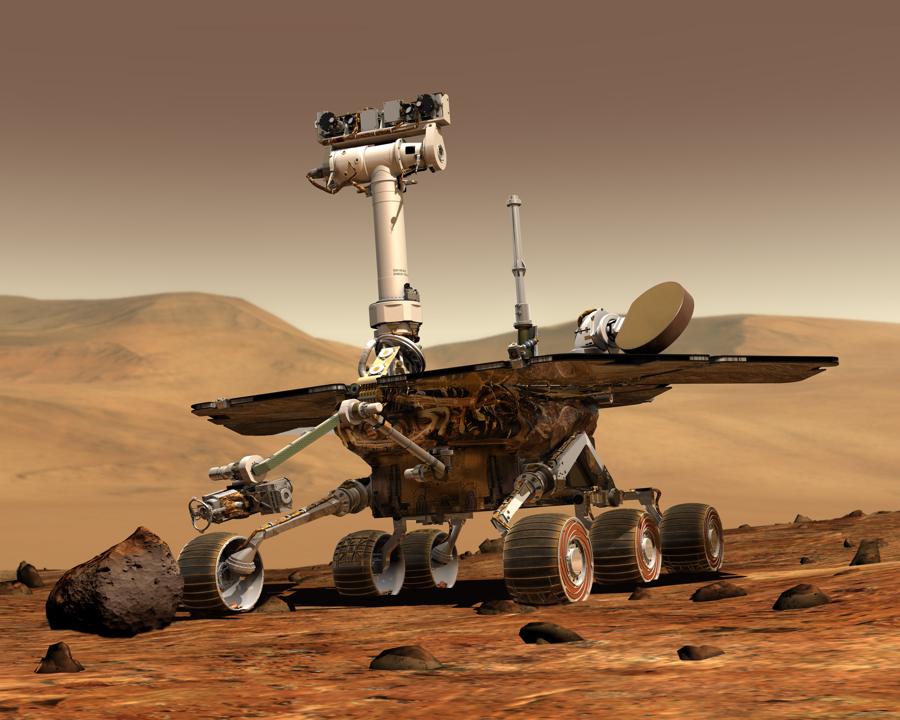
On September 27, 2021, a NASA rover detected a rumbling sound and forceful winds on Mars, later discovering that it was a dust devil.

A dust devil is a small vortex that swirls dust, debris and sand to great heights. The whirlwind on Mars was around 400 feet tall and about 80 feet wide, going fast at 16 feet per second. Its rumbling gusts went 25 miles per hour for around 10 seconds.

The sound of the dust devil on Mars is quite similar to how it sounds on Earth. However, the sounds are more quiet due to Mars’ thin atmosphere, which also makes the winds sound weaker. Last year, a dust devil went right over the range rover Perseverance currently on Mars. Scientist German Martinez, a co-author at the Lunar and Planetary Institute in Houston stated, “it was fully caught red-handed by Persy.” [Read More]

The Mighty Sun, Stellar Powerhouse Illuminating the Solar System and Nurturing Life on Earth

by Daileni Cruz, age 10

The Sun was born nearly five billion years ago and still has quite a long time to live. The diameter of the sun is about 864,950 miles making the sun 109 times bigger than Earth. It also is 333,000 times heavier than our planet.

The sun has multiple layers that serve different purposes. The Sun's core is the source of its energy and is extremely hot. The surface of the sun is named the photosphere, which produces light and heat for planets. The corona is the largest outer layer and has solar winds that reach Earth. However, these solar winds are blocked because of Earth’s magnetic field.

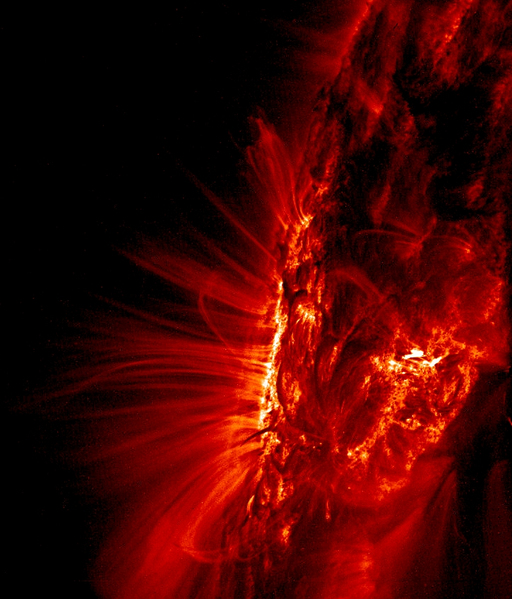
The surface of the Sun can develop dark spots. Violent and rapid solar flares can cause eruptions near sunspots; these flares release magnetic energy. Another feature of the sun is the red loops around the atmosphere called prominences. These are large clouds of gas that extend outward around the Sun's atmosphere. Geomagnetic storms are caused by solar flares that can damage satellites and radio transmissions. [Read More]

Rising Tide of Colon Cancer: Younger Patients at Risk and Seeking Answers

by Sandy Flores-Ruiz, age 17

Colon cancer, the second deadliest type of cancer in the United States, has seen a rise in diagnosis in younger patients under 50. While doctors are not exactly sure of the reason for this increase, they might know contributing factors.

Colorectal cancer, also known as colon cancer, is a disease in the digestive system. This cancer usually begins with a growth of tissue called a polyp, which is caused due to abnormal production of cells. Removing this tissue in the early stages could prevent cancer, but many of the symptoms may not appear at first. Some of those symptoms could include changes in bowel movements, bleeding, abdominal pain, fatigue, and weight loss.

According to the National Cancer Institute, in 2020, over 147,950 people were diagnosed with colon cancer, and an estimated 53,200 people died–which is still just 8.8% of all cancer-related deaths. In 2019, 20% of the newly diagnosed patients were under the age of fifty. In comparison, only 11% under the age of fifty were diagnosed in 1995. [Read More]

Understanding the Health Impacts and Controversies Surrounding Daylight Saving Time

by Ayelen Flores Ruiz, age 13

Although daylight saving time is very popular with many people, it may have negative health effects for humans, according to some scientists.

Daylight saving time is when clocks move an hour forward in the spring and return to standard time in the fall. This makes people lose an hour of sleep, causing scientists to question if this is healthy. Kenneth Wright, an expert on sleep and body clocks, says that daylight saving time is the wrong name for this procedure. He says that humans are only changing the way they live concerning the sun, making their bodies out of sync. The action of changing the clocks creates a problem with the human body’s circadian rhythm as it resets.

Wright and other scientists advocate for permanent standard time instead of switching twice a year. The U.S. Senate voted for daylight saving to become permanent in March 2022, but without a vote from the House, it has not become law. Something similar happened in Congress in the 1970s, however, it was not passed as people feared the shift could cause fear or depression among adolescents and others. [Read More]

How Seismic Waves are Studied to Peer Inside the Earth

by Alejandro Berrueta, age 11

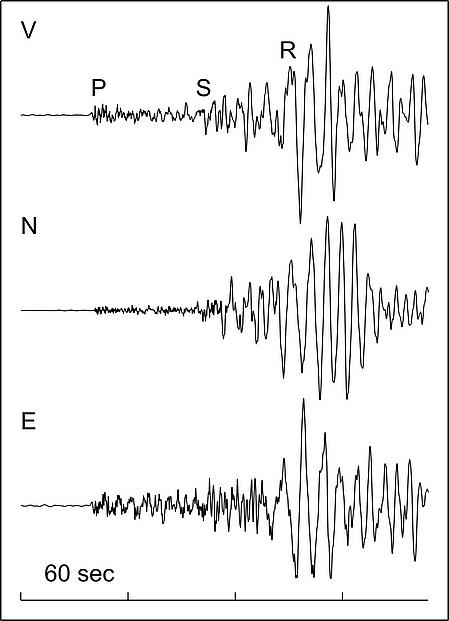
Scientists continue to get more advanced as their knowledge of seismology increases. These advancements are helping citizens all around the world to take shelter before any disaster strikes, regardless if it is natural or manmade.

As we know, movements on Earth are caused by platonic plates moving under the ground. These extremely fast movements can cause earthquakes, volcanic eruptions, and tsunamis, which can be deadly. Humans can also cause movements on the planet by the use of explosions. For example, testing atomic bombs, and other heavy explosions as well as mining can also cause earthquakes.

With more advanced technology becoming available, scientists will continue to study movements in or on Earth. With the correct measurements, big impacts can be avoided and save lives. [Read More]

Scientists Discover Fish are Self-Aware

by Jonah Smith, age 14

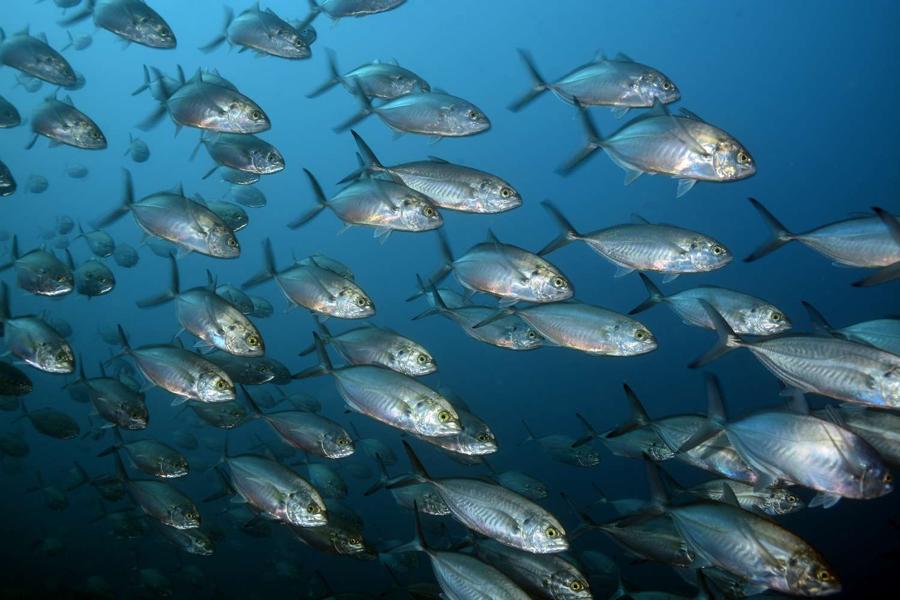
Humans can recognize their faces in mirrors and photos almost automatically. Ongoing research at Metropolitan University in Japan suggests that fish have the same ability. Being able to recognize your reflection or being self-aware, is an ability usually tied to intelligent animals, such as chimpanzees or humans. Finding this ability in fish suggests that self-awareness might be more common than scientists previously thought. [Read More]

Brain Wave Technology Could Help Assess Concussion Severity

by Kevin Chen, age 15

Researchers in Texas have discovered a new technology that could use brain waves to detect the severity of a concussion and compare injuries in a standardized way. Known as magnetoencephalography (MEG), this technology may offer a way for doctors to evaluate and quantify the seriousness of concussions by measuring brain waves, potentially indicating the healing progress of a concussion.

Primarily employed in planning epilepsy surgeries, MEG scans the brain for various frequencies of waves, including delta waves with a frequency of one to four hertz. Typically, a person's brain frequency falls within the range of 13 to 30 hertz, known as beta waves. Researchers observed that individuals with concussions exhibited unusual delta waves, leading them to consider MEG as a new avenue for concussion detection.

Currently, doctors use brain scanners like electroencephalogram (EEG) to record neuron activity. However, EEG cannot detect weak electromagnetic signals deep within the brain, whereas MEG can receive signals from any part of the brain's folds and grooves. The resulting MEG images provide significantly more detailed data on brain activity compared to EEG, offering more accurate insights into a patient's condition [Read More]

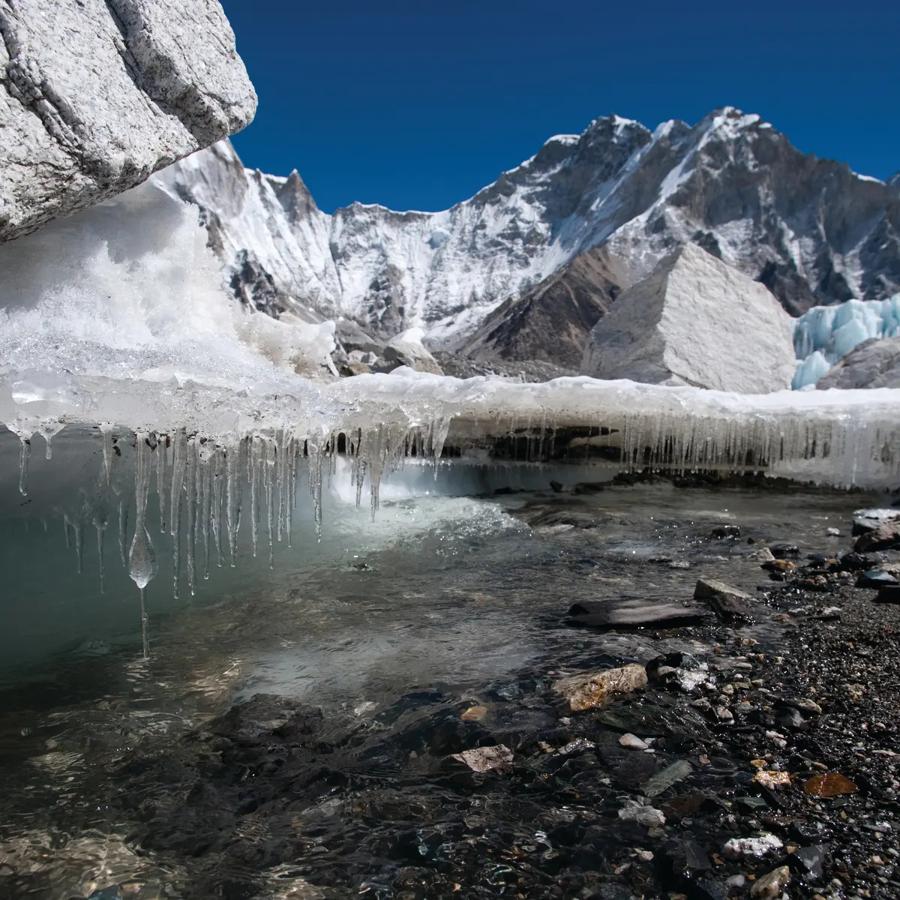
Himalayan Glaciers Face up to 80% Ice Loss by 2100 Amid Rising Temperatures

By Valeria Moreno Lopez, age 16

Scientists believe that nearly a quarter of the world's population could face severe natural disasters by 2100 due to the alarming rate at which the Himalayan glaciers are melting. The International Centre for Integrated Mountain Development (ICIMOD), based in Nepal, has warned that the glaciers could lose up to 80% of their volume if worldwide temperatures increase by 3 degrees Celsius or more.

ICIMOD, which aims to preserve life and biodiversity in mountain and downstream populations, has reported that one-third of the glaciers from Afghanistan to Myanmar could disappear even in the best-case scenario. However, over the years, the calculations have changed. If worldwide temperatures rise between 1.5 to 2 degrees Celsius, less than half of the volume will be lost by 2100. Moreover, these temperatures could also exacerbate global droughts, wildfires, extreme floods, and food shortages. Professor Saleemul Huq, director of the International Centre for Climate Change and Development, has stated, "In all three pillars of climate action - mitigation, adaptation, and loss and damage - we are at a standstill or going the wrong way, while the consequences of inaction are accelerating by the day."

Further research suggests that nearly 2 million square miles surrounding the highest mountain chain already show dramatic impacts. Due to the isolated location of Himalayan communities, immediate disaster response is challenging. Glacial water benefits crops and medicinal plants in nearby farmlands, but rapid melting will overwhelm them. The risk of constant floods, landslides, and avalanches soars, followed by a series of drought phases as the water dries up. Stretching from tropical rainforests to cold deserts in Asia, numerous rare species are in danger due to the region's shifting conditions. In particular, about 14 butterfly species are extinct in the Murree Hills of Pakistan, and other animals face breeding and developmental issues. [Read More]

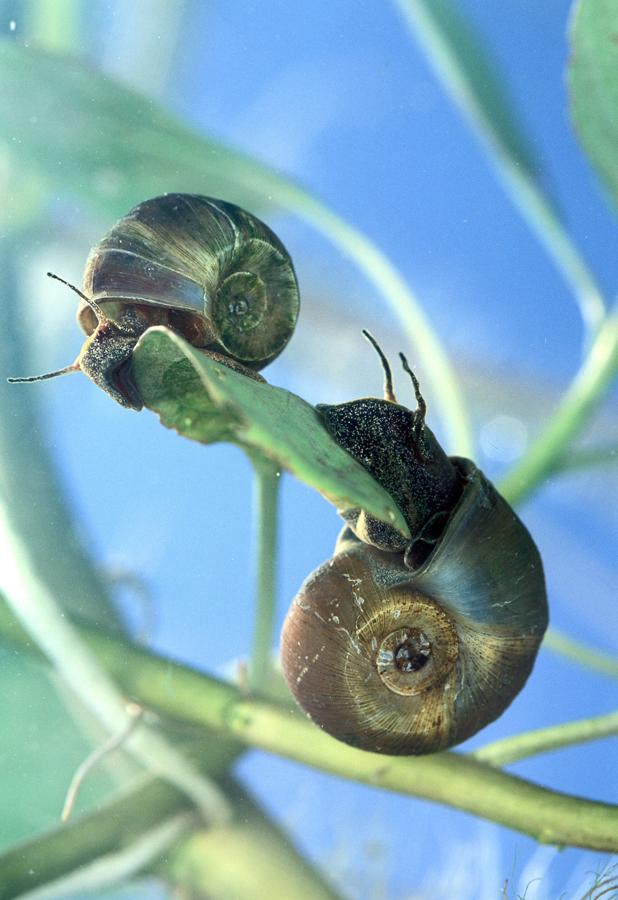
Small Killers, Big Impact: A Creative Approach to Controlling Deadly Snail Parasites

by Camila Cruz, age 16

When we think of deadly creatures, our minds often gravitate toward large predators. However, the most lethal killers in the natural world happen to be quite small.

Snail parasites are responsible for thousands of deaths annually, having infected nearly 250 million people, primarily in regions across Asia, Africa, and South America. This parasitic disease is known as schistosomiasis, and despite its ease of transmission, it remains relatively unknown. The parasite resides in freshwater environments worldwide, primarily latching onto snails, and waiting for other organisms to enter the water. Once it detects a potential host, it attaches to the skin and burrows into the host's blood vessels, where it can reproduce and live for decades.

Interestingly, it's not the parasite itself but its eggs that cause the infection. These eggs possess sharp barbs that pierce through the host's body, allowing them to return to the water, where they seek out a snail to complete their life cycle. [Read More]

Bursting into Bloom: The Life Cycle of Flowers

by Abigail Gezae, age 11

There are many steps for a flower to blossom. A key factor to making plants grow is the resource of light. This is what makes flowers bloom and causes leaves on a tree to change.

Regardless of the type of plant, light and water are essential components for a plant to survive. In fact, some plants have adapted to be able to rotate or turn themselves to face the sun. If a plant is in the shade it will most likely die because there is no sun.

In the winter, seeds start germinating. This is the beginning of the life cycle of plants. Plants grow rapidly, with only shallow roots in spring. Summer is when flowers open and are pollinated by insects. For example, bees take pollen from a flower and bring it back to the hive. In the fall, plants die and the wind spreads the seeds, birds are a big help in scattering seeds. These are the ways in which plants or flowers grow according to various seasons. For some of plants, these processes happens over one year – these plants are called annuals. An example of an annual plant is the common poppy, which takes one year to germinate, scatter seeds, and then dies. [Read More]

Volcanic Eruptions Cause Birth of a New Island in the Pacific Ocean

by Kaleab Afeworki, age 11

The Hunga Tonga-Hunga Ha’apai volcano had one of the most powerful underwater explosions and still holds unbreakable records. This volcano has erupted several times in the last decade and scientists continue to study its activity.

It erupted in 2014 near the South Pacific Island Kingdom of Tonga. The cause of the eruption was due to a submarine volcano, an underwater vent where magma erupts and explodes. It left vast amounts of ash, rock, and mist in the air, settling into a tiny island with a 400-foot summit.

The volcano remained active until its recent eruption in 2022, which produced a tsunami so great that it touched the coasts of Japan and South America. This eruption was so intense that it injected water vapor that managed to touch space – a feat that has never been observed with any other volcanoes on Earth. Additionally, the event created the greatest concentration of lightning and energy strong enough to damage undersea fiber optic communication cables. [Read More]

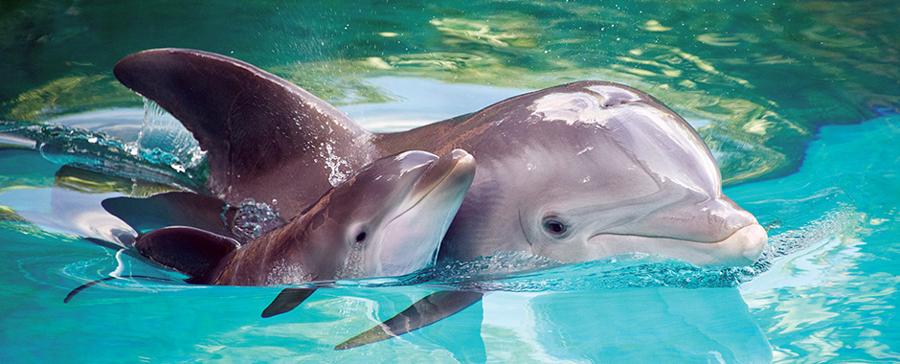
Do Dolphins Use 'Baby Talk'? Examining Whistle Communication in Bottlenose Dolphins

by Dulce Vazquez, age 15

Typically, when adults speak to babies they use a high-pitched baby voice. Did you know dolphins do the same?

Bottlenose dolphin moms modify their whistles when their newborns are nearby. Similarly, baby bottlenose dolphins also start creating a unique tune or whistle in their first few weeks and can continue doing so for up to a couple of months. “Dolphins shout their names in water as a way to keep track of each other,” marine biologist Laela Sayigh from Massachusetts said.

Sayigh and her students published a large study in 2009 that examined 40 unique whistles from 19 female dolphins. The researchers discovered that mom dolphins appear to adjust their tune when their calves are present. Calves stay with their moms from three to six years, creating mother-baby bonds. [Read More]

How Humans Harnessed Fire

by Sedona Afeworki, age 14

Fire, a chemical reaction, is the burning of a combustible substance with oxygen, fuel, and heat. The reaction radiates heat and light. There are various uses for fire such as to cook food, to keep warm, and to light a candle. However, how did early humans use fire to their advantage?

The first proof of fire dates to around 440 million years ago, before human existence. Millions of years later, the ancestors of early humans called “hominins” discovered how fire could be used once they moved to the african savannas. However hominins were not the first to discover fire; in reality, no one did. Instead, there were chemical reactions that kept happening in the grasslands, which resulted in many wildfires. Instead of trying to invent it, hominins tried to control fire and some archeologists believe that the hominins learned to do so and maintain flame around 2.5 million years ago. But there was no apparent evidence to prove this theory. While stone tools can still be found by archaeologists many years later, the presence of fire cannot be tracked in early history.

By observing the behavior of animals today, researchers have attempted to explain how hominins first used fire. For example, different types of birds and even chimpanzees in the savanna take advantage of the newly mobilized and visible prey. [Read More]

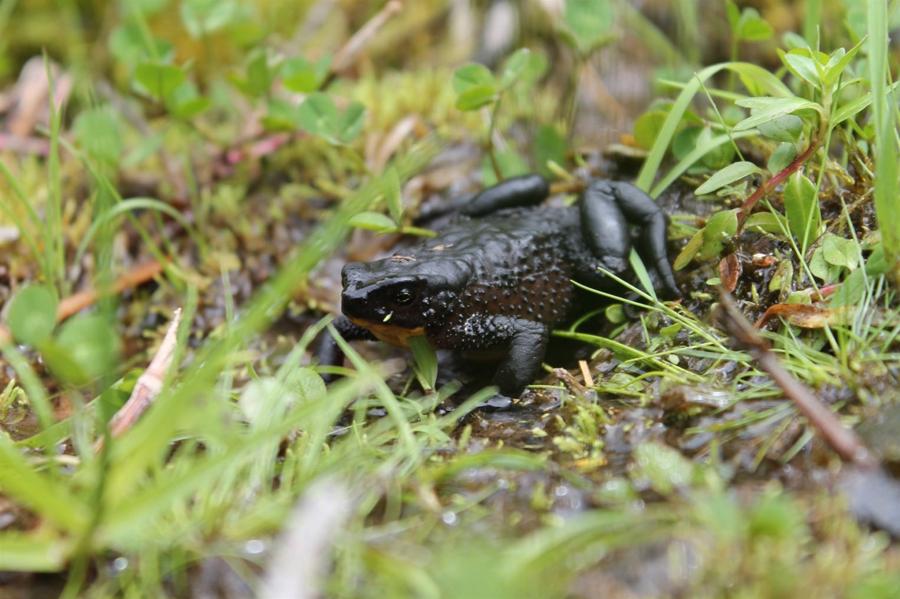
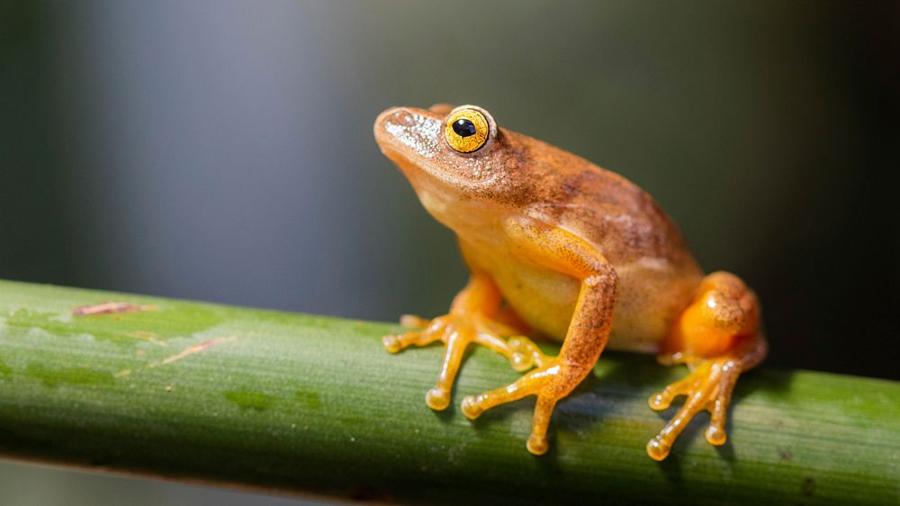
Scientists "Rediscover" the Jambato Harlequin Frog in Ecuador

by Shalom Shalmat, age 14

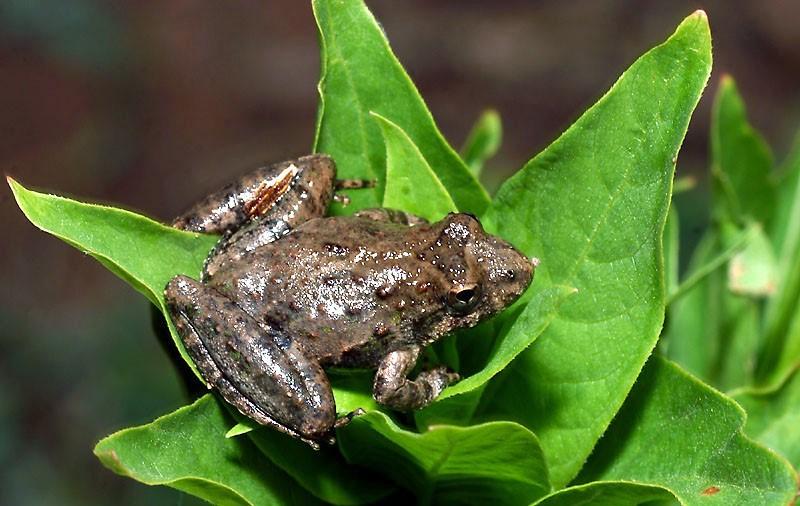
Is it possible for an animal that has been extinct to make a comeback? Across Central and South America there is a group of bejeweled frogs that is doing just that. The group is called the Harlequin frogs, which is a category of 100 different colored frogs.

After several researchers reported in the December Biological conservation that “roughly one third of harlequin frogs presumed to have gone extinct since the 1950s has been rediscovered,” Klye Jaynes, a conservation biologist at Michigan State University believes this is a glimmer of hope. When Jaynes heard about the jambato harlequin frog, he was motivated to begin researching how many harlequin frogs have returned from extinction.

A fungus caused the frog to fully disappear from 1988 to 1989. People searched for this frog for years. Scientists ran extreme research and pastors even offered rewards to their congregations if anyone found one. After being missing for decades, in 2016 a boy discovered a small population of Jambato frogs in a mountain valley in Ecuador. [Read More]

How Stars Are Born, Evolve, and Die

by Amayah Henderson, age 12

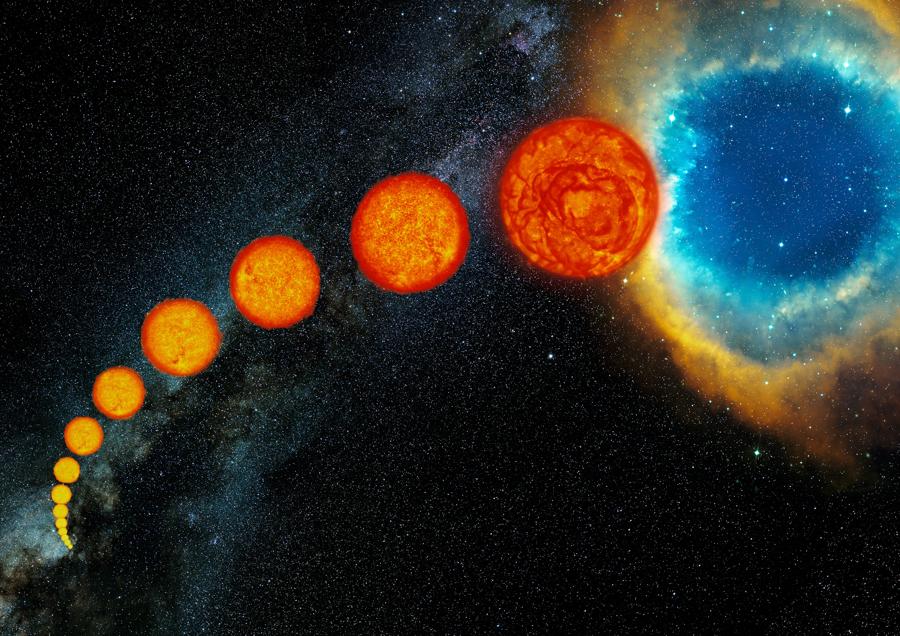
Over many years, scientists have discovered that stars have both a birth and a death. All stars are born in an interstellar nebula cloud. These stars are born when gas collapses inward, causing it to spin around the star as it forms, creating a large disk of stellar material. During its birth, a star is imbalanced because of the gravity pushing inward and the hot gases that are pushing outwards. Following this stage, the two forces balance, leading to the three cycles. When stars are born, they can be different depending on their mass. They could be lightweight, mediumweight, or heavyweight.

Lightweight stars are typically 0.8 to eight times the mass of the sun. These stars spend billions of years in a stable phase, making energy by converting hydrogen to helium until the hydrogen is exhausted to create a massive red supergiant. After millions of years, the star's outer layers expand, leaving just a core compressed by gravity. What’s left is called a white dwarf star.

In contrast, a middle-weight star can be eight to 20 times the mass of the sun. These stars evolve faster, barely spending a few billion years in the stable phase, using all of their fuel. It then evolves into a supergiant with a nuclear supply that emits large amounts of light, then dies in a harsh supernova explosion, blowing away its outer layers and leaving a giant, city-sized core known as a neutron star. [Read More]

Megalodon: Ancient Terror of the Seas

by Lincoln Roos, age 12

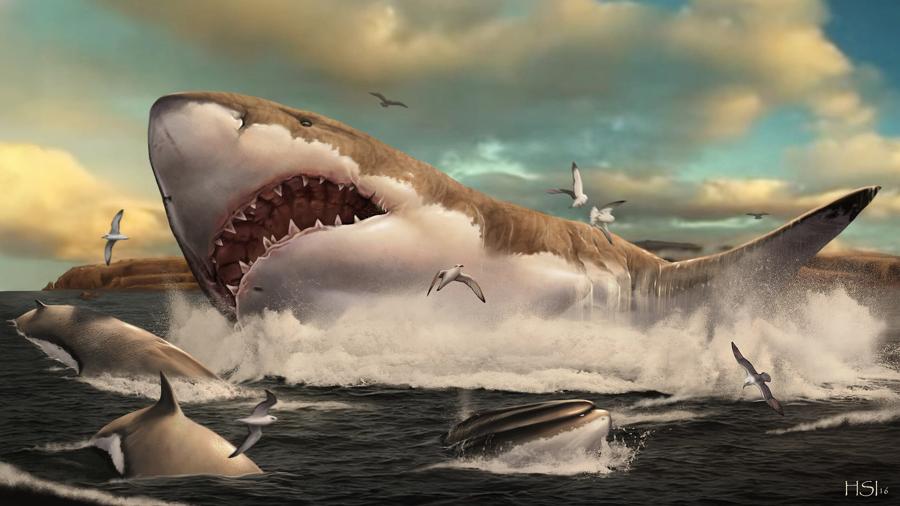
Most people have probably heard of a megalodon. If you have not, a megalodonis an extinct shark and was the apex predator of its time. Megalodons roamed the ocean about 3.6 million years ago. The megalodon’s appearance was that of a massive shark with an elongated and slender body. It had large pectoral fins and was as long as two school buses, weighing about 203,000 pounds. This shark moved around the ocean at two miles per hour.

Hollywood likes to envision megalodons as big great white sharks because of their similar-looking teeth. However, they have many differences: great whites have a more torpedo-like body with a thicker middle. They do not look the same, and they are not in the same lineage. Instead, it would look like a lemon shark; it has the same look as the megoladon but is much smaller.

A megalodon would typically live in tropical and subtropical areas around the world because it is much harder for them to live in areas with colder climates. Megalodons needed to eat an even larger amount of food. Megalodons ate prey such as whales, large fish, and even other sharks. A megalodon's pups grew up in shallow waters near the shore, and when mature, they moved into deeper water. [Read More]

Playing Board Games May Have Brain Benefits

by Aarosh Subedi, age 13

Board games are known as a good form of entertainment and a way to spend time with family and friends, but they can also give people a break from screens, which can improve cognitive function and help with problem-solving.

There are social, emotional, and cognitive benefits of collaborative and competitive games. Board games and word puzzles also improve executive functioning, spatial recognition, and processing speed. According to a survey by WordsRated, 65% of U.S. adults love board games. Respondents reported an increase in social activity, which the scientists associate with a boost in serotonin, a neurotransmitter that helps regulate mood and lowers anxiety.

Scandinavian researchers looked at preschoolers who played cooperative and competitive board games. Both types of games encouraged bonding and prosocial behavior. The studies found some differences. Competitive games bolstered problem-solving, brain function, and academic performance, while cooperative games gave more enjoyment. These benefits continued through each grade. As we get older, the health benefits rise. [Read More]

Why the Wisconsin River Flows Backward?

by Kevin Chen, age 17

One of Wisconsin’s most familiar rivers may have once flowed in the opposite direction. According to recent geological studies, the Lower Wisconsin River might have originally flowed eastward, not westward toward the Mississippi as it does today. This surprising possibility is changing how geologists interpret the area’s geologic past and reveals how thoroughly rivers can be shaped by natural forces over time. To understand this dramatic shift, researchers have turned to focus on what lies beneath the wider Wisconsin River Valley.

There are numerous signs of a much older landscape throughout the Lower Wisconsin River Valley. A flat layer of rock at the bottom of the valley suggests that a different river once shaped this area. The unusual slope of the buried valley floor points to a flow that moves eastward. Although much of the original surface has been worn away or buried, these underground clues give researchers important insight into the river’s ancient path and larger system. However, the river didn’t change course on its own—something much larger shaped its direction.

During the Ice Age, large glaciers moved across parts of the Midwest and reshaped the land. These massive sheets of ice could block rivers, change their flow, or create entirely new channels. In this region, glaciation likely reversed a river that once moved East to the Gulf of Saint Lawrence. As ice covered and reshaped the land, drainage systems were disrupted, and new routes opened, forming parts of the modern Mississippi River Basin. Though the shift happened gradually, the effects are still visible in the landscape today. To better understand how the river valley formed, scientists needed tools that could look beneath the surface and into the past. [Read More]

How Poisonous “Blood Flowers” Help the Environment

by Ermiyas Abiy, age 10

The Tropical Milkweed flower is part of the milkweed family of plants. This plant is also known as the Bloodflower, Scarlet Milkweed, Silkweed, or Sunset flower.

The scientific name of for this interesting flower is Asclepias Curassavica, and the origins of the name are thought to be from Curacao, located in the southern Caribbean.

Blood flowers were thought to be native to the Caribbean, South America, Central America, and Mexico. However, these flowers have recently been found in other parts of the world. They typically grow in tropical and subtropical regions. This flower is usually found in fields, prairies, and swamps. [Read More]

Stephen Hawking’s Brilliant Life Despite the Odds

by Nae McNeail, age

Professor Stephen Hawking unfortunately passed away at the age of 76 in 2018. He was amazing in his academics and an outstanding mathematician before he passed.

Hawking was a hard-working, active man before he was diagnosed at age 21 with motor-neurone disease, also known as Lou Gehrig’s disease, from which he suffered for almost all of his adult life.

Stephen met his first wife, Jane, a few years before he was diagnosed with Lou Gehrig’s disease. Jane and Stephen would have fallen in love with or without his disease. [Read More]

New Report Says Milwaukee’s Air Pollution Is Getting Worse

by Edwin Torres, age 13

Milwaukee was rated once again as one of the worst metropolitan areas in the nation for ozone-polluted air, according to the latest American Lung Association (ALA) report.

Ground-level ozone, also known as smog, happens when heat and sunlight mix with gases from smokestacks, cars, and other pollutants. Milwaukee was ranked as the 26th worst of 228 cities for ozone pollution, placed second amongst Wisconsin cities, only behind Sheboygan, which was ranked the 24th worst. The annual report compared metro areas throughout the country by using air quality data gathered between 2021 and 2023. It was discovered that 46% of Americans, equivalent to more than 156 million people, live in places with high levels of particle or ozone pollution. That’s almost 25 million more people compared to last year’s report.

Similar to prior years, people of color had a higher chance of being exposed to unhealthy air or were more likely to have illnesses, such as heart disease or asthma, that make them more vulnerable to polluted air. Although people of color comprise around 41% of the U.S. population, they make up more than 50% of individuals living in counties that the ALA ranked “failing” for the poor quality of the air. [Read More]

Recycling Turns Waste Into New Possibilities

by Dellany Onyango, age 10

Every year, Americans generate millions of tons of garbage, which slowly decomposes in landfills and causes pollution of land, water, and air. Recycling is a way to reduce that problem.

Recycling is a process that turns certain household items into new products. Many things can be recycled, including paper, glass, aluminum, and certain plastics. It is cost-effective because the materials can be reused for future products. Recycling also helps preserve natural resources. Composting is a process similar to recycling, as it gives food scraps a second life by turning them into fertilizer that improves soil health.

Items that can be recycled are usually made of metal, plastic, or glass, provided they are clean. For the safety of the workers, recycling facilities encourage the public to avoid putting broken glass in recycling bins. Some unrecyclable items include coated paper products, most Styrofoam, food wrappers, and food-soiled products. [Read More]

What Happens When Galaxies Collide?

Kevin Chen, age 17

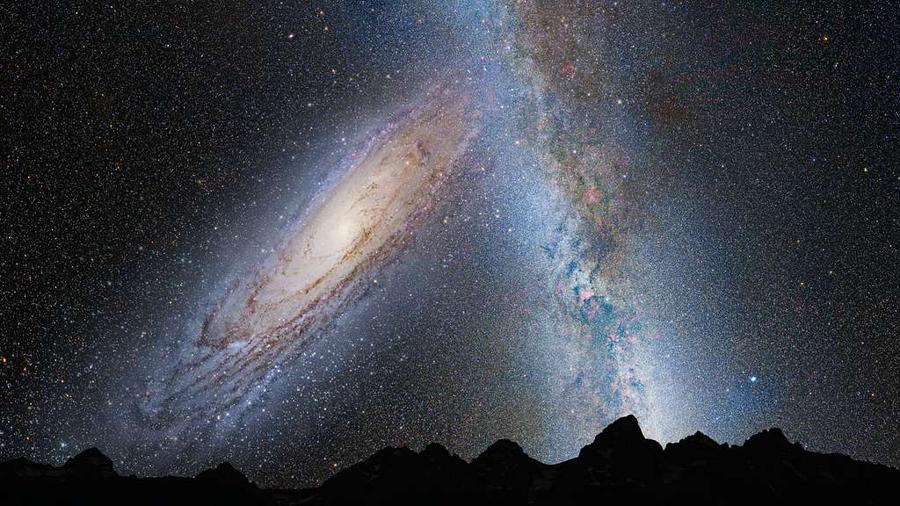
For years, scientists believed the Milky Way and Andromeda galaxies were on a direct collision course. However, new research suggests that their future is far more uncertain. Several factors could influence the outcome in unexpected ways.

Currently, the galaxies are approximately 2.5 million light-years apart and approaching each other at a speed of 223,694 miles per hour. Earlier estimates predicted a collision in 4.5 billion years, but with improved data and updated computer simulations, results now vary widely. A team of astronomers ran 100,000 simulations and discovered that in just over half of the scenarios, the galaxies come close and merge gradually over eight to ten billion years. According to a study published in Nature Astronomy, about 2% of the outcomes suggest a collision could happen as soon as four to five billion years. In many other cases, however, the galaxies never collide at all.

This uncertainty largely stems from gravitational influences within the Local Group—our corner of the universe, containing around 100 smaller galaxies. The Large Magellanic Cloud (LMC), a smaller galaxy orbiting the Milky Way, moves mostly sideways relative to Andromeda and could tug the Milky Way slightly off course, reducing the chance of a direct collision. Meanwhile, another galaxy, M33, applies a weaker pull that nudges the Milky Way toward Andromeda. These forces are enough to shift future trajectories and cause a range of possible outcomes. [Read More]

Flying Fish Use Fins to Soar Over Oceans

by Ermiyas Abiy, age 10

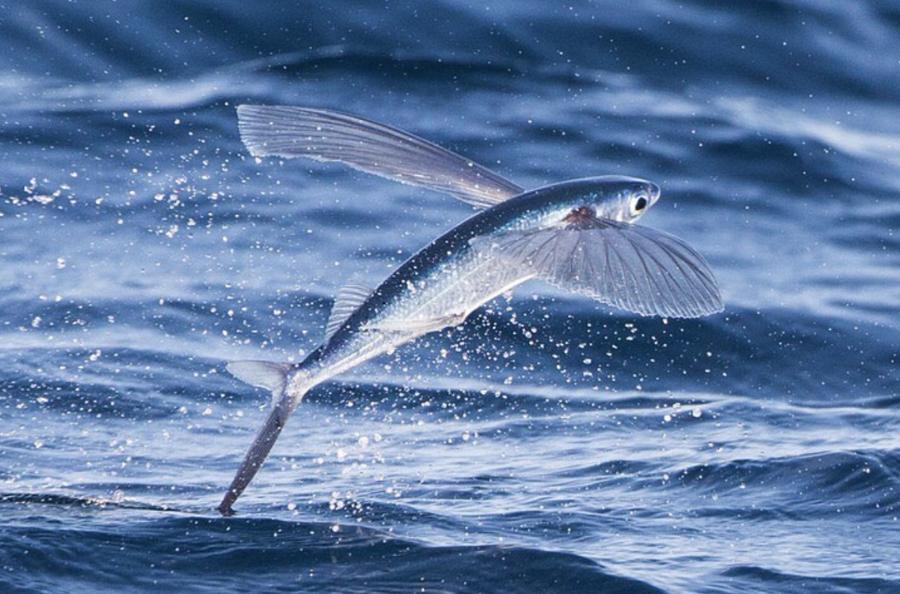
Some people might think that flying fish can fly after hearing their name. However, they actually glide through the air! They do this by speeding underwater, at a speed of up to 35 miles per hour, and then launching themselves with their pectoral fins up to 650 feet in the air.

There are approximately 40 different species of flying fish. They live in the Atlantic, Pacific, and Indian oceans, and sometimes are found on the outside of coral reefs. Clear, open oceans make great habitats for these tropical flying fish.

Flying fish primarily consume plankton as well as small crustaceans. Although they don’t have a wide variety of food, they have a lot of predators. Their predators are tuna, swordfish, mackerel, marlin, bigger fish, and fishermen. The fish willingly hand themselves over by jumping into fishermen’s nets and boats as they are drawn to well-lit boats. [Read More]

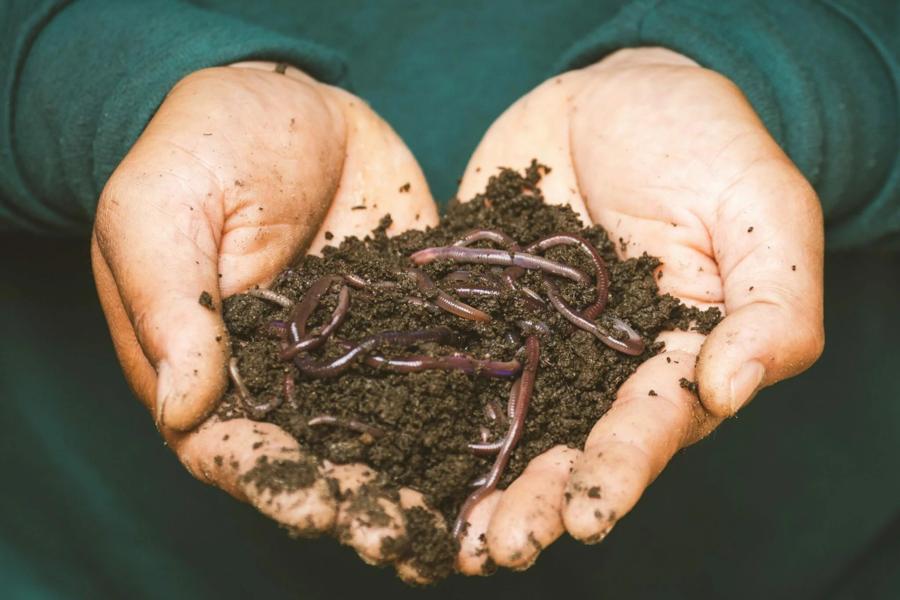
Turn Food Scraps Into Soil, Not Methane

by Sofia Zapata, age 16

Methane is a gas worse than carbon dioxide when it comes to its negative effects on the environment. However, there is an easy way to reduce its production: composting.

Carbon dioxide is a clear gas composed of one carbon atom and two atoms of oxygen. It is mainly produced from human activities such as burning oil or natural gas. Methane is a colorless, odorless, flammable gas, and it is the main component of natural gas. Methane traps 25 times more heat in the atmosphere than carbon dioxide due to its strong ability to absorb infrared radiation, even though it degrades more quickly in the atmosphere.

Decomposition of organic waste, such as food scraps, without oxygen releases methane gas. Microorganisms called methanogens grow in oxygen-deficient environments and allow for the breakdown of organic matter into methane. Microorganisms and germs in waste are not always harmful, as they can play important roles in food production and environmental sustainability. However, appropriate composting is helpful to reduce this methane production, which ultimately has negative consequences for the environment. [Read More]

Engineers Build Air Powered Robot for Hazardous Exploration

by Niko Sayu, age 11

A team of mechanical engineers from the University of California, San Diego, has just created a robot that runs on air. It is made from a singular 3D printed piece. The fact that it can be printed cheaply and easily makes it advantageous in exploring dangerous places like Chernobyl or small mountain caves.

The team is led by engineer Yichen Zhai, who, along with a team of colleagues, created a machine that may revolutionize the exploration of hazardous environments forever. The robot is a six-legged crawler made from a type of flexible plastic used in hoses and shoe soles. It can be 3D printed in one piece, yet it is soft, sturdy, and durable. The robot took two and a half days for the engineers to print. Its flexibility and sturdiness, as well as the fact that it can be printed in almost any size, would make it an incredibly useful tool for any work on flooded or dangerous sites. Its electronics-free design can be helpful in places where flammable objects could be at risk as well.

The robot waddles with three of its legs at a time to avoid tipping over. It uses a can of pressurized air that flows in tubes and through chambers to power its “limbs ”so it can waddle. The crawler moves at a slow 1.6 inches (four centimeters) per second, which is faster than a snail, but still not quite as fast as a turtle. [Read More]

The Science Behind the Spin: How Aerodynamics Control Baseball

by Max Moreno, age 13

As a baseball flies through the air, it is governed by Newton's laws of motion. Newton's first law tells us that a moving object, such as a baseball, will continue moving in a straight line unless another force acts upon it.

A force can be thought of as a push or pull in a certain direction. Three main forces affect a baseball: weight, drag, and lift. Weight is the pull of gravity that makes the ball fall toward the Earth. Drag is the air pushing against the ball, slowing it down. Lift is a force caused by differences in air pressure above and below the ball, which can make it move in different directions.

Most baseballs weigh about five ounces and are made of a solid cork-and-rubber center wrapped in yarn. A white leather cover is stitched on the outside. Because of how the ball is built, the weight is spread evenly. The way the ball spins affects its movement, as spin alters the air pressure on each side of the ball. This effect is called the Magnus effect. For example, if you give a baseball a side-spin, it will curve to the side. This doesn’t just happen with baseballs; it can also occur with soccer balls, tennis balls, and golf balls, which also curve and affect how they spin. [Read More]

Why Fish Owners Should Watch for Fin Rot

by Lucas Abiy, age 8

Pet fish owners may want to dive in and learn about fin rot. It is one of the most common diseases in fish.

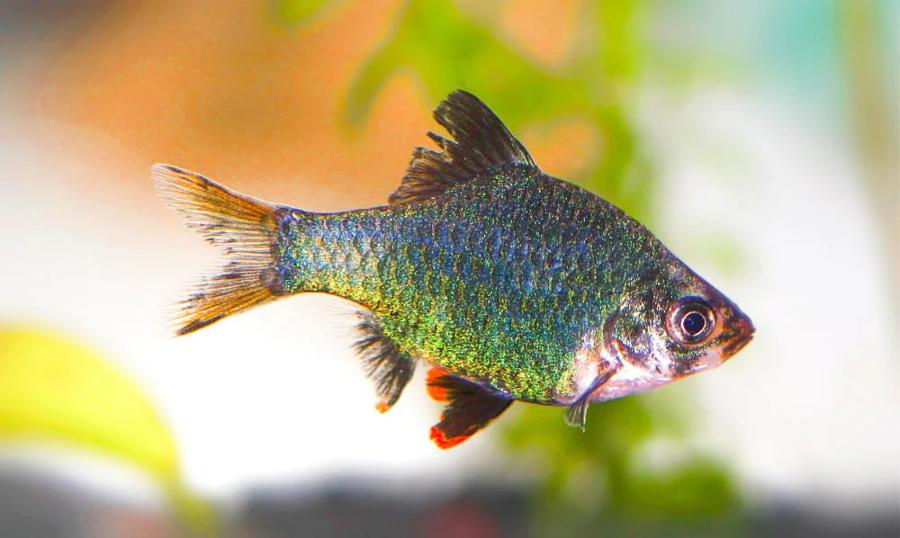
Fin rot is a disease that both saltwater and freshwater fish can catch. It is caused by different types of bacteria, most commonly Aeromonas, Pseudomonas, and Vibrio. Fish can develop fin rot when bacteria enter through a tear or injury in their fins or tail. A fish is more likely to catch fin rot when it experiences stress. Stress weakens the fish's immune system and allows bacteria to more easily take over. Fish can become stressed when their tank is overcrowded, when water quality is poor, or when they are bitten by an aggressive fish.

The symptoms of fin rot include frayed or ragged fins, often with black, white, or even red edges. In more advanced cases, the rot can spread toward the body. Other symptoms can include changes in behavior, such as lethargy or lack of movement. [Read More]

De los desiertos a los bosques, los animales se adaptan a los hábitats

Por Gerard Sanchez, edad 11

Los hábitats son entornos que proporcionan a los animales agua, refugio, alimento y espacio para vivir.

Existen diferentes hábitats, como los casquetes polares, las sabanas, los desiertos y las selvas tropicales. A veces, los hábitats no cuentan con todo lo que los animales necesitan, lo que puede provocar su muerte.

Los animales a veces evolucionan o se adaptan para sobrevivir en sus hábitats. Por ejemplo, los osos polares tienen gruesas capas de pelaje y grasa para sobrevivir al frío polar. Los puercoespines tienen largas púas para defenderse de otros animales en su hábitat. [Read More]

How Guinea Pigs Became Beloved Pets Around the World

by Sylvia Hoks, age 11

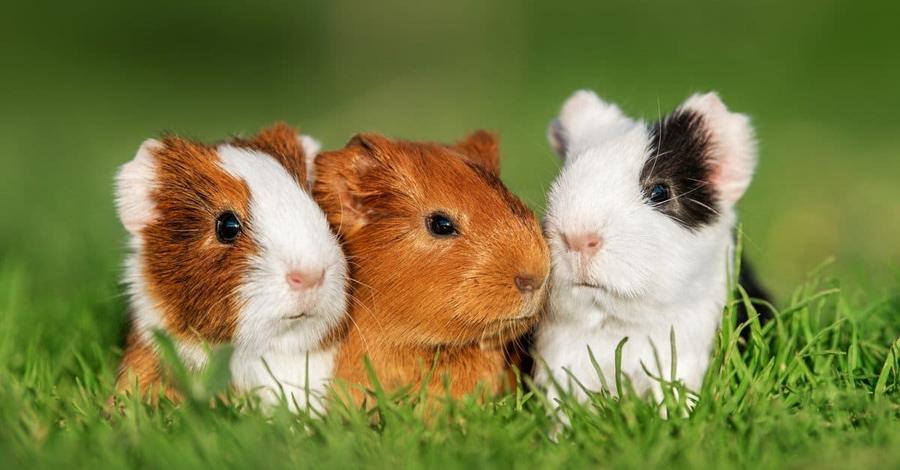
Many people own little furry potatoes, also known as guinea pigs. Not many think about how these rodents became household pets worldwide. How did they get their strange name, and what is their backstory?

Guinea pigs are normally looked at as fuzzy, large, hamster-like creatures. They have no relationship to pigs, so their name doesn’t exactly reflect their appearance. Their ancestors are actually part of the rodent and Cervidae family.

There are various assumptions about how these animals got their name. One thought is that they got their name from being transported on ships leaving either Guiana, South America, or Guinea, West Africa. Others say that the squeaking noise they make is similar to the sound pigs make. However, researchers still have not determined how they got this peculiar name. [Read More]

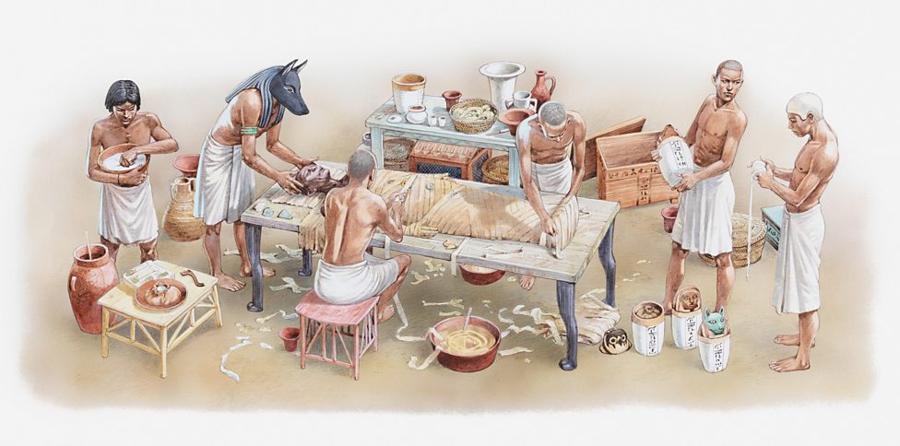
Scientists Discover Two 7,000-year-old Mummies Deep in the Sahara Desert

by Elim Eyobed, age 14

After a recent discovery by various scientists, archeologists and researchers, two of the world's oldest mummies were found buried deep in the Sahara desert.

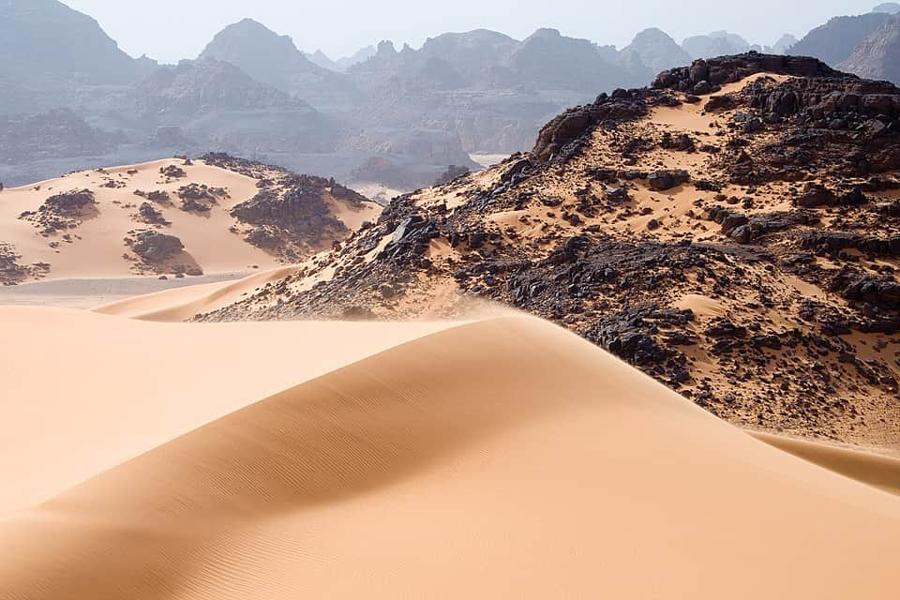
Located in the Tadrart Acacus Mountains of Southwestern Libya by the middle of the Sahara lies the Takarkon rock shelter, archeologists found fifteen mummies at this location. Out of the 15, two seem to have naturally mummified.

Natural mummification is a process where a body is preserved without intentional intervention primarily due to environmental conditions, especially dryness and lack of oxygen. This phenomenon helped with the overall preservation of their DNA. Researchers used the DNA to try to determine the mummies’ origins. Their genes indicated the people likely came from sub-Saharan Africa; however, they also contained neanderthal DNA. [Read More]

Australia Is Home to the World’s Deadliest Creatures

by John Agbo, age 14

Though it’s the world's smallest continent, Australia contains more dangerous creatures than any other continent. This island is home to a diverse array of unique and fascinating animals and plants, each with their own level of severe danger and eeriness.

The Stonefish has spines that contain a neurotoxin that will kill you in under 60 minutes. It is found in the Red Sea, French Polynesia, and Queensland, Australia. Their camouflage skills are so good that if they stay still, whether in the sand or a cluster of coral, they are nearly invisible. There are two types of Stonefish, and their eyes easily identify them: the Estuarine Stonefish’s eyes are relatively small and are slightly elevated on their heads within a pit, while the eyes of the Reef Stonefish are on top of their heads. They are known to hide in coral reefs, under rocks, and in the shallows under the sand. If you are not careful, it is very easy to step on one of their 13 highly toxic spines. [Read More]

From Deserts to Forests, Animals Adapt to Habitats

by Gerard Sanchez, age 11

Habitats are environments that provide animals with water, shelter, food, and space to live.

There are different habitats such as ice caps, savannas, deserts, and rainforests. Sometimes habitats do not have everything animals need, which can result in their death.

Animals sometimes evolve or adapt to help them survive in their habitats. For example, polar bears have thick layers of fur and fat to survive frigid polar air. Porcupines have long quills to defend themselves from other animals in their habitat. [Read More]

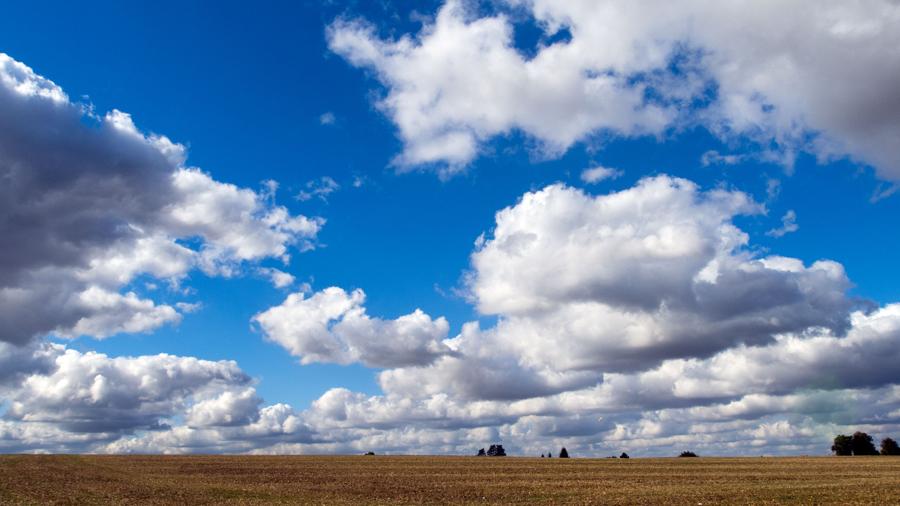
The Science and Shapes of Clouds

by Semaia Zerzghi, age 10

What are clouds to you? Most people would maybe say, “clouds are puffs of white floating around in the sky, and sometimes, rain or snow falls from them.” Well, that's the short version, but there’s much more to clouds than meets the eye.

A cloud is a mass of water drops or ice crystals suspended in the atmosphere. They form when water vapor condenses in the sky. This process is called “condensation,” which allows us to see the water vapor. Sometimes the water evaporates from the ground and rises up to condense into clouds. The word “evaporate” means to change from a liquid to a gas at a temperature below the boiling point.

Clouds are separated into two major factors: location and shape. High clouds form several kilometers up in the sky. Middle clouds form between high and low clouds. Low clouds form within about a kilometer of Earth's surface. [Read More]

How the Brain Stores and Retrieves Memories

by Dellany Onyango, age 9

A memory is a record of information that your brain considers important and saves. Memories can last five seconds or five years. Three parts of the brain help with memory: the amygdala, the cerebral cortex, and the hippocampus.

The hippocampus, located in the cerebral cortex, is the part of the brain that stores memories. An undamaged memory gathers information like the current day or time and retains it for later use. When the brain receives data, it decides which pieces are important. This process involves three steps: encoding, storage, and retrieval.

Encoding is when your brain takes in information from your environment and converts it into a form that can be stored. Then, your brain stores that encoded information for future use, which is called storage. The final part of memory is retrieval, which brings stored information back out of storage in three ways: recall, recognition, and relearning. Recall involves actively remembering something without environmental cues. Recognition occurs when your surroundings trigger your memory. Relearning happens when you remember information faster and more easily the second time you learn it. [Read More]

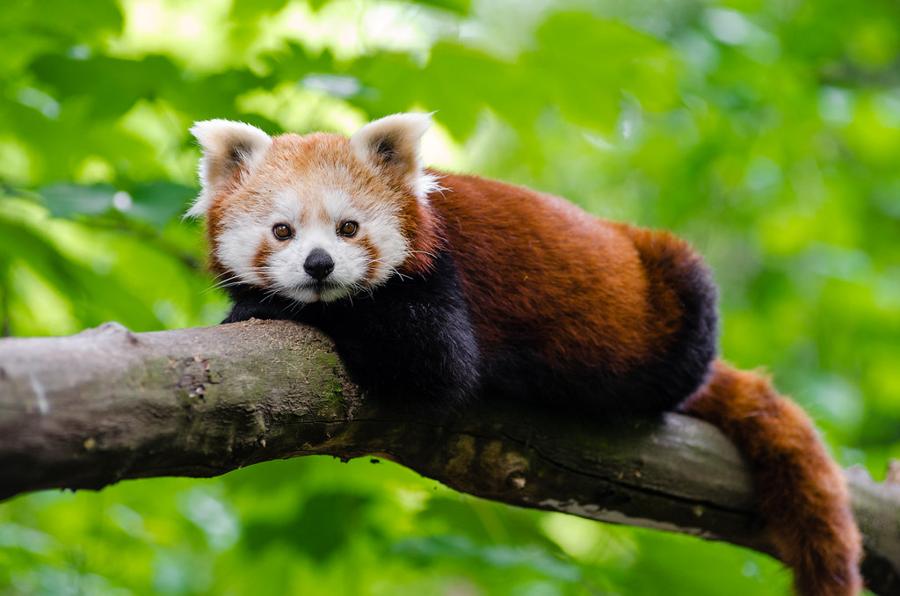
Did You Know Red Pandas Are Not Actually Pandas?

by Arsema Biruk, age 8

In contrast to their name, red pandas are in fact not pandas. It may come as a surprise what animals they are actually related to.

Scientists were confused for a long time about what other animals red pandas were related to. Today it is known that red pandas belong to their own unique family, called Ailuridae, within the Order Carnivora. They share more distant connections to raccoons, skunks, and mustelids like weasels and otters, but they are not closely related to giant pandas or bears.

Most species in the Order Carnivora are carnivores, meaning they eat meat. Red pandas, however, are mostly herbivores. They eat fruits, flowers, bamboo leaves, and bamboo shoots, though sometimes they also eat eggs and small animals. Ironically, red pandas and giant pandas eat mostly the same things, but they aren’t related. An animal often compared to the red panda is the binturong, but they are not in the same genus. Both, however, are arboreal mammals that share some similarities. [Read More]

The Mystery of Brain Fog and How to Beat It

by Niko Sayu, age 11

You’ve probably heard of it — brain fog. It’s often thought of as something that only affects older adults, but that is not the whole story.

Brain fog is a term for a large collection of symptoms that many people experience in their lifetime. For example, you could be working, exercising, or just relaxing, and then you get a strange feeling. You are tired, fatigued, forgetful, and possibly even dizzy. Sound familiar?

It is perfectly reasonable if brain fog is not the first thing that jumps to mind. After all, brain fog has recently been associated with long COVID and the aftereffects of anesthesia. There are many factors that can contribute to brain fog. A common factor is lack of sleep. This happens because sleep loss inhibits proper communication between brain cells. This, in turn, leads to side effects such as fatigue, exhaustion, confusion, and a slow thought process. This can be extremely dangerous depending on the individual’s performed task. Another cause of brain fog is dehydration. Dehydration lowers blood volume and reduces the amount of oxygen and electrolytes like sodium, potassium, and calcium in the body. [Read More]

Animals That Scare to Survive

by Edna Torres, age 6

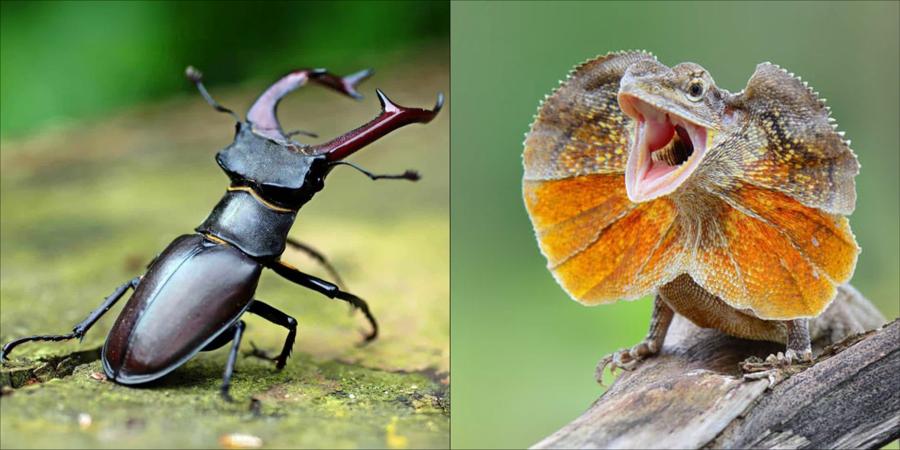
Some animals will often make themselves appear intimidating to protect their lives. For example, some animals will roar or enlarge their bodies to defend themselves.

One creature that does this is the male stag beetle. These beetles have large, impressive jaws, but can’t actually bite with them. Instead, they use their jaws to fight other males for mating rights.

Another creature with daunting features is the frilled lizard. This lizard is not harmful but can be intimidating when it is threatened. This lizard spreads its frills wide, creating a large, frightening appearance to scare off predators. [Read More]

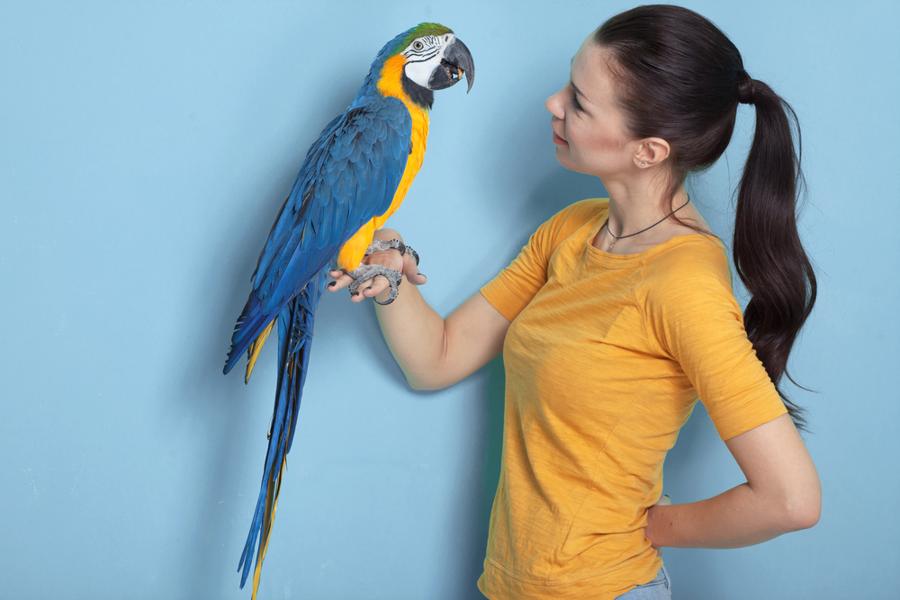
Parrots and People Share Surprising Similarities

by Bruno Torres, age 9

Parrots and humans have more in common than many might think. From being able to talk to living for decades, and even using tools, these birds are one of a kind.

Most parrots live in Australia, Asia, Africa, and the Americas. Some species migrate within these continents to places like Mexico and New Zealand. Parrots can be between three and tand39 inches in height. This range is wide due to their extensive diversity, with over 400 species of parrots known to exist.

Most male and female parrots are almost identical, and it is hard to tell them apart. However, some species look very different, such as the Eclectus Parrot. Males from this species have green feathers, while the females have crimson and royal blue feathers; their beaks are black, and they have scarlet colored heads. [Read More]

The Ferret That Almost Disappeared

by Delia Moreno, age 8

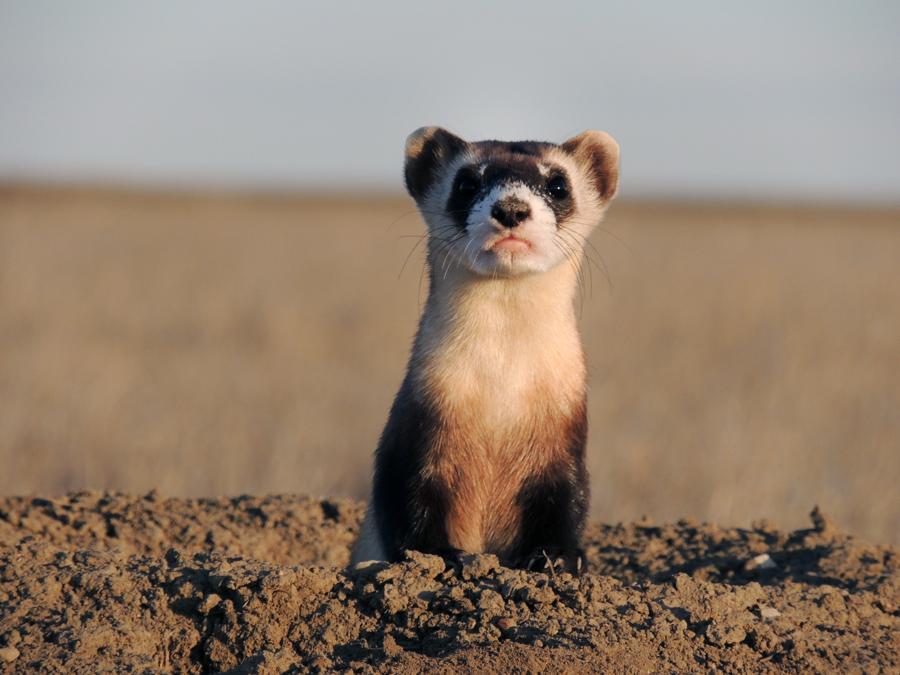
The color of a black-footed ferret helps them blend in the wild and hide from predators.

Ferrets weigh from 1.5 to 2.5 pounds. Black-footed ferrets are characterized by their size. They are typically skinny with black fur on their face, feet, and tail. Male ferrets tend to be larger than females.

Ferrets used to roam from Southern Canada to Northern Mexico, but they are now mostly found in Wyoming, South Dakota, Montana, and Arizona. Black-footed ferrets can live up to three or four years in the wild. [Read More]

What Is a Binturong?

by Lincoln Roos, age 12

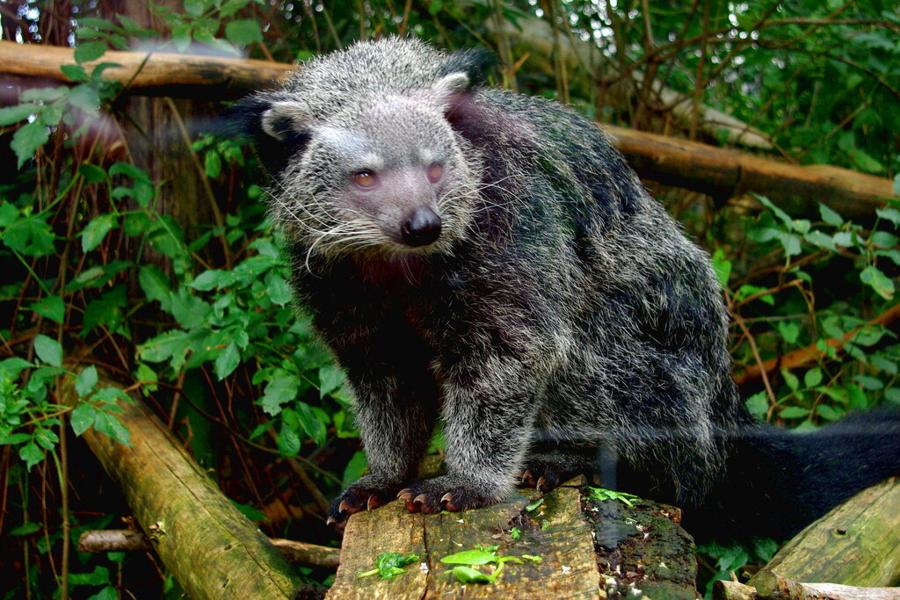
The binturong is a unique-looking creature that is often described as having the physical aspects of a bear, cat, and monkey.

The binturong lives in the forests of eastern Asia, high up in the trees. It uses its thick, padded tail to climb these trees and hang from them. However, as these creatures age and get heavier, adult binturongs will also need to use their arms to hold on to branches, not solely their tails like young ones. Along with its tail, the binturong also uses its claws to climb and grip trees.

A binturong can come in many colors, including brown, black, white, and silver, as well as having brown on the tips of its fur. Binturongs also have long ear hairs and brown, reddish eyes, which many think gives them a cute appearance. [Read More]

The Forces That Keep Planes Aloft

by Max Moreno, age 13

To many, flight seems inexplicable as humans aren’t biologically built to defy gravity, yet inventors found a way to send thousands of tons of metal carrying hundreds of people soaring through the sky.

Despite flying on planes being a normal occurrence, many don’t know the science behind plane flight or the forces at play. Lift is what allows planes to fly. It is a force generated when air flows over and under their wings. As planes move through the air, the pressure above their wings becomes lower than the pressure below them, creating an upward force. However, lift isn’t only generated by the wings; every part of the plane contributes, thanks to its aerodynamic shape.

Planes experience other forces as they fly, such as drag, which is the wind and air resistance slowing the plane down as it moves. Another force is thrust, which pushes the plane forward with the help of its engines. The last force is gravity, which constantly tries to pull the plane down. [Read More]

The Strange Arctic Landscape of Devon Island

by Kaleab Afeworki, age 13

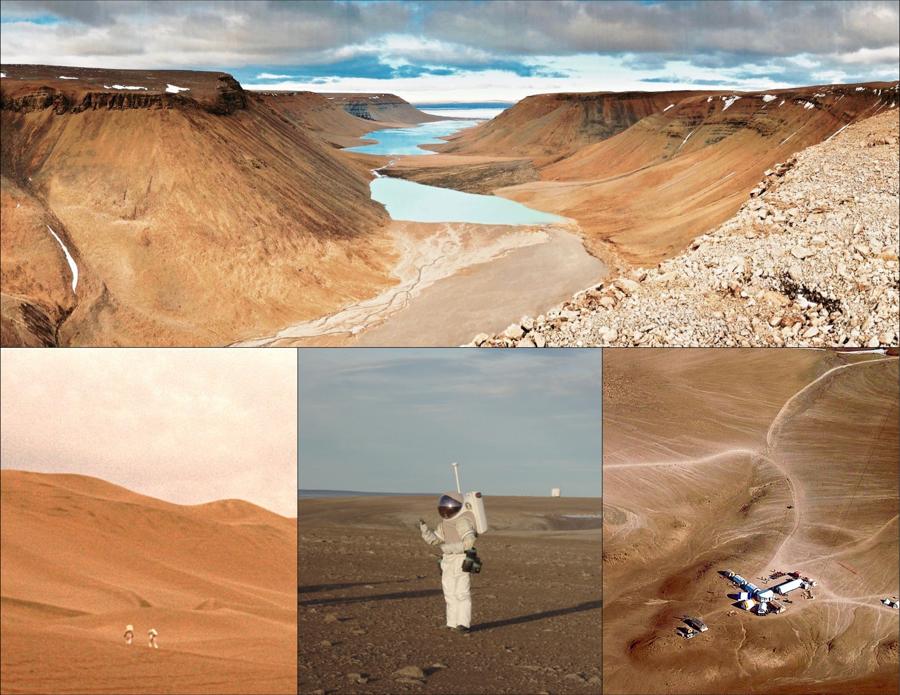
Devon Island is the largest uninhabited island in the world. It is more than five times the size of Hawaii. This island is located in the Canadian Arctic.

Devon Island has two environments that are vastly different. The first environment, the polar desert, has a harsh climate that animals are unable to adapt to. However, there are tiny parts of this biome where there are richer ecosystems, more plants covering the area, and accessible water. The temperature on the island ranges from -16°C (3.2°F) in the winter to 8°C (46.4°F) in the summer. These rare areas, while typically dry, contain moisture throughout the summer.

The other environment on Devon Island is called Truelove Lowland. This polar oasis is located on the north coast of Devon Island. This biome contains a large variety of plants, a more diverse ecosystem than the polar desert, and has a rich habitat that different species can live in. During the summer, this biome rarely exceeds temperatures over 10°C (50°F) in a span of under two months. [Read More]

Appendix Cancer Has Rise Among Millennials and Gen X

by Ayelen Flores, age 15

Doctors and researchers have identified differences in the rates of appendix cancer depending on age group. Older age groups have significantly lower rates of developing appendix cancer: people born in the 1940s have rates of appendix cancer two to four times lower than people born in the 1960s to 1980s.

The appendix is a finger-shaped pouch attached to the large intestine. Appendicitis is a very common infection that causes inflammation of the appendix. To treat appendicitis, most go through surgery.

Appendix cancer has been a prevalent topic in recent medical conversations. There is also a gap in knowledge on appendix cancer that causes it to be misinterpreted as colon or ovarian cancer. Doctors can identify appendix cancer with symptoms such as stomach pain or bloating; these symptoms are different from appendicitis because they are unbearable and last longer. [Read More]

Sheep Leaf Sea Slug Uses Photosynthesis to Survive

by Dulce Vazquez, age 16

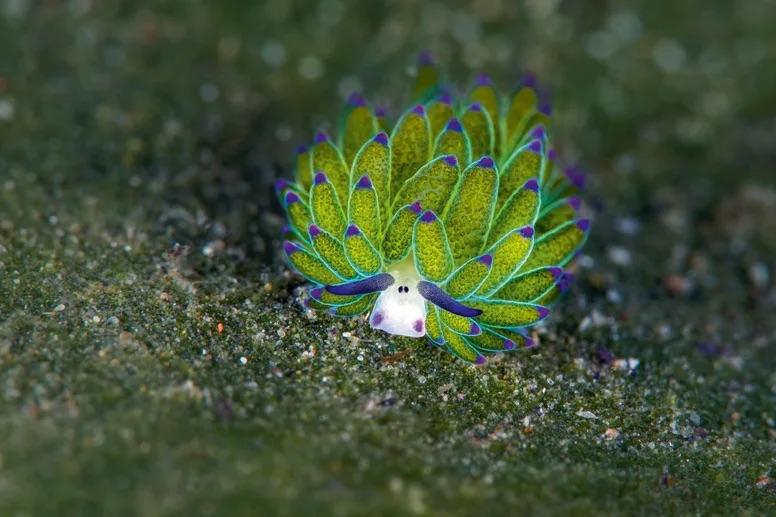
The sheep leaf sea slug was discovered on Kurashima Island, in Japan, back in 1993. It can also be found in the marine environments of the Philippines, Indonesia, Singapore, and Thailand. It has a unique feature only found in a few other animals.

Sea slugs have many small features. They can be a variety of different colors, including yellow, red, blue, green, white, and purple. Sheep leaf sea slugs typically have white faces with black eyes. A unique feature they have is their two rhinophores that look like ears. Rhinophores are organs that help find food and detect chemicals in water, such as algae. These slugs have green cerata (leaf-like appendages) around their upper bodies, which are used to help with respiration and defense.

Sheep leaf sea slugs absorb chloroplasts from algae. During this process, photosynthesis takes place, which is the process of turning light into food. They collect chloroplasts in their tissue. The chloroplast is gathered in their tissue for no more than ten days. Chloroplasts absorbed by the sheep leaf sea slugs help camouflage and create food. Due to the amount of chloroplasts in their bodies, the sheep leaf sea slug’s body has a green pigment. The chloroplast produces sugar, which can be used for extra fuel. This fuel can be used in egg production. Their eggs are shaped into spiral coils, and each coil contains 15-20 eggs. [Read More]

How a Meteorite Helped Create One of North America’s Largest Lakes

by Sofia Zapata, age 16

An asteroid created one of North America's biggest lakes, known today as Lake Manicouagan. This 214 million-year-old circular lake is visible on any map of Canada and is known as the “Eye of Quebec.”

About 214 million years ago, a meteorite crashed into Earth, creating a big crater in northern Quebec, Canada. At the time, it was part of the ancient continent of Pangaea. The meteorite was three miles wide and traveled over 30,000 miles per hour, causing a 350-meter-deep hole. It’s only in very recent history that this massive crater became a lake.

The reservoir was created in 1968, when humans constructed the Daniel-Johnson Dam to produce energy. After the dam was built, it blocked the Manicouagan and Outardes Rivers, which filled the crater. [Read More]

Doomsday Clock Ticks to 89 Seconds as Global Threats Grow

by Sofia Zapata, age 15

Doomsday Clock was set to 89 seconds until “midnight”– the lowest it's ever been. This clock is a warning to humanity to take control over threats that could lead the world to its end.

The Doomsday Clock was created in 1947 to represent how close humans are to destroying the world with dangerous technologies. The placement of the clock is controlled by the Bulletin of the Atomic Scientist and Security Board, a group of 18 experts with diverse backgrounds. They meet twice a year to discuss events, policies, and trends. In 1947 they considered the threat posed by nuclear weapons to be the greatest danger to humanity, which they used to set the clock. However, in 2007 they started including catastrophic disruptions from climate change in their decisions.

In 1947 the clock was first set to seven minutes, but within two years it dropped to three minutes, due to the dangerous arms race. As years passed, more events started worrying scientists. This led them to continue the countdown and consider more factors. This year, the clock was moved to 89 seconds. Big threats to humanity are causing the clock to continue getting closer to midnight, these include nuclear weapons, climate change, and artificial intelligence. [Read More]

Scientists Clone 13,000-year-old Wolf Species

by Will DeFour, age 15

Thousands of years ago, dire wolves were the apex predators of North America. With white fur and a large, muscular build, they could take down the behemoths of the Ice Age. They went extinct long ago, but scientists at Colossal Biosciences are using gene editing technology to recreate something not seen in over 13,000 years, a species they call “dire wolves.”

Colossal was founded in Dallas in 2021, with grand plans to “de-extinct” the Tasmanian tiger, dodo bird, and legendary woolly mammoth. Colossal uses a gene editing technology called CRISPR to make this possible. Their co-founder and head of genetics, George Church, developed the first genomic sequencing technique and helped innovate stem cell engineering and genome editing. He is now a professor at Harvard and the Massachusetts Institute of Technology.

Colossal employs over 130 scientists and is valued at $10.2 billion. This value is mainly due to their first great scientific leap, the de-extinction of the dire wolf. [Read More]

Lilac-Breasted Roller Wows With Its Colorful Feathers and Striking Appearance

by Sessina Zerezghi, age 8

The Lilac-breasted Roller, also known scientifically as Coracias Caudatus, was given its name in 1766 by Carl Linnaeus, a Swedish scientist.

The Lilac-breasted Roller is a colorful bird that is characterized by its green, white, black, yellow, turquoise, dark blue, and lilac plumage. Its legs are small and greenish yellow. While they are colorful at maturity, when they are first born, they are simply grey. These birds have strong beaks, short necks, and narrow tails. The Lilac-breasted Roller lives in eastern and southern Africa.

The Lilac-breasted Roller’s diet consists of grasshoppers, beetles, lizards, crabs, and small amphibians. This bird takes prey from underground. The Lilac-breasted roller is about 14.5 inches, and its tail can be around eight to nine centimeters long. Its wingspan is between 50 and 58 centimeters. The bird lays up to white white eggs, which are incubated for around 24 days. [Read More]

Invasive Mussels Threaten Great Lakes but New Methods Offer Hope

by Will DeFour, age 15

As invasive mussels devastate the Great Lakes, scientists are looking into new ways to combat the threat and protect important parts of the local ecosystem, such as spawning grounds for native fish.

Ten years ago, a group of divers led by Harvey Bootsma researched algae growth and its connection to the invasive zebra and quagga mussels. In their study, they scraped the mussels off a portion of the lakebed near Sleeping Bear Dunes, Michigan. As the scientists returned over the years, they noticed something odd: the mussels did not grow back. After a decade, there are still a few mussels that have been able to regrow. The mussels struggle to return because an invasive fish, the Round Goby, eats the mussels before they grow big enough to become a problem.

With the help of the Round Goby, marine biologists across the Midwest are trying to push back against the mussel invasion. A team led by Bootsma has cleared a 540-square-foot area by towing a 1,100-pound plate behind a boat to destroy the mussels. Last year, scientists from the National Oceanic and Atmospheric Administration (NOAA), one of the key players in the fight against the mussels, created a tank-like machine to crawl across the lake bed and clear mussels in a 2,000-square-foot area. These projects, if targeted in spawning grounds and other important areas, can greatly benefit native species. However, this federally funded project is facing new threats as the Trump administration's budget cuts are taking funding away from marine organizations, including NOAA. [Read More]

Sand Boa’s Hunting Skills and Goofy Eyes Go Viral

by Lincoln Roos, age 12

An unusual creature thrives in the deserts of Iran and the Arabian Peninsula. This amazing creature is called the Arabian Sand Boa. Its name represents where it is from and the way it makes burrows deep in the sand. Being a nocturnal creature this snake hunts from dusk to dawn.

This animal is carnivorous which means it only eats meat. This boa preyed upon geckos, smaller snakes, and worm lizards. This animal's hunting strategy involves it sleeping in its burrow for the entire day. When the cool air of the night falls, the snake senses a change in the sand’s temperature. Then in turn it goes higher in the sand with those strange eyes peeking out slightly. When prey gets close its head and fangs lunges out lightning fast and drag its prey deep into its burrow. Never to be seen again. This animal is also an egg layer, which is very strange for a boa because only two species of boa lay eggs. After mating this snake can lay up to five eggs.

The Sand Boa is also very interesting due to the placement of its eyes on the top of its head. This is useful when hunting. It also looks very cute in the process but don't let its eyes fool you because this animal has a very strong bite. The Arabian Sand Boa has to have a powerful bite because it has to kill its prey in one swift move or face the consequences of the prey running away, another predator stealing the kill, or another predator eating both it and its prey. Don't worry about the Arabian sand boa hurting you, because they are very friendly towards humans. Some people even keep them as pets. [Read More]

The Science Behind Spring Bird Migration

by Ayelen Flores, age 15

It is the time of year when birds are flying miles and miles: spring migration has started. Birds undergo a huge transformation to prepare for anything on their journey.

To prepare for migration, some birds gain weight by eating excessive amounts of food, like high-energy berries and fruits with carbohydrates. With the fat from the fruits, birds gain energy, and their internal organs shrink or grow to make room for energy-rich fat. Bar-tailed Godwits, a bird species, also increase the size of their heart and chest muscles. This improves the distribution of energy and oxygen mid-flight. A type of songbird, the Blackpoll Warbler, expands its digestive tract to process more food, then shrinks it during migration to reduce the need to refuel.

As seasons change, birds have to adapt to new habits and sleep less. While birds fly, half of their brain is asleep while the other half is awake to react to any danger. Swainson’s Thrushes sleep for nine seconds at a time. This bird also burns muscles to create energy, traveling up to 200 miles during migration in a single stretch. Burning muscles help it fly for a longer time and reduce the need to stop. [Read More]

High Up in the Mountains Pikas Make Their Home

by Isabella Flores, age 7

The American Pika, or the Ochotona princeps, is a rodent-like mammal. This animal lives in North America. Their habitat is located in alpine terrain, high up in caves and cliffs, west of the Rocky Mountains.

Pikas have black and brown fur, which helps them camouflage among objects of similar colors, such as rocks. Their ears are shaped like half a heart, and they have a thick layer of fur covering their tails.

Pikas collect flowers, grass, and weeds to survive during the winter. During summer, they lay plants in the sun to dry out before storing them in their dens so they don’t rot during the winter. Pikas live in groups inside caves to protect each other. They alert one another of predators such as hawks, weasels, and coyotes by making a high-pitched squeak. [Read More]

Why Does Blobfish Looks So Strange?

by Yemariam Bekele, age 9

True to their name, blobfish are bulbous, squishy creatures with weak bones. Deep underwater, they are unrecognizable due to the intense water pressure helping them hold their shape together. Their shocking appearance outside of the water has caused some people to coin the blobfish “the ugliest fish in the world.”

The blobfish lives deep in the Pacific Ocean. They can be found in dark and cold environments between 1,970 and 3,940 feet below the surface. Giant squids and angler fish also live in the deep ocean with the blobfish.

The blobfish keeps itself alive by eating crustaceans, which can include crab, shrimp, lobster, starfish, and even dead fish. Blobfish relax at the bottom of the ocean and wait for their prey to come to them. [Read More]

Cave Explorers Discover Underground Forest in China

by Estefania Garcia-Fox, age 12

In a giant sinkhole in Central China, a team of scientists has discovered a mysterious underground forest. This sinkhole turned out to be 630 feet deep. A team of speleologists, people who study and explore caves, rappelled into the sinkhole in 2022 and discovered three cave entrances and a forest of ancient trees that grew to be more than 131 feet tall, seeking the sunlight that came through the sinkhole entrance.

Zhang Yuanhaui, senior engineer at the Institute of Karst Geology, measured the sinkhole interior. The bottom is 1004 feet long and 492 feet wide. In Mandarin Chinese, the word for forested sinkholes such as this one is “tiankeng,” or “heavenly pit.”

“The bottom of the sinkhole did indeed seem like another world!” Yuanhaui said. [Read More]

Might a Modified Mouse Make a Mammoth?

by John Agbo, age 14

Researchers have taken a preliminary step toward the potential revival of the prehistoric woolly mammoth. However, one must consider whether this endeavor signals a promising future for Earth, a misuse of advanced technology, or humanity's attempt to intervene in natural processes, essentially trying to play God, as mentioned by a professor at the University of Arizona (U of A).

Based in Dallas, Texas, Colossal Biosciences has successfully developed the first genetically modified “colossal woolly mouse.” This mouse features attributes such as thick fur and body fat typically found in woolly mammoths, representing the first step toward the company's goal to “de-extinct” prehistoric creatures.

To achieve this step, they made eight edits across a spectrum of seven genes, focusing on enhancing traits similar to those of woolly mammoths, particularly traits related to cold resistance, which they believe were crucial for the mammoth's survival in the tundra. They hoped for at least one mouse to exhibit characteristics akin to a mammoth, such as golden hair. The final product, however, was just a regular mouse with a few changes. [Read More]

The Rare "Walking Fish" of Mexico’s Lakes

by Edna Torres, age 7

The axolotl is a type of salamander native to Mexico. They are commonly found in the freshwater lakes of Xochimilco and Chalco. This fascinating creature is not only rare and protected, but it also has biological abilities that continue to amaze scientists and nature lovers.

The scientific name for the axolotl is Ambystoma mexicanum. Despite these creatures being amphibians they don't develop in the same way as other amphibians such as frogs. Typically, amphibians start as eggs and hatch into a larval stage, such as tadpoles, and then grow into creatures such as frogs. However, due to their genetics, axolotls physically stay in their larval stage through adulthood.

Axolotls are usually brown, black-grey, or light pink. They can grow between six inches and 18 inches long and weigh approximately eight to 11 ounces. These creatures have a long tail, a flat head, and four lizard-like limbs. Axolotls spend most of their lives underwater water and have gills however they are not fish. Due to their aquatic habitats and lizard-like features, axolotls are often referred to as "walking fish". [Read More]

Henry Vilas Zoo Helps Save the Red Panda

by Ermiyas Abiy, age 9

With their unique anatomy and small size, red pandas look a little different than their giant black and white cousins. This furry animal is endangered and Madison’s local zoo is trying to help them. Some of the reasons these animals are endangered are because of habitat loss, human interference, and poachers that kill them for their fur.

These small pandas are native to several countries including Nepal, China, and India. They are also native to one of Asia’s well-known high forests, the Himalayan Mountains. Their scientific name is Ailurus Fulgens, which means “fire cat.”

These furry animals are classified as carnivores by scientists even though they rarely eat meat. Because of this, they are widely considered herbivores as they mostly eat bamboo. Their habitats are home to about 40 different kinds of bamboo. However, they only choose one or two different species that have the most nutrients for the rest of their lives as their main food source. [Read More]

Feathers, Fur, and Farmwork: The Role of Domesticated Animals

by Arsema Biruk, age 8

Domesticated animals are animals that humans have tamed. These animals provide essential resources for humans. They can be kept as pets, used as work animals, or serve as a food source.

Many domesticated animals are raised on farms, including cows, horses, donkeys, pigs, sheep, and llamas. Other creatures include various fish, reptiles, and some invertebrates, such as snails and clams. Some are kept for their ability to work, like large workhorses that pull heavy equipment or herding dogs that ensure sheep stay together. Others are raised on farms to produce milk, meat, eggs, hair, or skin. The most common domesticated animal is the chicken, with 25 billion kept worldwide for their eggs and meat.

Domesticated animals can also be wonderful companions. Dogs were the first animals domesticated by humans, about 15,000 years ago. They are descended from wolves. Dogs assist humans emotionally, physically, and socially. This could be why dogs are the most popular pets globally. Some dogs help on farms, like herding dogs, but they can do much more. There are rescue dogs working for police and rescue teams. Guide dogs also assist people with disabilities. [Read More]

April 7th Is International Beaver Day

by Ermiyas Abiy, age 9

Beavers are very important, so important, in fact, there is a worldwide celebration for them. These creatures make the environment better by making wetlands and watersheds cleaner.

Beavers are native to North America, Asia, and Europe. They are the second largest rodent, right behind capybaras. Beavers can be found throughout almost all of North America, including Wisconsin.

These creatures live in places like marshes, streams, and other wetlands. They sometimes build their homes partially underwater. They do this so they can be safe from predators because of the underwater entrance. [Read More]

Asteroid “Mini Moon” Follows Earth, Spins Away Toward the Sun

by Siheon Park, age 12

The mini-moon was an asteroid that only stayed in Earth’s orbit for two months. This extraordinary asteroid caught scientists’ eyes, even though it was not visible from Earth without specialized telescopes.

The mini-moon was first spotted last August, but it orbited Earth in late September 2024. It was 33 feet long and is said to come back in the year 2055, exactly three decades from now–however, just like last year, it will only stay temporarily.

The mini moon’s discovery was made by two brothers, Raul and Carlos de la Fuente Marcos, and their team of astronomers. They work for Complutense University of Madrid in Spain. Some scientists say it is possible that the mini-moon was a part of the real moon that broke away. They made hundreds of observations of this “moon” in 2024. [Read More]

White Holes Could Be the Opposites of Black Holes but No One Knows if They Exist

by Kevin Chen, age 17

Black holes are among the most mysterious objects in the universe, pulling in everything that goes near them. But what if there were cosmic objects that did the exact opposite– expelling matter instead of capturing it? The concept of white holes emerges from the same set of equations that describe black holes, yet they remain purely theoretical. While nothing can escape a black hole, nothing could enter a white hole. Some physicists believe white holes might exist, while others argue they are not possible.

They were first proposed as a solution to Einstein's general relativity equations by physicist Karl Schwarzschild in 1916, just a year after Einstein’s theory was published. Schwarzschild’s calculations describe black holes as completely collapsed objects, but since general relativity does not dictate a fixed direction for time, the equations also allowed for a similar object – a white hole.

Physicists describe white holes as a “time reversal” of black holes. Unlike black holes, which trap matter inside, white holes would constantly eject material into the universe. However, no known event or process in the universe seems to create white holes, which is why they are purely theoretical. [Read More]

Understanding the Impact and Differences of Generations

by Aarosh Subedi, age 12

Generations are groups of people born within a specific time period. Each generation is given a name, and these names serve to categorize different age groups based on common experiences, social trends, and historical events. Sociologists and researchers assign these names to help analyze generational differences in values, behaviors, and cultural shifts.

The Lost Generation refers to those born between 1883 and 1900 and was named by author Gertrude Stein. The name describes individuals who came of age during World War I, experiencing unimaginable losses due to the war and significant global migration. Many of them struggled to find meaning in life after witnessing the horrors of war.

The Greatest Generation, born between 1901 and 1927, was also known as the “Government Issue” or the “General Issue” (GI) Generation due to their involvement in World War II. These individuals endured the Great Depression and were known for their resilience, patriotism, and sense of duty. The term was popularized by news broadcaster Tom Brokaw in the late 1990s, who praised this generation for their sacrifices and moral outlook. [Read More]

Elephants Are Gentle Giants That Need Protection

by Dellany Onyango, age 9

The world's largest land animal is the elephant. It can weigh up to eight tons and grow as tall as 16 feet.

The elephant's trunk is its most noticeable feature. The trunk is made of its nose and upper lip. It is incredibly strong, allowing elephants to dig for roots, spray water, and even wrestle with other elephants. Their trunk can reach up to ten feet in length.

Elephants live in Africa and Asia, where their habitats include grasslands and forests. Their diet consists of tree roots, fruit, bark, grass, and twigs. Elephants also use their tusks to help gather food. Tusks are elongated front teeth in the upper jaw, and they are used for digging, fighting, and stripping tree bark. [Read More]

Sandhill Cranes Have Flocked the Sky for Millions of Years

by Arsema Biruk, age 8

Sandhill Cranes draw attention as they fly through the sky in large flocks, called sedges. These large birds have been around for 2.5 million years and can be found in open areas around Canada, as well as northern and southeastern states in the U.S. During the summer, they are seen in bogs, marshes and prairies. During the winter, the cranes migrate in towards the south of the United States.

Sandhill Cranes can stand up to four feet tall, with a wingspan of six to seven feet. They have gray feathers covering their bodies and are known for their distinctive red heads. Many people think these birds are very elegant, especially when they dance. They can also be heard from a long distance. Many describe their calls as bugling and rattling.

These cranes mate for life. They have courting rituals, which include energetic dances. Adult cranes start breeding between the ages of two and seven, and their young stay with their parents for about nine months. Sandhill Cranes usually live for around 20 years. The oldest Sandhill Crane was found in Wisconsin and was 37 years old. [Read More]

Stars Light Up the Night Sky With Color, Power, and Patterns

by Aloniab Gezae, age 10

Stars are massive spheres of hydrogen gas that are visible in the night sky. They are primarily made of hydrogen, which is compressed by gravity into helium. This process releases a tremendous amount of energy and causes the stars to shine.

Stars differ in size, temperature, brightness, and color. A star’s core is extremely hot, with blue stars being hotter than red ones. The Sun falls in between blue and red stars in terms of temperature and is a part of the Milky Way galaxy. Galaxies are made up of billions of stars, along with gas and dust.

When a massive star's life comes to an end, it burns out and explodes in a dramatic event called a supernova. After a supernova, the remaining core may collapse into a black hole, which has such a strong gravitational pull that even light cannot escape it. [Read More]

Hyraxes Are Small Mammals Closely Related to Elephants

by Sessina Zerezghi, age 8

Hyraxes are mistaken for rodents, but they are ungulates. People think they look like large guinea pigs with flattened hoof-like nails. Hyraxes are agile creatures that scamper and leap on steep rocks and branches. They are also gregarious which means they live in colonies of up to 60 hyraxes.

Although hyraxes share ancestry with elephants, they are very small. They range from four to 12 pounds and can measure up to 12 to 22 inches. Hyraxes have a black patch on their back that covers a gland. When they are angered or startled, this specific patch of hair will rise. Another unique feature of hyraxes is their moist rubber-like feet that form a structure similar to a suction cup at the bottom of their soles. This allows them to have great agility and climbing skills.

Rock hyraxes live up to nine to 12 years. They are widely found in rocky areas. They can be specifically found in East Africa and the Middle East. Hyraxes are animals that are active in the day. These animals cannot control their own body heat so they cuddle up with one another to stay warm. They are also herbivorous which means they do not eat meat and instead eat plants. These animals travel up to a mile looking for food on trees and on the ground. [Read More]

Birders Flock to See Rare Jaegers at Wisconsin’s Jaeger Fest

by Allison Torres, age 16

The Parasitic Jaeger is a bird that spends most of its time at sea, except for breeding season in the arctic tundra. What makes them special are their rare sightings, which have mostly occurred around the Great Lakes in the winter. A group of birders in Wisconsin have created a tradition of looking out for these birds in their annual “Jaeger Fest.”

The Parasitic Jaeger is a lean and powerful bird, with a slim bill and an elongated, pointed tail. For both sexes, their body length is usually between 15 to 21 inches. They weigh about 11 to 21 ounces and their wingspan can be 43 to 47 inches long. This type of jaeger is one of three jaeger species. The others are the Pomarine Jaeger and the Long-tailed Jaeger, the largest and smallest of the three, respectively.

Parasitic Jaegers have dark brown feathers covering their back, wings, and head, while white feathers envelop their stomach and neck. They have distinctive white lines, or shafts, on some of their outer wing feathers, helping birders distinguish between the Parasitic Jaeger and other Jaeger species. [Read More]

Exploring Pluto, the Largest of Dwarf Planets

by Sessina Zerezghi, 8

Pluto is a dwarf planet that orbits the sun, but it is much smaller than the other planets. While Pluto isn’t very large, it is the largest known dwarf planet in our solar system. Pluto has a volume of about 1.5 billion cubic miles (or 6.4 billion cubic kilometers). Its diameter is 1,473 miles (2,370 kilometers), and it weighs approximately 1.31 × 10²² kilograms.

Pluto was discovered in 1930 by Clyde Tombaugh, an American astronomer (not an astronaut). That same year, Venetia Burney, an 11-year-old girl from England, suggested the name “Pluto,” which was later officially adopted.

In 2006, the International Astronomical Union reclassified Pluto from a planet to a dwarf planet, placing it in the same category as Ceres, Makemake, Haumea, and Eris. [Read More]

Blanchard’s Cricket Frog Listed as Endangered in Wisconsin

by Ermiyas Abiy, age 9

A tiny frog that is native to Wisconsin is getting closer to extinction. This frog is called the Blanchard's cricket frog, and it’s only an inch long!

The Blanchard’s cricket frog typically lives near ponds, lakes, streams, and other bodies of water. You can find these amphibians in the southwest area of Wisconsin. They live in mud flats, marshes, meadows, and other wetlands.

This amphibian can’t dig its holes during winter, so it goes into other existing dwellings. It will go into crayfish burrows, rotted root channels, and tiny mammal burrows. Blanchard’s cricket frogs need to find a dwelling that is at least 33 degrees Fahrenheit because they can’t withstand freezing temperatures. [Read More]

Golden Gaze: All About the Common Goldeneye

by Isabella Flores, age 7

The Common Goldeneye is a unique bird that is known for its bright yellow eyes.

The golden eye bird primarily resides near large bodies of water like lakes and rivers, they also live in boreal forest. They nest in trees located in North America in regions across Canada and Alaska. The best time to see these birds is during the winter.

Along with its mesmerizing eyes, the Common Goldeneye has colorful features across its body. The male Goldeneye has a green-black head and a black-and-white body. The female has a brown head and eyes of the same color. [Read More]

NASA Finds Black Hole Growing Faster Than Expected

by Estefania Garcia-Fox, age 13

A “rapidly feeding black hole” was found earlier this year by a NASA telescope. This discovery holds many important clues to the evolution of supermassive black holes.

A black hole is an immense object with a gravitation pull so strong that it can pull everything towards it, including light. Supermassive black holes exist at the center of most galaxies, and modern telescopes continue to observe them at surprisingly early times in the universe's evolution.

The newly discovered black hole, LID-568, is pulling at a massive amount, 40 times the limit scientists thought was possible. It was difficult to understand how these black holes were growing massively in a short amount of time. However, the recent discovery of the supermassive black hole consuming matter at an extraordinary rate shortly after the universe's birth has provided astronomers with valuable insight into the mechanisms of rapidly growing black holes in the early universe. [Read More]

The Aye-Aye Lemur Is Feared by Some but Needed by Nature

by Lucas Abiy, age 8

The aye-aye lemur looks scary as it has rounded eyes, rat-like teeth, and a big bushy squirrel-like tail. The lemur eats fruits, larvae, fungi, nectar, and insects such as wood boring beetles, clear-winged moths, wood wasp, and the green-headed flush head. This interesting Lemur lives in the jungles of Madagascar.

The aye-aye lemur has amazing senses of smell and touch, which helps when looking for prey. This creature eats uniquely; it taps on hollow branches and uses its four muscular fingers to extract its meals from trees. The aye-aye lemur can measure up to one meter in length, and weigh up to about two kilograms.

This lemur spends most of its life in the treetops and rarely goes down to the forest floor. Their circular nest is found resting in between tree branches in the rainforest and is cuddled in leaves and vines. [Read More]

The Little Bird With a Big Talent

by Edna Torres, age 6

The Rufous Hornero, also known as an ovenbird, is a small bird that builds very unique-looking nests. Their nest resembles an outdoor clay oven!

Ovenbirds build their nests using straw, hair, and mud. These birds work hard to construct their nests, but they typically use each nest only once. The nest is primarily used to lay and incubate their eggs. However, ovenbird nests can last for many years, and other birds often reuse them once the original builders have left. Inside the nest, there is a designated chamber where the female lays her eggs.

Ovenbird eggs are white with dark brown spots, and the female may lay three to four eggs at a time. Rufous Horneros are about the size of a human hand. Their diet includes insects, fruits, seeds, and spiders. These birds are commonly found across South America, especially in countries like Argentina, Brazil, Paraguay, and Uruguay. [Read More]

Penguins Are Birds That Swim Instead of Fly

by Bruno Torres, age 9

Penguins look similar to each other, but there are actually a total of 18 species of Penguins. While the physical features of these birds make them look like they can fly, Penguins are actually flightless birds. Their feathers and bodies have adapted to swim underwater.

Penguins have black feathers on their back and white feathers on their belly that help them camouflage and stay safe from predators while underwater. The largest penguin to exist was about the size of a human being! Scientists discovered this after studying penguin fossils from millions of years ago. These studies have provided scientists insight into the appearance of ancient penguins.

It may be hard to differentiate between a male and female penguin, however, male penguins are taller and heavier than their female counterparts. When penguins lay eggs, both of the parents stay until the eggs have hatched. Most penguins have a life span between 15 and 20 years. [Read More]

White-Nose Syndrome Threatens Bat Populations Across North America

by Aubrey Bevenue, age 13

White-nose syndrome is a fungal disease that is killing bats across North America, leading to the endangerment of multiple bat species. This disease was found in New York in 2006 and has spread to most of the U.S. and Canadian Provinces.

The white-nosed syndrome (WNS) is a disease found on bats' noses, which causes them to have difficulties throughout life. It affects the way they hibernate, fly, exchange heat and maintain blood circulation.

Typically, bats hibernate all winter long and do not need to eat during this time. However, with the disease, bats tend to wake up more frequently and may need to consume more food. Bats primarily eat insects, but during winter, these food sources become scarce leading to starvation or unnecessary energy expenditure for hunting. Over time, their fat reserves are used up, which causes them to starve to death before spring. [Read More]

How Ancient Egyptians Made Mummies

by Marco Flores, age 10

The mummification process was a type of ritual performed in ancient Egypt to preserve a deceased body for the afterlife. While many may have heard about mummies, few know about their significance in ancient Egyptian culture or the process of mummification.

Mummies are deceased Egyptians covered in wrappings and put in a yellow or red shroud. Many types of mummies existed in ancient Egypt, each with its purpose. For instance, Ushabti was a mummy that was tasked with things to do in the afterlife. The Egyptians would also mummify dogs, cats, food, and birds for them to experience the afterlife. The food was preserved in this fashion with the idea that people could enjoy it in the afterlife – it was known as a “virtual mummy.”

If one were to be an emperor, king, or ruler, they would be buried in the Valley of the Kings. There, they were buried in shrines and glass cases covered in ancient art. Today, the Valley of the Kings is located at the Great Pyramids of Egypt. [Read More]

Scientists Say Elephants Have Names for Each Other, Just Like Humans

by Oliver Zink Age, 14

A new study shows elephants have names for each other just like people do. Scientists discovered this by using the sounds that elephants call each other, and the elephants reacted.

West African elephants call each other by name-like calls, a rare ability in non-human animals. Researchers recorded calls of the elephant's name being communicated by another elephant. Then, they played the recording to the elephant and it responded by calling back or walking toward the speaker. A mother elephant would also react to their child’s name, though not as much as their child. The researcher’s experiment confirmed that elephants use a name-like component that distinguishes each elephant from each other. When scientists played the recording for other elephants there was little to no reaction, confirming their hypothesis.

In another study, Micheal Pardo, a researcher at CSU and Save the Elephants, tested the hypothesis on dolphins and parrots. He found that dolphins and parrots called one another by “name” by imitating the call used by the addressee. In contrast, the elephants do not imitate the receiver's call to address one another, which is very similar to humans. The ability to learn to produce new sounds is uncommon in nonhuman mammals, but it is necessary for identifying individuals by name. Arbitrary communication, where a sound represents an idea rather than an imitation, greatly expands communication capability and is considered a next-level cognitive ability. [Read More]

Discover UW-Madison’s Zoological Museum

by Kevin Chen, age 16

Who would’ve guessed that you can find a 13,000-year-old giant beaver skull right here in Madison? It is among the 750,000 different species of animals in the UW-Madison Zoological Museum.

The museum started collecting specimens as early as 1848, the year Wisconsin became a state. The Zoological Museum is also a national center for research and education. Its goal is to study animals, not just in Wisconsin but also from around the world. UW biology students study skeletons of “finch” birds, which were also studied by Charles Darwin. They learn about Darwin and natural selection during class and examine the skeletons in labs.

What makes this museum stand out even more is associate director and curator Laura Monohan’s time spent on the museum’s upkeep. “She is the core – the heart – of the museum,” said Jason Miszaniec, a research associate and museum scientist. Monohan has raised more than $800,000 from donors and grant agencies to supply equipment and fund operations. “Most museums are probably only ever going to put 5-10% of their collections on display. But behind the scenes, there’s 95% of what they have…that’s really what I love,” Monohan says. She always puts enormous effort into maintaining the museum. Monohan has worked at the museum for over 17 years. She enjoys collecting specimens and teaching students about the importance of zoology. Emily Halverson, a collections manager for the museum, said, “People come into the museum, in part, to see her.” Monohan’s contributions to the museum led to her being awarded the 2023 Academic Staff Excellence Award. [Read More]

New Wisconsin Center of Origins Explores Life Beyond Earth

by John Agbo, age 14

The question that has captivated humanity for centuries—“Is there life beyond Earth?”—is now at the forefront of research and exploration at the newly established Wisconsin Center of Origins, known as WiCOR.

This center combines seven fields of study: integrative biology, geoscience, astronomy, chemistry, bacteriology, botany, along with atmospheric and oceanic sciences. Each discipline offers a unique perspective and builds on the others to provide a comprehensive examination of the origins of life, both on Earth and beyond.

Eric Wilcots, the Dean of the College of Letters and Science and a professor of astronomy, envisioned WiCOR. The center's broad array of specialties has attracted significant interest from researchers worldwide, who are eager to explore the rich possibilities the program offers. Notably, the center's groundbreaking inaugural project, [Read More]

Sugar Gliders Are Tiny Flyers With a Sweet Tooth

by Ermiyas Abiy, age 9

This creature glides through the night sky but it's not a bat or owl. It is often mistaken for a flying squirrel. It's the sugar glider, a fascinating animal with a sweet tooth!

Sugar gliders get their name from their diet which mostly consists of sugar. Sugar gliders' sharp incisor teeth are very useful. The teeth allow them to bite into trees, and rip off the bark, which reveals juicy sap. They eat larvae, insects, gum, sap, fruit, pollen, and nectar. Since larvae and insects are considered meat, sugar gliders are omnivores. They are also marsupials, which means females develop their offspring outside the body in a pouch.

Sugar gliders can glide due to their patagium, which is the gliding membrane that stretches from the rear feet to their front feet. The patagium makes their limbs contiguous. When the animal is gliding, the membranes stretch out with the tail as it directs the sugar glider to land. The marsupial steers by changing the tension of each part of the patagium. [Read More]

James Webb Telescope Proves Our Universe Is Expanding Faster Than Science Can Explain

by Will DeFour, age 15

Recent observations from the James Webb Telescope confirm earlier findings that the universe is expanding up to 8% faster than previously believed. However, this old observation was never due to miscalculations and could be associated with dark energy.

The rate of expansion of the universe is called the Hubble constant. It is measured in kilometers per second per megaparsec. However, the Hubble constant is faster than it was after the Big Bang when the universe was formed. The difference is called the Hubble Tension and has been a mystery to physicists for nearly a century. The New findings from the James Webb Telescope have just proved its existence.

Over the billions of years since the Big Bang, the expansion of the universe has been speeding up. This is due to a Mysterious Force called dark energy. It is a repulsive substance that counteracts the force of gravity. It currently makes up 68% of the universe's total energy density and could be the solution to the Hubble Constant. [Read More]

Whitetip Reef Sharks Help Keep Reef Ecosystems Balanced

by Isabella Flores Gonzales, age 7

Did you know that whitetip reef sharks are one of 85 species that make up the family of requiem sharks? These sharks have a habit of resting in shaded areas while motionless.

Whitetip reef sharks are between five to seven feet long. These sharks weigh up to 176.4 pounds and can live up to 25 years. They live in the warmer zones of the Indian and the Pacific oceans. These sharks have up to five offspring after breeding.

When it comes to their appearance, their most notable feature is their front and upper dorsal fins which are tipped white, giving them their name. However, for some sharks, this white tip is not present. Along with their white-tipped fins, they have a gray top and pale white belly. [Read More]

Koenigsegg Jesko Absolut Sets New World Speed Records

by Juan Esteban Palma, age 12

The Koenigsegg Jesko Absolut is the fastest car in the world. This car can go up to 330 miles per hour! This is impressive because the previous top speed was 200 mph. The Jesko Absolut is a great model for future cars that want to achieve high speeds.

The Koenigsegg Jesko Absolut has already broken four world records with its speed and performance. The Koenigsegg set one record by going from 0 to 250 and back to 0 in 27.83 seconds. Only 125 Jesko Absoluts were ever made. This amazing car was sold for the price of $3 million.

The car’s speed is rooted in its 5.0 liter V8 engine. This engine is outfitted with two turbochargers to give it even more power. The Jesko Absolut’s jet-like design gives low air resistance letting the car go much faster. [Read More]

The Ocean Helps Clean Up CO2 From the Atmosphere

by Will DeFour, age 14

Nine hundred and fifty billion tons. That is the amount of carbon dioxide in the Earth's atmosphere right now. This number is only growing due to the burning of fossil fuels releasing greenhouse gasses like carbon dioxide. Consequently, ice caps are melting, coastal cities are being flooded, and coral reefs that will not grow back for hundreds of years are being destroyed.

Carbon emissions threaten life on Earth, but just stopping the burning of them is not enough. To truly stop the Earth's warming, carbon must be removed from the atmosphere. The removal of carbon dioxide is not an easy endeavor as it requires space, money, and highly advanced technology. One potential location to capture and store carbon dioxide is in the ocean. Already absorbing a quarter of the carbon dioxide that people use, the ocean can essentially work as a carbon dioxide sponge, sequestering carbon for possibly thousands of years. There are many ways to remove carbon, all of which could positively impact the environment.

One of the ways that the ocean already captures carbon dioxide is by absorbing it through seaweed. Each year, the ocean absorbs 200 million tons of carbon dioxide through seaweed. By propagating large amounts of this plant, an additional billion tons could be captured. The subsequent seaweed could be used as a food source, allowing large amounts of land currently used for farming to turn back into ecosystems like forests, prairies, and swamps. This method is one of the cheapest and has uses beyond carbon absorption. However, it is not as effective. For more impactful options, other possibilities must be explored. [Read More]

Toucans Are More Than Just Big Bills and Bright Feathers

by Kai Shade-Adamus, age 8

There are roughly 10,000 species of birds always moving around the world. Birds, in general, are the descendants of feathered dinosaurs from long ago, and their limbs turned into wings over time. There are two types of feathers. One is the strong-stalked “contour.” where are the outer feathers. Beneath the contour feather are fluffier “down” feathers, which keep birds warm.

Toucans are a very friendly and fun species of birds. Toucans primarily eat fruit and use their large beaks to pluck these fruits from tree branches. While their beaks are very large – even bigger than their heads – they are very lightweight and not made of solid bone. Instead, these beaks are filled with spongy tissue.

There are over 40 species of toucans that live in forest and woodland habitats. Toucans live in tree holes that are made naturally or made by other animals, like woodpeckers. Toucans usually lay about two to three eggs in their nest at a time. The eggs take two to three weeks to hatch. Newborn toucans are usually featherless and blind. [Read More]

Frogs Around the World Show Amazing Ways to Survive

by Isabella Flores, age 7

Frogs come from all over the world, living in dry environments such as deserts and very wet ecosystems like rainforests. While there are some poisonous frogs, many are harmless. Frogs eat various small insects, worms, and even larger species like mice and snakes.

One well-known frog is the red-eyed tree frog. These frogs specifically camouflage themselves in rainforest trees to hide from predators. They hide all their bright colors by shutting their eyes, covering their blue sides with their legs, and tucking in their bright orange feet beneath their bellies. The red-eyed tree frog has sticky pads on its feet for climbing and its long strong legs help it jump between branches.

The Uakari poison frog is also another well-known species. The glands on its body produce poison and the bright stripes across its back lure in prey. While this frog is only 1.5 centimeters long, they can be dangerous to mess with. [Read More]

Sea Turtles Are Gentle Giants of the Ocean

by Semaia Zeregezhi, age 10

Sea turtles are tranquil, loving reptiles, and they can range in size from small to absolutely massive. The largest sea turtles can weigh more than eight people combined! Their shells consist of an upper part called a “carapace” and a lower section called a “plastron.” Hard scales, also known as “scutes,” cover all species of turtles except leatherback turtles.

There are six different species of sea turtles. The Olive Ridley turtle normally weighs less than 100 pounds. The leatherback usually ranges from 650 to 1,300 pounds. The carapace of each turtle ranges in color, length, shape, and arrangement of scales. The plastron is located beneath the sea turtle's stomach.

Because sea turtles do not have teeth, their jaws have modified “beaks” suited to their diet. They also do not have visible ears, but they have eardrums covered by their skin. Sea turtles hear low frequencies best, and they have an excellent sense of smell. Their vision in water is decent, but sea turtles are nearsighted out of water. [Read More]

How Deep Sea Fish Use Light to Survive in the Dark

by Edna Torres, age 6

Many deep sea fish use light-producing organs to survive since the sun cannot reach the deeper level of the sea.

There are many fish that live in the deep sea, like lanternfish, hatcherfish, and anglerfish. These fish are intriguing and interesting because they don’t act like typical fish.

Deep sea fish obtain food by using their organs to make light, these are called photophores. This ability is called bioluminescence. Angler fish have a small bioluminescent lure to attract prey. Some fish don’t have eyes, so they use their other sense, like their ears, to hunt down senses. [Read More]

How Barred Owls Threaten Spotted Owls

by Siheon Park, age 11

Spotted owls are threatened carnivores that inhabit forests, as well as wooded and rocky canyons across the American West Coast, the Southwestern United States, and western Mexico.

Male spotted owls weigh up to 1.5 pounds and grow up to 48 centimeters tall. Female spotted owls are slightly larger and taller than the males. They weigh up to 1.7 pounds and are about 48 centimeters tall.

Spotted owls are nocturnal hunters that eat small mammals like squirrels, birds, rats, voles, hares, and other small owls. These owls have competition with close relatives called Barred owls. Barred owls are larger and are more aggressive than spotted owls. Barred owls have begun to displace spotted owls in their natural habitats. [Read More]

Giraffes Are Graceful Animals of the African Grasslands

by Isabella Flores, age 7

Did you know that baby giraffes are known as calves? These calves are about six feet tall when they are born!

The scientific name for a giraffe is giraffe camelopardalis. These animals are herbivores which means their diet consists of plants, grass, leaves, and fruit. These mammals can weigh up to 1,750 to 2,800 pounds, and can grow up to 19 feet tall!

Calves commonly die due to lion attacks during the beginning of their lifespan. Adult giraffes can protect themselves due to their height. Along with their height, giraffes have long tongues, necks, and strong legs for running. For giraffes to stay safe, they need to be mindful of their surroundings when bending down to rest or drink water. [Read More]

Winter Finches Are Taking Their Time to Migrate

By John Agbo, age 14

This year’s Winter Finch Forecast released by the Finch Research Network suggests a slower year for migratory birds arriving in Wisconsin.

During the winter, many species of Wisconsin’s migratory songbirds fly South, searching for food sources and warmer temperatures. This season also usually attracts birds from farther north, from Canada, for the same reasons. The number of birds flying to Wisconsin and other states varies every year, depending on the availability of crops and berries. However, recent patterns indicate that many birds hesitate to make this journey. They have remained in their northern habitats longer than usual.

The migration patterns of finches help predict the migratory patterns of other birds and are connected to the availability of food sources in their homes in the boreal forests in Canada. The Finch Research Network has cone crop reporters on the ground who monitor the abundance of cone crops and berries in Canada. Based on their reports, the Winter Finch Forecast is created, analyzing bird movement patterns and preparing residents for roughly how many and which birds to expect. The forecast generally pertains to Ontario and nearby areas, including Wisconsin. [Read More]

Saving the Northern Bald Ibis Through Guided Migration

by Kevin Chen, age 16

Migration is crucial for birds like the northern bald ibis. Almost completely wiped out in the 17th century, the birds have been saved from extinction through breeding programs and human support over the last two decades.

Although northern bald ibises no longer face the crisis of extinction, they still lack the instincts of migration routes, which in the past were learned from older generations. They now need more external support systems to survive.

To resolve this issue, a conservation team led by Johannes Fritz, a biologist, and the Waldrapp Team based in Austria developed a unique idea. They started relocating northern bald ibises from risky areas to safer locations. However, the result was that the birds were unfamiliar with the intended routes for migration. [Read More]

Bees and Wasps Are Similar Yet Surprisingly Different

by Dellany Onyango, age 9

Bees and wasps are winged insects that share many similarities but also have distinct differences. Both insects have a proboscis, a specialized mouthpart that helps them drink water and nectar. Female bees and wasps have an organ called an ovipositor, which can be used for either laying eggs or, in some species, as a stinger. Since male bees and wasps don’t lay eggs, they do not have an ovipositor and, therefore, cannot sting.

Bees and wasps are found on all continents except Antarctica and can thrive in various environments, from deserts to grasslands. Their diets mainly consist of nectar and pollen, but some wasps are also carnivorous, feeding on small invertebrates such as caterpillars and spiders.

Bees and wasps have unique body features that vary in color and size. While bees are typically hairy and stout, wasps have sleeker, longer bodies. Female and male wasps can grow up to two inches long, with some species having bright yellow and black abdomens. Although male wasps do not have stingers, some species can still inject venom into their prey or predators. Many wasps are also known to paralyze caterpillars with their sting before laying eggs inside them, a behavior common in parasitic wasps. [Read More]

Cómo las plantas acuáticas sobreviven en el agua

por Semaia Zerezghi, edad 9

Las plantas acuáticas son plantas que viven en el agua. Estas especies viven en el margen de estanques, ríos y pantanos. Un ejemplo de este tipo de plantas es la Vallisneria spiralis, una planta oxigenante, que suele estar en estanques y acuarios.

Muchas de las plantas acuáticas se encuentran bajo el agua, pero también hay algunas expuestas al aire. El pequeño sistema de raíces sirve para anclar la planta y para directamente absorber el dióxido de carbono y los minerales del agua. Algunas plantas que están bajo el agua contienen bolsas de aire que les ayudan a sobrevivir en estas condiciones.

Las plantas acuáticas fueron algunas de las primeras plantas en la historia. Con el paso del tiempo, se evolucionaron a plantas que viven en la tierra y en el agua. [Read More]

Las mariposas son hermosas polinizadoras del mundo — por Sessina Zerezghi, edad 7

Las mariposas son uno de los insectos más conocidos alrededor del mundo por su belleza. Las mariposas son polinizadores y ayudan a las plantas! Muchos insectos como las abejas y mariposas, se alimentan de néctar y polen de las diferentes flores que visitan. [Read More]

Algae Is Vital to Marine Ecosystems — by Dayanis Torres, age 13

Algae is a type of seaweed in lakes and other bodies of water. There are different types of algae like green, brown, gold and red. Most serve the same type of purpose for different locations. [Read More]

UW Researchers Find North America's Oldest Dinosaur — By Camila Cruz, age 17

Earlier this month, the University of Wisconsin Geology Museum announced the finding of a brand new species of dinosaur – one that lived 10 million years earlier than when researchers thought the oldest dinosaurs roamed in North America. [Read More]

Learn About the Fat Tailed Savannah Monitor — by Lucas Abiy, age 7

The savannah monitor is a long and stocky lizard that lives in Central and West Africa, encompassing areas of Senegal to parts of Ethiopia. These lizards can live up to 30 years! [Read More]

Matching Set of Dinosaur Footprints Discovered in Africa and South America — by Sofia Zapata, age 15

Matching dinosaur footprints found in Africa and South America are helping scientists discover new things about dinosaurs that roamed the Earth 120 million years ago. [Read More]

The Science Behind Fireflies and Their Glow — by Dellany Onyango, age 9

Fireflies are small insects that belong to the beetle family, Lampyridae. They are famous for their ability to produce light from specialized organs located in their hind segment. This bioluminescence is the result of a chemical reaction in their bodies, where energy is released in the form of light. [Read More]

Why Snow Leopards Are Called Ghosts of the Mountains — by Sessina Zerezghi, age 7

Snow leopards, also known scientifically as Panthera uncia, are interesting animals. They are similar to lions, pumas, and other big cats. Unfortunately, these leopards are endangered. [Read More]

Sand Cats Thrive in Deserts as Tiny yet Fierce Hunters — by Chelsea Zheng, age 12

Despite being smaller than a common house cat, the sand cat is a fearsome predator. Unlike most other cats, this cat lives in the harsh desert and has accumulated various adaptations to survive in these areas. [Read More]

The Golden Eagle Is a Fierce Bird of Prey — by Lucas Abiy, age 7

The golden eagle is one of the best-known birds of prey. These eagles live in the northern hemisphere, including Eurasia, North America, the Scottish Highlands, and North Africa. [Read More]

These Big Cats Are Often Mistaken for Otters but Are Stealthy Predators of the Americas — by Lucas Abiy, age 7

The jaguarundi cat is an amazing creature. Due to their small stature and slender body, these wildcats are commonly mistaken for weasels or otters. [Read More]

A "New" Kind of Bear Appears in the Arctic — by Siwoo Park, age 12

Pizzlies or grolar bears are the offspring of grizzlies and polar bears. While it is a rare occurrence for these two kinds of bears to mate, changing climates and global warming have expanded the habitat range of some species, leading to more overlap and intermingling between these two types of bears. The Grolar bear is a representation and sign of how animals are adapting to the ever-changing climates of Earth. [Read More]

Learn All About the Unicorns of the Ocean — by Reety Subedi, age 8

Narwhals are popularly known as the “unicorns of the sea”. However, they are scientifically known as Monodon monoceros. [Read More]

The Life and Death of Trees, How Nature Takes Its Course — by Ian Kosharek, age 12

The death of a tree is inevitable. From its initial germination to the damages it endures throughout its growth, a tree will eventually surrender at the end of its lifetime. [Read More]

Desert Blonde Tarantula Thrives in Harsh Desert Environments — by Lincoln Roos, age 11

The Desert Blond Tarantula is a species of arachnid that lives in the Sonoran Desert, California and Mexico. It survives in these areas with little water. This creature has many other names including the Arizona desert blonde, the Mexican Blond Tarantula, and the Western Desert Tarantula. [Read More]

The Basilisk Lizard Defies Gravity on Water — by Kai Shade-Adamus, age 8

The basilisk lizard is a fascinating reptile known for its ability to walk on water, thanks to its speedy, powerful legs. [Read More]

Three Wisconsin Birds that Weigh Less than an Ounce — by Joseph Zheng, age 10

American goldfinch, and house sparrow are all examples of small birds commonly found in the state. [Read More]

Humpback Whales Are the Big Singers of the Ocean — by Isabella Flores Gonzalez, age 7

The humpback whale is a marine mammal found in oceans around the world. These massive creatures can grow as long as 50-60 feet and weigh as much as 40 tons, making them one of the largest animals in the sea. [Read More]

New Study Traces Bees Back to Supercontinent Gondwana — by Jules Da Costa, age 16

Bees are vital insects for our natural world, and a recent study shows that they're much older than we previously knew and come from a supercontinent millions of years ago. [Read More]

Expired Canned Fish Led to a Breakthrough in Marine Parasite Research — by Theodore Morrison, age 16

Who would have guessed that expired canned fish could be valuable? For an ecologist and a graduate student, it was expired fish that held the key to the construction of a timeline of parasites in marine environments. Chelsea Wood and Natalie Mastick, the parasite ecologist and graduate student respectively, engineered an ingenious idea to study parasitic threats to marine life. [Read More]

The Pink Fairy Armadillo Is One of Argentina’s Rarest Species — by Siheon Park, age 11

The pink fairy armadillo is as small as a dollar bill and incredibly mysterious, spending nearly its entire life underground. These nocturnal creatures live in central Argentina, particularly in dry deserts and shrublands. [Read More]

New Cancer Treatment Wipes Out Rare Melanoma in Patient — by Ayelen Flores, age 14

A new cancer treatment has recently been approved and has shown positive results in some people. These types of therapies are not guaranteed to help every patient – however, one woman by the name of Toni English was a patient who saw results. The treatment has been able to completely wipe out her cancer. [Read More]

The Blue Glaucus Uses Stolen Venom to Survive — by Siheon Park, age 11

Sea slugs are brightly colored to help them camouflage into their underwater environment and warn other animals to stay away. Their vibrant shades are beautiful – perhaps the most eye-catching is called the blue glaucus, also known as the “sea swallow,” blue angel,” or even “blue dragon.” Blue glaucuses are found in the Atlantic, Pacific, and Indian oceans. A group of blue glaucuses are called “blue fleets.” [Read More]

St. Louis Zoo Welcomes Red Wolf Cubs, Bolstering Endangered Population — by Sofia Zapata, age 15

Red wolves have been an endangered species since 1967, but recently four new red wolves were born at the St. Louis Zoo. [Read More]

Beware the King Cobra: Apex Predator of the Snake World — by Bruno Torres, age 9

The king cobra is one of the deadliest animals alive because of its venom. The king cobra’s eyes remain open, even while asleep due to the snakes not having eyelids. When the cobra feels endangered, it uses its reflexes on its neck and hood to scare away humans and any other threats. The king cobra has flexible bones that allow its jaw to open very wide to catch prey. Although its fangs are only about half an inch in length, they are strong and can bite through their prey. [Read More]

Bush Vipers Are Camouflaged Predators with a Venomous Bite — by Gerardo Sanchez Ramirez, age 10

Bush vipers are incredible snakes that have unique physical features and characteristics. [Read More]

Bizarre Discovery Off Japanese Coast Sparks Fierce Debate — by Mahalia Pearson, age 13

The Yonaguni Monument is under the sea near the island of Yonaguni, Japan. The island is the westernmost part of Japan, so far west that it is only 111 km from the east shore of Taiwan and 2,000 km from Tokyo. [Read More]

Incoming Asteroid Burns in the Atmosphere Over the Pacific Ocean — by John Agb, age 13

Earth narrowly avoided a small-scale disaster. On September 4, 2024, a small asteroid ignited in the atmosphere over the Pacific Ocean, near the Philippines. Luckily, it burned up before causing any damage. [Read More]

Unmanned Vessel Searches Lake Superior for Site of 1968 Plane Crash — by Edwin Torres, age 13

An airplane carrying three researchers unexpectedly crashed into the waters of Lake Superior on Oct. 23, 1968. Since then, parts of the plane have drifted to the surface, but little is known about what exactly happened to the crew and plane. [Read More]

El ciclo de vida de un bebé lobo — por Joseph Zheng, edad 9

En la primavera, las lobas hembras dan a luz a crías recién nacidas en madrigueras después de nueve semanas de gestación. [Read More]

Why Light-Speed Travel Remains Beyond Human Reach — by John Agbo, age 13

n the latest space mysteries, people often ponder what would happen if we traveled at the speed of light. However, it is worth asking: is this even possible? [Read More]

Why Mysterious Giants Live in the Deepest Oceans — by Samuel Garduño Martínez, age 17

When comparing spider crabs on shore to those on the ocean floor, the 13-foot-wide ocean crabs put the meager shore crabs to shame. This trend of going deeper and getting bigger seems common in nature, prompting the creation of the famous adage, “the deeper they go, the bigger they get.” There is scientific data to support this assertion, however, terrestrial animals have also been known to grow to huge sizes. Although aquatic animals aren’t the only ones who have benefited from their larger sizes, gigantism has been a key factor in the survival of creatures in the mighty oceans. [Read More]

Colugos: Incredible Gliders That Soar Through Southeast Asia — by Delany Onyango, age 9

Although the colugo, a creature that resembles a flying chipmunk, cannot fly, it has the remarkable ability to glide through the air. The colugo has a patagium, which is the stretchy skin that connects its limbs, allowing it to glide between trees. When fully extended, their patagium can span up to 28 inches, helping them glide distances of up to 328 feet. The colugo can fold up its patagium to avoid getting caught in twigs or other sharp objects and uses its tail to steer while gliding. [Read More]

The Sungazer Lizard is a Tiny but Mighty Reptile — by Dagim Abiy, age 7

The sungazer lizard is fast and stubbornly defensive. The small lizard is covered with spikes all over its body that scare away many predators. [Read More]

Black Holes Are Mysterious Giants That Shape Our Galaxy — by Aloniab Gezae, age 10

A black hole is a region in space with an extremely powerful gravitational force. Black holes aren’t holes; rather, they are composed of extremely dense material packed into a tiny space, creating a remarkable force that pulls everything inward. This gravity draws in anything that comes near, and it is so strong that even light cannot escape. Black holes are called “black” because they are invisible in space. [Read More]

What Is Bluetooth? Exploring Its Uses and Security Tips — by Aarosh Subedi, age 11

Bluetooth is a form of technology that connects devices without the need for cables or wires. There are several interesting aspects of Bluetooth. [Read More]

The Dual Nature of Deadly Nightshade from Poison to Medicine — by Siwoo Park, age 12

Deadly nightshade, also known as Atropa belladonna, is a highly poisonous plant that has been used for centuries in cosmetics, poison, and for its medicinal properties. The plant is also featured in witchcraft, folklore, and mythology. [Read More]

How Do Freshwater Lakes Exist Deep in the Sahara Desert? — by Oliver Zink, age 13

In the middle of Earth's harshest desert lies a group of freshwater lakes that get their water from a single underground aquifer. These lakes, known as the Lakes of Ounianga, were originally filled with water when the Sahara was a much wetter region. The lakes are located in northeastern Chad, within the Ennedi Plateau region, in a basin near the Tibesti Mountains. The site became a UNESCO World Heritage site in 2012. [Read More]

Gila Monsters: The Venomous Predators of the Desert — by Ermiyas Abiy, age 9

Gila monsters are one of seven venomous lizards that exist in the world. They are some of the rarest creatures but are also endangered. [Read More]

OSIRIS-REx Delivers Asteroid Samples That Could Help Understand Our Solar System’s Origins — by Iliyan Hoskins, age 11

On Sept. 24, 2023, the OSIRIS-REx spacecraft delivered an important package that NASA had been anticipating for seven years. [Read More]

Sea Angels Are Tiny Marine Slugs with Big Survival Skills — by Siheon Park, age 11

Sea angels are semi-transparent marine slugs that swim near ocean surfaces and get their name from the way they glide with their wing-like appendages. [Read More]

Nebulae Are the Birthplace of Stars — by Malak Alquraishi, age 13

A nebula is a giant cloud of dust and gas. There are several different types of nebulae, and they are an essential part of the interstellar medium—the space between stars. Nebulae are among the most spectacular sights in astronomy. [Read More]

Caterpillars Are Small Creatures with Big Transformations — by Dilma Attidekou, age 10

Caterpillars are small insects that shapeshift into bigger insects known as butterflies. [Read More]

Cone Snails Deadly Venom Holds Promise for Medicine — by Siwoo Park, age 12

New research on cone snails and their venom has opened doors for possibilities in medicine. Cone snails are ocean-living mollusks that have a hollow, spear-like, harpoon tooth to hunt prey. These harpoon teeth are laced with a venom that is made of molecules called peptides. [Read More]

Exploring the Moon’s Formation and the Arrival of a Temporary "Second Moon" — by Semaia Zerezghi, age 9

The Moon was formed at the same time as Earth when a large object, roughly the size of Mars, collided with our planet. The debris from this colossal impact collected to form the Moon and Earth's gravitational force kept it in orbit. As a result of this crash, the Moon and Earth share many similar materials, although not identical. [Read More]

On a Remote Island in the Arctic Ocean, Scientists Study Life on Mars — by Dulce Vazquez, age 16

The Haughton Impact Crater is perhaps the closest thing we have to Mars on Earth, in addition to being one of the world's northernmost impact craters. The Haughton Impact Crater is found on Nunavut territory on Devon Island in the Arctic. [Read More]

Exploring Earth From Its Core to the Edges of Space — by Arsema Biruk, age 8

Earth is home to human beings and many other living things. Earth's formation took place around 4.56 billion years ago. About two-thirds of the Earth's surface is covered with water. On the remaining land, there are forests and deserts, providing habitats for thousands of animals and different species. [Read More]

What Makes Hurricanes and Tornadoes So Dangerous? — by Arsema Biruk, age 8

A hurricane is a violent storm that forms over warm oceans during the hottest months. It starts when warm, moist air rises and forms clouds full of water vapor. As the hurricane approaches land, it can cause terrible damage, although it often begins to weaken without the warm ocean waters to fuel it. [Read More]

Cougars, Lynxes, and Bobcats Exploring the Differences — by Dagim Abiy, age 7

The cougar, lynx, and bobcat are mostly found in northern climates, but they have many differences. [Read More]

America’s Mysterious Black Big Cat — by Ermiyas Abiy, age 9

The term “black panther” is an umbrella term to describe large cats with a black appearance. In the Americas, these black cats are mostly jaguars. Jaguars with an entirely black coat are unique since they nearly make up 11% of their population. [Read More]

Birds and Humans: A Sweet Collaboration in Honey Hunting — by Sedona Afeworki. age 15

While humans and animals have existed together for thousands of years, cooperation between humans and animals has only been observed in rare occasions and studies now attempt to understand why. [Read More]

Why Parts of New York City Are Slowly Sinking — by Sofia Zapata, age 15

New York City and other coastal cities are experiencing vertical land motion, with some areas sinking while others are rising. The regions that are sinking are facing a faster rate of subsidence compared to those that are rising. In New York City, specific areas such as lower Manhattan, southern Brooklyn, and Queens are slowly subsiding. Scientists have identified two primary factors contributing to this sinking. One potential cause is the alterations to the Earth’s surface due to construction and land modification, which make the ground less compact beneath buildings. Another cause traces back to the most recent ice age and the natural processes that followed. Around 24,000 years ago, a large ice sheet covered most of New England and upstate New York. After this ice sheet melted, the Earth's mantle has been slowly readjusting, leading to the gradual subsidence observed today. The land where New York City stands was once uplifted by the ice sheet, and as the ice melted, the land began to sink back down. [Read More]

The Danger of Ski Wax Chemicals on the Slopes — by Allison Torres, age 15

Who knew that such a healthy sport like skiing could leave deadly chemicals on the slopes? Ski waxes are often used to protect skis and help them glide across surfaces, but recent studies on their composition have raised concerns about their impact on the environment and human health. Researchers have discovered that PFAS (per-and polyfluoroalkyl substances), also known as "forever chemicals," were found in ski wax on the snowy slopes of ski resorts in Austria. [Read More]

How Jane Goodall Changed the World of Science and Conservation — by Sandy Flores Ruiz, age 18

Valerie Jane Morris Goodall is most famously known for her research with chimpanzees and her 1965 documentary “Miss Goodall and the Wild Chimpanzees”. Her research wasn’t easy. Goodall faced criticism for being a scientist without a college degree and a woman in a field that was primarily dominated by men. Nevertheless, she was able to make impactful discoveries and became a leader of the conservation movement. [Read More]

Extinction of The Largest Known Primate Ever to Live — by Theodore Morrison, age 16

Imagine as a species, being so big and unmaneuverable, that it starves to death. That was the probable reality for the Gigantopithecus Blacki who were massive beasts that dominated southeast Asia during the latest Ice Age. [Read More]

Wolves Are Powerful Predators with a Purpose — by Dagim Abiy, age 7

Wolves are wild and fierce creatures, but they are not a threat to humans. Wolves have their way of life from other animals. They evolved from carnivores 60 million years ago. The wolves that are now spotted across the world have been around for one million years. [Read More]

Learn About Cicadas, Nature’s Loudest Insects — by Mahalia Pearson, age 13

There are more than 3,000 different species of cicadas. These cicadas can be found in many different parts of the world. Cicadas normally fall into two groups: annual and periodical cicadas. The annual cicadas are found in many different places whereas the periodical cicadas are found mostly in the central and eastern regions of the United States. [Read More]

How Woolly Mammoths Survived the Ice Age — by Bruno Torres, age 8

One of the largest creatures to roam Earth thousands of years ago was the woolly mammoth. Woolly mammoths used their large tusks to fend off predators and find food underneath the snow. These creatures roamed across North America, Europe, and Asia and their diet consisted of many plant leaves and tree branches. [Read More]

The Eastern Pipistrelle, Wisconsin’s Smallest Bat Species, Was Recently Added to the Endangered Species List — by Ermiyas Abiy, age 9

The smallest bat in Wisconsin is the eastern pipistrelle. These creatures are so small that they can sometimes be mistaken for moths. [Read More]

Why are Baby Giraffes Born So Tall? — by Amelia Pearson, age 14

Baby giraffes, also known as calves, are impressively tall compared to other young animals, typically standing about six feet tall. Female giraffes are typically smaller than their male counterparts. [Read More]

How Using Language Propelled the Human Species — by Dayanara Flores Gonzalez, age 16

Scientists do not know exactly how language began; however, verbal communication allowed humans to build civilizations. [Read More]

From Mountains to Deserts, The Geoffroy's Cat Adapts to Life in Patagonia — by Kimberly Rodriguez, age 12

The Geoffroy’s cat is a small creature, only about the size of a domestic cat. Despite its size, this wild cat can hunt many other kinds of animals. [Read More]

Bald Eagles Soar Again, But Threats Persist — by Sessina Zerezghi, age 7

Bald eagles are the largest raptor in the world. Their population has increased over the decades but is sadly still being threatened. [Read More]

Investigation Reveals Cars Are Data-Collection Machines — by Daniel Li, age 16

Recent investigations by Mozilla's Privacy Not Included project have uncovered a startling reality about modern vehicles. Far from being mere transportation devices, these cars have transformed into sophisticated data-collection machines, raising concerns about privacy and personal data security. [Read More]

Rare Sighting of Gray Whale in Massachusetts Waters — by Aria, age 13

The recent sighting of a gray whale in the Atlantic Ocean has alarmed scientists. Typically, sighting this rarely-seen species is a good sign for the ocean; gray whales are intended to be spotted in the North Pacific Ocean, not the Atlantic Ocean. The species has hardly been seen in the Atlantic Ocean since its population faded in the 18th century. [Read More]

The Largest Leopard in the World Stalks the Forests of Iran — by Ermiyas Abiy, age 9

The Persian leopard, also known as the Caucasian Leopard, is a highly rare animal found in Iran. For decades, it has rarely been spotted outside of this country. [Read More]

Why Writing by Hand Is Better for Memory and Learning — by Camila Cruz, age 16

There’s been evidence for years that it’s better to take notes by handwriting than typing. New research is finally giving us an answer as to why. [Read More]

The Mighty Roar and Clever Mind of Lions — by Semaia Zerezghi, age 9

Panthera leo or lions are the kings and queens of beasts and are known for being terrifying regal creatures. However, what most people don't know is that lions are also incredibly intelligent. [Read More]

Sanderlings Are Arctic Breeders with a Love for Sandy Beaches — by Siheon Park, age 11

Sanderling birds have unusual lives. Their breeding habitat is the Arctic tundra, but they hate the cold! [Read More]

Exploring Galaxies: Shapes, Sizes, and Cosmic Mysteries — by Aloniab Gezae, age 10

All galaxies are made up of stars, gases, and dust. There are billions of galaxies across space, including the one Earth is in: the Milky Way. [Read More]

Blue Jays Are Nature’s Colorful Songbirds — by Abigail Gezae, age 12

Blue Jays are interesting animals with a variety of skills. They are beautifully colored birds, with blue and white on their stomach and chest. [Read More]

Africa’s Donkeys are Being Slaughtered for Medicine in China — by Owen Ayite Atayi, age 16

Africa’s donkeys are being slaughtered for a medicine used in China. The medicine that they produce is called e-jiao. [Read More]

Beluga Whales: Navigating Arctic Challenges — by Sessina Zerezghi, age 7

Beluga whales are one of nature’s amazing mammals. These whales live in the Arctic but move locations when the ice melts. In the fall, they move to the south as ice forms, returning in the spring when ice breaks apart. [Read More]

Journey Along the Grand Canal's Historic Waters — by Aubrey Bevenue, age 13

Venice's beauty comes from its buildings and water. The buildings date back to ancient history and are still used today. Additionally, many sculptures provide context about Venice and its rich history. [Read More]

Kiwis Are New Zealand's Fuzzy Flightless Bird Species — by Siwoo Park, age 12

A brown, fuzzy… bird! Kiwi birds are almost the size of a chicken and live in burrows. They are very mysterious; only three species have been discovered. [Read More]

Thorny Devils, Masters of Camouflage — by Ian Kosharek, age 11

Thorny devils are spiny, fierce-looking creatures native to the Australian desert, particularly favoring dry and hot climates in coastal areas of Australia. These creatures weigh up to three ounces and are approximately two centimeters in size, roughly the size of a hand. When they hatch, both male and female thorny devils are similar, but after a year, females become visibly longer, sometimes reaching twice the size of the largest males. Their lifespan ranges from 10 to 20 years. [Read More]

Learn About the Bright Colors and Deadly Poison of Poison Dart Frogs — by Ian Kosharek, age 11 `

Poison dart frogs, native to the tropical rainforests of Central and South America, come in many unique colors. [Read More]

Rapidly Intensifying Hurricanes Could be a Consequence of Climate Change — by Dulce Vazquez, age 15

Throughout several decades, it has been observed that hurricanes have seen a trend of increasing intensity. The increasing strength of hurricanes has led people to be unprepared for their effects. [Read More]

Stargazers in North America Get Ready for Eventful 2024 — by Camila Cruz, age 16

Stargazers in North America should start getting ready because they will have much to watch for in 2024. [Read More]

Black Widow Spiders Pose Threat Across North America — by Siwoo Park, age 12

The Black Widow, one of the most venomous spiders in North America, is known for its potent venom and red mark. This species of spider is responsible for several deaths. [Read More]

Marie Curie Was a Trailblazer in Science and Radioactivity — by Siwoo Park, age 12

Marie Curie, one of the world’s beloved scientists, was a pioneer in the study of radioactivity and her discoveries revolutionized cancer treatment. Through her discovery of radium, she became the first woman to win a Nobel Prize in two different fields, and eight years later won a subsequent prize. [Read More]

New Breed of Supercomputer Aims for the Two Quintillion Mark — by Ayelen Flores Ruiz, age 13

There is a new type of supercomputer under construction known as an exascale supercomputer. Exascale refers to a supercomputer that can perform two quintillion operations in a second. This drastically compares with a phone which does 17 trillion operations and the human brain which does 228 trillion operations in a second. These computers can help rearrange human life. [Read More]

Dumb Phones on the Rise as Gen Z Looks to Limit Screen Time — by Allison Torres, age 15

Flip phones became popular in the 1990s and 2000s. At that time, they were a great invention in communicating with people wherever and whenever. [Read More]

U.S. Military's PFAS Pollution Threatens Communities Nationwide — by Camila Cruz, age 16

It is hard to imagine that the U.S. military, whose number one goal is to protect, is also one of the biggest contributors to the spread of chemicals that cause cancer, kidney disease, and many other serious health problems. [Read More]

Learn How Dinosaur Fossils are Formed — by Bruno Torres, age 8

When visiting dinosaur museums, one typically encounters large reconstructions of dinosaurs with what appears to be their bones. In reality, these structures aren’t bones and are called fossils. Fossils are features or remnants left behind after animals and plants die, they typically date back at least 10,000 years. [Read More]

The Science of Lucid Dreaming, Exploring the Sleeping Mind — by Dayanara Flores, age 16

The experience of knowing you're in a dream while you're still asleep is called “lucid dreaming.” Most people don't have lucid dreams, but some have tried techniques to become more self-aware in their sleep while dreaming. [Read More]

Amateur Fossil Hunter Finds “Underwater T-Rex” — By Iliyan Hoskins, age 11

150 million years ago, an ancient apex predator roamed the ocean. The species was called a Pliosaur, and it possessed jaws more than twice as powerful as those of today’s saltwater crocodiles. It killed its prey with just one bite from its 130 long, razor-sharp teeth, earning it the nickname "underwater T-Rex." The underwater T-Rex existed 150 million years ago, spanning the early Jurassic to the Cretaceous periods. An adult Pliosaur was a 30-foot-long sea creature capable of traversing the ocean at high speeds. That’s why scientists bestowed upon it the name underwater T-Rex. [Read More]

Three New Missions Planned to Explore Venus — by Chelsea Zheng, age 11

Venus is considered Earth’s twin due to its similar size and density. However both these planets have developed vastly different from one another. Earth was able to develop and sustain life, while Venus became a scorching and toxic planet. To further understand how Earth’s neighboring “twin” developed a harsh environment, scientists launched spacecraft to study Venus and continue to launch more in the future. [Read More]

Mysterious Golden Orb Found on Alaska Seafloor — by Dayanara Flores Gonzalez, age 16

A mysterious golden orb was recently discovered on the Alaska seafloor. Marine scientists have no idea what this orb might be, but scientists believe it might be an egg casing of a creature nobody has seen before. [Read More]

Exploring Mercury, NASA's Mission to the Solar System's Hottest Planet — by Lina Alquraishi, age 9

Scientists knew very little regarding the planet Mercury up until 1974, when NASA launched the Spacecraft Mariner, which opened the door to vast amounts of information. [Read More]

The Complex Steps and Technologies Behind Spacecraft Missions — by Aarosh Subedi, age 11

There are many steps before you launch a spacecraft, and many kinds of spacecraft are important to the technology we use today. Multiple types of satellites watch the world around us. Meteorological satellites give meteorologists information about what the weather will look like. Communication satellites make television possible to watch; navigation satellites help people guide their ships in water; geodetic satellites help record unknown places on Earth. Satellites that are used by militaries help perform observations to find enemies in specific places. Many more types of innovations are used to go to space. [Read More]

Quetzalcoatlus: The Flying Giant — by Aloniab Gezae, age 8

The Quetzalcoatlus is the biggest flying creature of the late cretaceous period. It is not a dinosaur, it is actually a pterosaur, which was a group of flying reptiles. Its wings were 40 feet wide. [Read More]

Two Black Holes Orbiting Each Other Were Discovered in Cosmic Light Show by Astronomers — by Allison Torres, age 14

Scientists have made a remarkable discovery - a previously hidden black hole has emerged from obscurity. This colossal black hole is accompanied by a smaller partner that had remained undetected until now. Astronomers have recently confirmed the emission of light from this smaller black hole. When these two black holes orbit each other, they generate bursts of light, known as a blazar, which emits intense radiation into space, specifically in the OJ287 region. [Read More]

The Profound Effects of Music on the Human Brain and Emotions — by Aissata Bah, age 13

Music serves as a form of art and tradition, expressing a wide spectrum of emotions, including anger, amusement, and sadness. It wields a remarkable emotional power that can transform one's mood, evoke physical sensations, and trigger the retrieval of long-lost memories. [Read More]

Venus, Earth's Mysterious Neighbor with Peculiar Traits — by Chelsea Zheng, age 11

Venus is the second planet from the sun and neighbor to Earth. Besides the moon, Venus is the brightest object that can be seen in the night sky. [Read More]

Navigating the Dangers of the Sea — by Daileni Torres-Cruz, age 10

Being at sea can be a wonderful experience, however, it can also take an unexpected turn for the worse. There are many dangerous occurrences in the sea. High winds during storms or volcanoes make big waves in the middle of the ocean that can cause ships to swerve off their courses. Ships may also collide with large icebergs, similar to what occurred on the Titanic in 1912. The Titanic was the newest and most luxurious boat at the time. The iceberg ripped a hole in its exterior, which caused it to sink to the bottom of the ocean. It was known as one of the worst accidents at sea. [Read More]

The System Scientists Use to Track Near-Earth Objects — by Dulce Maria Vazquez, age 14

The Torino scale is a system that predicts the chances of objects in space hitting the Earth. Established in 1999, the Torino scale rates potential of an asteroid to cause harm by looking at its size, and the probability that it will hit the earth. The scale ranges from zero to ten—zero means no danger and ten means that an asteroid is guaranteed to hit the Earth, and large enough that an impact would cause worldwide destruction. [Read More]

UW-Madison Researchers Use 3D Printing Technology to Develop More Efficient Electric Motor — by Sedona Afeworki, age 15

Four researchers from UW-Madison have achieved a groundbreaking feat by developing an electric motor using 3D printing technology. According to The Wisconsin State Journal, this prototype incorporates a "higher-percentage silicon electrical steel," which effectively reduces energy loss. [Read More]

Future Exploration of Enceladus Could Use Snake-Like Robot — by Ayelen Flores Ruiz, age 14

The idea of living somewhere other than Earth is fascinating for the future. Traces of chemicals needed for life have been detected from Enceladus, a moon of Saturn. Scientists are trying to find possible ways to explore Enceladus. [Read More]

The African Bongo: Big Horns? Low Branches? No Problem! — by Oliver Zink, age 12

The bongo is Africa's most colorful antelope. They can weigh up to 892 pounds and have spiral shaped horns which can grow up to 39 inches long. The bongos’ big ears help with hearing the slightest noise from predators. [Read More]

Four Consecutive “Supermoons” Visible in Wisconsin this Fall — by Dayanis Torres Cruz, age 13

In the coming months, there will be a lunar eclipse, a blue moon, and multiple supermoons. Supermoons are brighter and are seven percent bigger than the average size of a full moon because the moon is closest to Earth during these times. [Read More]

Craving Control: The Science Behind Junk Food Addiction — by Elim Eyobed, age 12

If you've ever had a craving for junk food, you're certainly not alone. Whether it's chips, pizza, donuts, or cake, these processed foods are so flavorful that they can become extremely addictive. As a result, it can be very difficult to stop eating. [Read More]

The Vampire Spiders Are the Secret Blood-Lovers of the Insect World — by Riya Adhikari, age 12

Everyone talks about blood-loving mosquitos, but does anyone talk about the blood-loving spiders? Evarcha culicivora, also called vampire spiders, are a type of spider that feeds on blood. They are called mosquito terminators. [Read More]

Investigating the Mysterious Snow on Saturn's Moon — by Amelia Pearson, age 13

The snow on Saturn’s moon, Enceladus, is able to bury almost any skyscraper on Earth. Scientists would like to find out why. [Read More]

The Cosmic Oasis and Jupiter's Largest Moons — by Amelia Pearson, age 13

One of the three largest moons on Jupiter, named Europa, is said to be the most promising place to find alien life in our solar system today. [Read More]

120-Million-Year-Old Dinosaur Fossil Sheds Light on Bird Evolution — by Dayanara Flores Gonzalez, 15

Scientists have just discovered a 120-million-year-old fossil that could help us learn more about landbound dinosaurs and their evolution into flying birds. [Read More]

The Utahraptor: A Cretaceous Menace with Terrifying Toes — by Aubrey Bevenue, age 12

When it roamed the Earth centuries ago, the Utahraptor reached over seven feet tall. It had many feathers and was a vicious predator found in eastern Utah. It was the bigger version of the Velociraptor. [Read More]

In a Distant Part of our Solar System, Astronomers Find New Ring Orbiting a Small, Icy World — by Allison Torres, age 14

Billions of miles beyond Neptune, astronomers have found a new ring in space orbiting a small ice world named Quaoar. It was discovered by an international group of researchers with several Brazilian members. [Read More]

Florida Softshell Turtle Relies on Unique Defenses to Survive — by Ermiyas Abiy, age 10

The softshell turtle navigates the wild with a bumpy, flat, and softer outer shell and is often distinguished by its tube-shaped nose protruding from its face. Despite its soft shell, compared to a “typical” turtle, the Florida softshell turtle isn’t less protected, yet it can be more vulnerable to certain threats. [Read More]

From Near Extinction to 4.6 Million Strong Wood Ducks Return — by Isabella Flores, age 7

Why give a quack about wood ducks? It is because they look cool! A wood duck is about 17 to 20 inches long, which is about the same size as a crow. The male wood duck has lots of colorful feathers: blue, brown, green, orange, red, white, and yellow. The female wood duck has a dark back and a white eye patch on a gray head. These colors help the female camouflage. [Read More]

Endangered Sea Turtles Fill Key Role in Aquatic Ecosystems — by Layla Calahan, age 12

Sea turtles are very important to ocean ecosystems, and they have lived for 100 million years. Unfortunately, some species of sea turtles are critically endangered. [Read More]

Double-Wattled Cassowary, the World’s Most Dangerous Bird — by Lucas (Dagim) Abiy, age 8
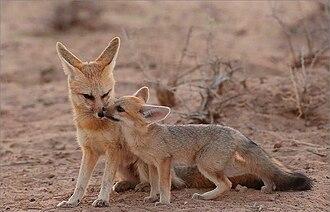
Have you heard of the Double-Wattled Cassowary? It is considered to be the most dangerous bird alive. The Cassowary lives in forests of Queensland, Australia, the lower land of New Guinea, as well as the Islands of Seram and Aru. [Read More]

The Laughing Kookaburra Has the Loudest Call in Australia — by Marco Flores, age 11

The laughing kookaburra is located in different parts of Australia and has one of the most unique sounds in the world. [Read More]

Orcas Combine Intelligence and Strength in the Wild — by Yemariam Bekele, age 9

One of the deadliest animals in the ocean is the orca. Orcas are called the wolves of the sea because they hunt in groups called pods, and these pods work together to corral fish and other prey into tight spaces before eating them. Their diet includes seals, sea lions, penguins, squid, sea turtles, sharks, and even other whales. Orcas can eat up to 500 pounds (about 225 kilograms) of food per day and can weigh about six tons. These creatures grow up to 23 to 32 feet long and can live up to 80 years. [Read More]

The Osprey Is Built for Hunting in Water — by Lucas Abiy, age 7

The osprey is an interesting bird with sharp eyes and narrow wings. It has an outer toe that can rotate and allows it to firmly grasp prey. This bird can carry prey almost as heavy as its body weight! The osprey also has a sharp hooked beak for tearing and ripping into other animals as well as long legs that make it easier to catch fish without going into the water. These physical features of the osprey are important because if its wings get too wet, it will have difficulty flying. [Read More]

Learn About the Fat Tailed Savannah Monitor — by Lucas Abiy, age 7

The savannah monitor is a long and stocky lizard that lives in Central and West Africa, encompassing areas of Senegal to parts of Ethiopia. These lizards can live up to 30 years! [Read More]

Yakutian Laika Dogs Make a Loyal Pet — by Ermiyas Abiy, age 9

Centuries ago, Yakutian Laika dogs were used for transportation during freezing weather in the region of Siberia, Russia. [Read More]

The Fastest Land Animal Faces Extinction Risk — by Ermiyas Abiy, age 9

heetahs are the fastest land animals in the world, however they cannot outrun their high risk of extinction due to human activity. Reporters in Eastern Africa have gathered information about the cheetah black market from interviewing people who have allegedly sold them. They say cheetahs are sold as pets, poached for their skin, and illegally traded. Eastern Africa is where most of the illegal trade occurs. Due to this, most of the cheetah population has declined. [Read More]

Cottonmouth Snakes Are Powerful Predator of Swamplands — by Sessina Zerezghi, age 7

The cottonmouth snake is a dangerous reptile. It has fast reflexes, strong jaws, and poisonous venom. The bulky coils of its body are full of strong muscles. [Read More]

Memes are Changing How the World Communicates — by Aarosh Subedi, age 11

You may think you are sending a joke when you share a meme with a friend. Although below the surface, memes are rapidly changing how the world communicates. [Read More]

Kangaroos The Powerful Hoppers of Australia — by Reety Subedi, age 7

Kangaroos are the tallest marsupials on the planet. When they stand up, they can measure over two meters tall, and large males can weigh around 90 kilograms. Kangaroos have two small front legs and two powerful back legs. Additionally, they have a very strong tail, which helps them balance when jumping and supports them during fights. [Read More]

How Raccoons Thrive in Cityscapes and Wilderness — by Siwoo Park, age 12

Raccoons, also known as trash pandas, are adaptable mammals that live in both rural and urban areas. These furry bandits will do anything to survive harsh environments. [Read More]

Learn About Wisconsin's Only Endangered Mammal — by Siwoo Park, age 12

Pine martens are recovering in Wisconsin after nearing extinction because of over-trapping and habitat loss. These furry, agile weasels are seeing a population upturn as environmental officials take steps to secure the pine forests they call home. [Read More]

El poderoso rugido y la mente inteligente de los leones — por Semeia Zerezghi, 9 años de edad

Panthera leo o leones son los reyes y reinas de las bestias y son conocidos por ser criaturas reales aterradoras. Sin embargo, lo que la mayoría de la gente no sabe es que los leones también son increíblemente inteligentes. [Read More]

Aprende cómo se forman los fósiles de dinosaurios — por Bruno Torres, 8 años de edad

Al visitar museos de dinosaurios, normalmente uno encuentra grandes reconstrucciones de dinosaurios con lo que parecen ser sus huesos. En realidad, estas estructuras no son huesos y se llaman fósiles. Los fósiles son elementos o restos que quedan después de la muerte de animales y plantas; por lo general, se remontan a al menos 10,000 años. [Read More]

Learn About Koala Parenting and The Early Lives of Joeys — by Ermiyas Abiy, age 8

Picture a jelly bean; now, picture a koala in the shape of a jelly bean. That’s how big koalas are when they are born. Koalas are a type of marsupial, which are animals that are born in a pouch. When a baby koala is born, it is called a joey. The joey is very petite, weighing one gram and only spanning two centimeters in length. The koala is hairless, blind, and has no ears, but it will eventually grow ears once it grows older. [Read More]

The 'Super Croc' That Could Have Hunted Dinosaurs — by Riya Adhikari, age 12

The Sarcosuchus Imperator, otherwise known as the “Super Croc,” was an ancient species of crocodile. It lived around 113 million years ago. [Read More]

Learn About the Armored Giant of the Dinosaur World — by Ermiyas Abiy, age 8

The Ankylosaurus was an armored dinosaur species that became extinct long ago. It was the heaviest armored dinosaur in the world. Surprisingly, there were spikes in their skin, too! With its solid and durable plates, this herbivorous dinosaur was very hard to attack and quickly defended itself. Their plates served as protection against carnivores, and male Ankylosaurs also used them in self-defense against other males to win over their mates. [Read More]

Ancient Human Footprints Found in White Sands National Park Raise Questions — by Dani Garduno Martinez, age 11

Many people usually imagine mammoths, dinosaurs, and ancient beasts when considering fossils. However, a large majority of people miss an important category: human fossils. A recent discovery was made in White Sands National Park in New Mexico. [Read More]

Hop into the World of Kangaroos — by Reety Subedi, age 7

Kangaroos are the tallest marsupials on the planet. When they stand up, they can measure over two meters tall and they weigh around 90 kilograms. Kangaroos have two small front legs and two powerful back legs. Additionally, they also have a very strong tail, which helps them balance when jumping. [Read More]

NASA Launching Unmanned Craft to Explore Metal Asteroid — by Theodore Morrison, age 16

An object traveling just above half the speed of sound. Sounds intimidating? Not for NASA, intend to launch an unmanned spacecraft into space to investigate an object which is made up of an unknown metal. NASA hopes to gain new insight from the asteroid in regards to Earth and its history. [Read More]

LED-Embedded Bandages: A Bright Future for Wound Care — by Amelia Pearson, age 13

There is a big difference between normal bandages and future LED-embedded bandages. Modern bandages are currently being developed at the University Of Southampton in England. These bandages can stop microbes from reproducing and can also kill the microbes. [Read More]

Learn all About Sea Otters, Nature's Aquatic Acrobats — by Joseph Zheng, age 9

Sea otters live in the water, specifically on the coast of the Northern and Eastern Pacific Ocean up until they reach three months of age. [Read More]

The Destructive Nature and Ecological Benefits of Wildfires — by Aubrey Bevenue, age 12

Wildfires have very destructive powers. Powerlines, campfires, lightning strikes, and other sources can start wildfires. Grasslands and forests are the main areas where fires can occur. [Read More]

The Greenland Shark's 400-Year Lifespan and Mysterious Existence — by Bruno Torres, age 7

Did you know that Greenland sharks can live for 400 years? That is more than the longest-living land animals. Along with their long lifespan, they are also known to be the biggest fish in the Arctic Ocean. The Greenland shark can live 7,200 feet underwater, where the temperature is between 28 to 44 degrees Fahrenheit. [Read More]

Discovering the World of Rays: From Manta Rays to Electric Rays — by Jeronimo Rosero, age 9

Rays are interesting creatures that have been around for 150 million years. They are calm animals but when you disturb them, they can attack using their venomous spines or barbs on their tails. There are various types of rays including stingrays, manta rays, butterfly rays, and electric rays. [Read More]

Lumpectomy Advances Breast Cancer Treatment — by Dulce Maria Vazquez, age 14

A new study has found that many women with breast cancer can get rid of the tumors without having their breasts removed. This can be achieved through a lumpectomy, the surgical removal of multiple cancer lumps. This surgery usually lasts about 40 minutes with patients claiming that it is not a painful operation, Patients who dealt with many tumors have been studied using sensitive imaging techniques. [Read More]

New Research Leads to More Fentanyl Testing — by Camila Cruz, age 16

Fentanyl is the leading cause of death for Americans ages 18 to 44. However, due to outdated drug testing standards in emergency rooms, fentanyl overdoses are often missed or mistreated. [Read More]

Cómo se estudian las ondas sísmicas para observar el interior de la Tierra — por Alejandro Berrueta, 11 años de edad; traducido por Samuel Garduño Martínez

Los científicos siguen siendo más avanzados, tal como su conocimiento de la sismología sigue incrementando. Estos avances están ayudando a los ciudadanos de todo el mundo a tomar refugio antes de un desastre, sin importar si es natural o artificial.  [Read More]

The Closest Black Hole to Earth is just 1,500 light-years Away — by Emily Rodriguez Lima, age 13

There are plenty of black holes in outer space. Astronomers have found what they believe is currently the closest black hole to Earth. [Read More]

William Bebee Pushed Barriers in Scuba Diving — by Marie Pietz, age 11

Exploring the sea is something that most of us don’t think about, but it’s important to understand the dangers of it as well as seeing how it can be successfully accomplished. [Read More]

Webb Space Telescope Sends New Images to Scientists on Planet Earth — by Lah’Nylah Bivens, age 15

The James Space Webb Telescope launched on December 25th, 2021. It is the newest and most powerful space telescope. It has been sending images and data to scientists on Earth since early summer 2022. [Read More]

Greenland’s Frozen Hinterlands are Melting Faster than Expected — by Theodore B. Morrison, age 15

Climate change has been impacting the planet for ages since humans started producing greenhouse gases. One impact climate change has had is the melting of the glaciers, which scientists have been trying to track for some time. One group has been following a particular ice stream to help keep track of the effects of climate change. [Read More]

Plants: Poultice or Poison? — by Juan Esteban Palma, age 10

It is important for humans to understand that some plants have medicinal properties and have been utilized for centuries to heal wounds or maintain well-being. In ancient times, healing plants were grown in special gardens and used to heal injuries. Today, there are still many plants used for medicine or other needs. [Read More]

2.5-Yard Elephant Tusk Fossil Discovered in Israel — by Desteny Alvarez, age 17

Researchers in Israel recently found a 2.5-yard-long fossil that belonged to a long-extinct straight-tusked elephant. It is believed to be the largest fossil ever found at a prehistoric site in the country. [Read More]

Scientists Say Invasive Species of Crayfish Might Leave Wisconsin on its Own — by Lah’Nylah Bivens, age 15

The rusty crayfish appeared in Wisconsin 50 years ago. Since this crayfish is not native to Wisconsin it is considered an invasive species. The rusty crayfish pushed native crayfish out of their dens and ate the native aquatic plants, causing harm to the lakes. This harmed the local spawning grounds, leaving fish unprotected. Rusty crayfish may have found their way to Wisconsin by traveling in buckets to be used as bait. These crayfish are native to Illinois, Indiana, Kentucky, and the streams of the Ohio River Basin states. They also can be found in New Mexico, Northeastern states, areas in Ontario, Canada, and states surrounding Wisconsin. [Read More]

Study Reveals COVID-19 Pandemic Prematurely Aged Teen Brains — by Ayelen Flores Ruiz, age 13

New MRI brain scans show that teen brains have matured beyond the years of their physical age (as much as three to four years) after the Covid-19 pandemic. This shows the importance of this time for teens’ brain development. [Read More]

Learn More About Okapis — by Aarosh Subedi, age 10

Okapis are mammals that originate and live in the Ituri Rainforest of the Democratic Republic of Congo in Africa. Scientists say this animal looks like a cross between a deer and a zebra. However, its nickname is the “forest giraffe" and it is a relative of the giraffe. The Latin name of an okapi is Okapia Johnstoni. [Read More]

What's So Special About Earth? — by Ian Kosharek, age 10

Earth is a planet consisting of many essential layers and interesting features. These unique aspects of Earth make it a foundation for life and allow for the survival of species on the planet. [Read More]

Local Observatory Renamed For STEM Pioneer Jocelyn Bell Burnell — by Mariah Justice, age 17

“Astronomy compels the soul to look upward, and leads us from this world to another,” said Greek philosopher Plato. With the renaming event on September 7 for the Bell Burnell Observatory— previously the Oscar Mayer Observatory—Madison has a new facility for cultivating the exploration of astronomy. [Read More]

Who Created These Mysterious Pillars in Ireland? — by Jonah Smith, age 14

Strange pillars reside in County Antrim, Ireland. They have an unusual shape that appears to be man made. These tightly wedged pillars descend in tiers, in a staircase all the way down to the sea. These columns are mostly hexagonal, though the number of sides these structures have may vary. Although their shape implies that they are manufactured, the complete opposite is true. [Read More]

The Mammal that Helped Take Over the Globe — by Ayelen Flores Ruiz, age 12

Researchers have discovered a prehistoric mammal with a two to five years life cycle that they call the Manbearpig. The mammal’s short lifespan is likely due to their months-long pregnancy, a trait scientists believe helped mammals dominate the world after the extinction of the dinosaurs. [Read More]

The Only Canids Known to Fish — by Ayelen Flores Ruiz, age 12

For the first time, researchers observed a fox fishing for food. After seeing the red fox, they joined the group of land mammals that also hunt for fish. [Read More]

Should We Add Insects to Our Diet? — by Emily Rodriguez Lima, age 14

When we think about consuming bugs, most of us would immediately respond by saying, “ew!” Although bugs may look nasty or creepy, they are a good source of protein. If insects are raised and prepared correctly, the protein they carry can be beneficial for our bodies. Raising them requires less water, less land, and overall less resources than other animals. [Read More]

Would You Want to Live on Neptune? — by Dilma Attidekou, age 8

Neptune, the smallest out of all outer planets, is known for its blue color. Methane is the reason for its color. Neptune has less then four percent of methane within its atmosphere.[Read More]

Native Asian Moth Spotted in Washington State — by Justin Medina Ruiz, age 13

On July 7, 2022, a giant moth with a ten-inch wingspread was discovered in a garage of a home in the state of Washington. Thankfully, the moth species does not pose a public health threat. The Atlas moth originates from the tropical forests of Asia and has not been seen before in the U.S. [Read More]

Scientists Watch as Jupiter Comes Close to Planet Earth — by Allison Torres, age 14

Earlier this year, people were able to get a glimpse of Jupiter's rings and moons with only a telescope or binoculars. Jupiter is the largest planet in our solar system and in September it passed closer to Earth than it has in 59 years. [Read More]

How Submarines Sparked Arctic Exploration — by Daniel Li, age 14

Built-in 1952, the USS Nautilus was the first submarine ever powered by a nuclear reactor and, coincidentally, also the first to ever reach the North Pole by traveling under ice. William Anderson, the commander of the Nautilus, wrote in his logbook, “Embarked following personage at North Pole: Santa Claus, affiliation: Christmas.” Spending multiple days underwater had not seemed to affect the commander’s sense of humor. [Read More]

First Plant Successfully Sprouts in Lunar Soil — by Daniel Li, age 15

The first seeds to ever sprout in lunar soil poked their heads above moon dirt at the University of Florida in May. Decades of research and experimentation led to this breakthrough which marks the first time terrestrial plants have grown in extra-terrestial soil. It also offers hope that astronauts will one day be able to grow food on the moon. [Read More]

New Fossil Discovery Sheds Light on a Mesozoic Era Species — by Chelsea Zheng, age 9<br>

The Ichthyosaur is well known by the name “sea dragon.” In February 2021, a 32 foot long Ichthyosaur fossil from 180 million years ago was found in England—the largest and most complete skeleton of its kind. [Read More]

Will the Tasmanian Tiger Roam the Earth Once More? — by Sandy Flores-Ruíz, age 16

For the past years —scientists have thought about reviving extinct species. Scientists in Australia and the U.S. have recently started a multi-million dollar project to bring back the Tasmanian tiger from extinction. [Read More]

New Super Computer Ranked Most Powerful in World — by Julian Medina Ruiz, age 14

Recently, a new supercomputer named Frontier passed a major milestone. This computer can perform one quintillion (1,000,000,000,000,000,000) calculations per second. Frontier’s storage system is able to hold 33 times more data than currently housed in the entire Library of Congress. This new computer was introduced on May 30, 2022 by the TOP500, a list that ranks the 500 most powerful computers in the world. [Read More]

Asteroid to Approach Earth in 2029 — by Lah’Nylah Bivens, age 15

In the year 2029 there will be an asteroid named 99942 Apophis that will approach Earth for the first time. However, after years of calculation and observation scientists have stated that it will not make an impact on the planet. [Read More]

From Water to Land Back to Water Again: the Evolution of the Qikitania — by Giovanni Tecuatl Lopez, age 17

There are many speculations regarding evolution and how it took place. Many think of evolution as a linear timeline; but this is not always the case and such can be seen in creatures like the Qikitania and Tiktaalik. [Read More]

Primera planta brota con éxito en suelo lunar — por Daniel Li, 15 años

Las primeras semillas que brotaron en suelo lunar asomaron sus cabezas por encima de la tierra lunar en la Universidad de Florida en mayo. Décadas de investigación y experimentación condujeron a este avance que marca la primera vez que las plantas terrestres crecen en suelo extraterrestre. También ofrece la esperanza de que algún día los astronautas puedan cultivar alimentos en la luna. [Read More]

We Bet You Don't Know About this Hyena! — by Dayanara Flores Gonzalez, age 14

You might think there is only one type of hyena, but no, there's more! There are two different types of hyenas: brown hyenas and Aardwolf hyenas. These hyenas look like dogs, but they are cat-like carnivores. A carnivore is an animal that only eats meat. Brown hyenas can easily digest skin and bones with their sharp teeth. They scavenge for lions that have previously been killed by other carnivores or hunt for their own prey. [Read More]

How Dinosaur Eggs Reveal Differences in Species — by Camila Cruz, age 15

Modern birds have many similarities to dinosaurs, from their feathers and feet to hollow bones and laying eggs. Recently, paleontologists found another feature dinosaurs shared that is their unique way of hatching, called tucking. [Read More]

Orcas Learn to Hunt in Family Groups — by Tierra Flowers, age 13

On March 21, 2019, researchers in Western Australia were studying orcas, a species also known as killer whales. Suddenly, the scientists witnessed a phenomenon that no one had previously seen. They observed orcas killing the world’s largest animal, a blue whale. [Read More]

Japanese Scientists Discover that Saturn's Rings Will Dissipate — by Avaiana House, age 14

Saturn is the sixth planet from the Sun and the second-largest in the Solar System. It is known for the colorful rings surrounding it, made up of rock and icy materials. These rings consists of colors such as pink, red, brown or gray. [Read More]

From the Big Bang to Humankind: How Life Emerged — by Julian Medina Ruiz, age 14

About 12 billion years ago, a big explosion, presently known as the “Big Bang,” created the universe. [Read More]

A Star is Born: The Life Cycle of Stars — by Valeria Moreno Lopez, age 16

Every single birth of a star in the sky begins in an immense cloud of gas, dust, and debris. These colorful clouds are called nebulae, cosmic wonders that swirl around space undisturbed for millions of years. [Read More]

Smaller than a T-Rex, the Gorgosaurus was Faster and Hunted in Packs — by Emily Rodriguez Lima, age 13

There was a dinosaur named Gorgosaurus that was discovered a few years ago. The Gorgosaurus is a relative of the T-Rex, but were smaller, with a stronger bite and faster speed. [Read More]

What Will Happen to Earth When the Sun Dies? — by Juan Esteban Palma Zuluaga, age 10

Our sun, like other stars, will die. Stars only shine as long as they have a source of energy, and eventually that gives out. [Read More]

The Science Behind Spring's Most Popular Weed — by Malak Al Quraishi, age 12

When you're picking weeds, you may wonder how dandelions spread so easily across the grass. You might ask yourself, why are dandelions so effective at spreading their seeds widely? [Read More]

Pluto Is Not a Planet – It’s a Dwarf Planet — by Hiba Al-Quraishi, age 14

Pluto is referred to as a “dwarf planet” due to its diminutive size. Pluto is only half the size of North America which is why it’s categorized as a dwarf planet. [Read More]

As Electric Car Sales Increase, Ford and GM Struggle to Catch Tesla — by Giovanni Tecuatl Lopez, age 17

Have you ever wondered if Tesla has competitors in the electric car market? Both Ford and General Motors (GM) have Tesla as target number one; these companies, already in the electric car market, plan to close the gap between them and Tesla. [Read More]

The Canola Flower: Beautiful and Delicious! — by Sol Saray, age 10

Canola is a flower that blooms in late winter to early spring representing Jeju Island in South Korea. It is a type of rapeseed and is part of the mustard family. There is even a festival named after the canola flower. [Read More]

How an Ancient Civilization Thrived and then Collapsed — by Emily Rodriguez, age 13

A mysterious ancient civilization on the island of Malta collapsed within two generations, despite surviving for more than a millennium. [Read More]