The Science and Shapes of Clouds
by Semaia Zerzghi, age 10
What are clouds to you? Most people would maybe say, “clouds are puffs of white floating around in the sky, and sometimes, rain or snow falls from them.” Well, that's the short version, but there’s much more to clouds than meets the eye.
A cloud is a mass of water drops or ice crystals suspended in the atmosphere. They form when water vapor condenses in the sky. This process is called “condensation,” which allows us to see the water vapor. Sometimes the water evaporates from the ground and rises up to condense into clouds. The word “evaporate” means to change from a liquid to a gas at a temperature below the boiling point.
Clouds are separated into two major factors: location and shape. High clouds form several kilometers up in the sky. Middle clouds form between high and low clouds. Low clouds form within about a kilometer of Earth's surface.
One type of cloud is a cirrus cloud. These clouds curve with the wind and are often thin and wispy, which means light and delicate. These clouds are high-level clouds. They can produce hairlike filaments of ice crystals called fall streaks.
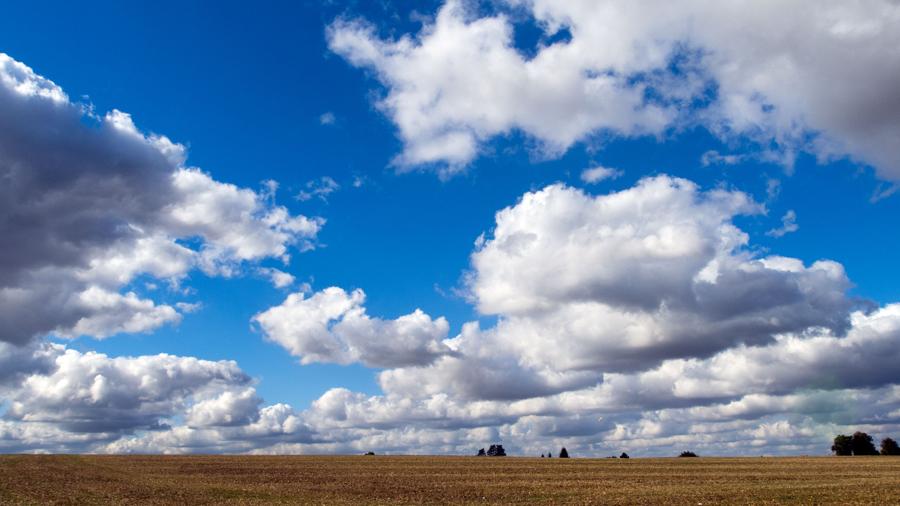
Cumulus clouds are big and fluffy. They look similar to giant cotton balls in the sky. They are low to middle-level clouds and can form in parallel strips. Some cumulus clouds can grow larger and develop into storm clouds, which produce heavy precipitation.
Stratus clouds are a type of cloud that forms sheets that cover the sky. They're flat and gray. Stratus clouds are low-level clouds. These clouds form so close to the ground that they are called “high fog,” and they produce light drizzle or snow.
Rain forms when the water droplets in clouds combine and grow larger. As these drops get heavier, gravity causes them to fall through the air faster, becoming rain.
Did you know that clouds are considered one of the most challenging aspects of climate science? Clouds can be really interesting and have many unique characteristics that are analyzed and studied by scientists on a daily basis. Understanding their formation allows us to get a better idea of our climate and helps us predict future weather.
[Source: NASA]











Loading Comments...