Scientists Discover the Largest Snake Lurking in the Amazon Rainforest
by Elim Eyobed, age 13
The northern green anaconda is a species that has been recently discovered in the Amazon rainforest. The anaconda is also known as the giant anaconda, emerald anaconda, common water boa, or southern green anaconda.
Many people thought there was only one kind of green anaconda, however, the scientific journal “Diversity” recently wrote that the “northern green anaconda” is a new species. The anaconda, as well as other big snakes, are considered “indicator species'' because they mostly signal the health of a whole ecosystem.
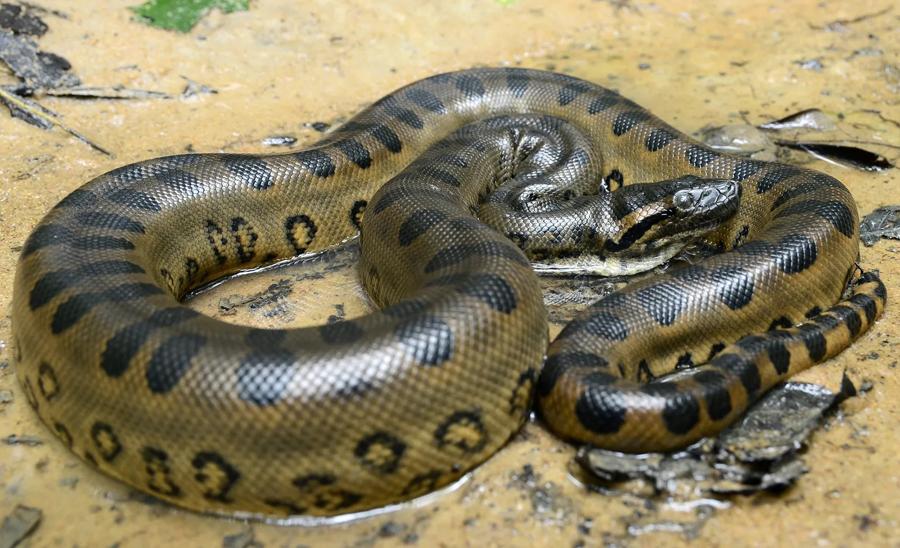
The green anaconda can reach up to 30 feet in length and weigh up to 550 pounds. Female anacondas are much larger than their male counterparts. Anacondas are usually dark green or brown on the outside, with darker spots going down their backs. The average lifespan of these snakes in the wild is about 10 years, but they can live twice as long in captivity.
This species’ color and pattern contribute to their camouflage that helps them blend in with the background of their habitat. Specifically, they are olive-green with dark and yellow spots along their spines and sides. They also have two dark stripes from their eyes to their jaws and scales along their belly that are yellow and black. Their deep colors allow them to easily camouflage in wet, dense and vegetative ecosystems. These anacondas thrive in aquatic areas and have to seek water during dry seasons.
This formerly unknown species was split from its closest relatives 10 million years ago. These anacondas are very similar to those located further south, but are a new discovery. Green anacondas are mostly found in Colombia, Venezuela, Brazil and other tropical areas. With their remarkable size and colors, green anacondas showcase the extraordinary diversity and adaptability of wildlife in their habitats.
[Sources: Reuters News Service; USA Today]











Loading Comments...