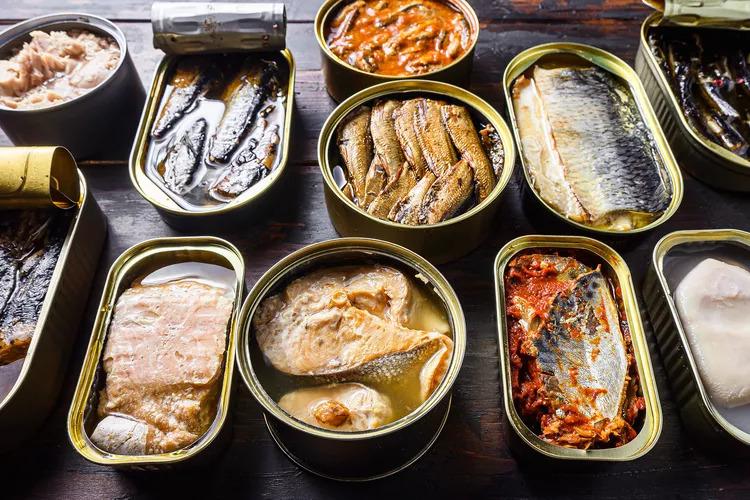
Expired Canned Fish Led to a Breakthrough in Marine Parasite Research
by Theodore Morrison, age 16
Who would have guessed that expired canned fish could be valuable? For an ecologist and a graduate student, it was expired fish that held the key to the construction of a timeline of parasites in marine environments. Chelsea Wood and Natalie Mastick, the parasite ecologist and graduate student respectively, engineered an ingenious idea to study parasitic threats to marine life.
The cycle of life each organism experiences can vary widely from species to species, and marine life is no different. The number of parasites can help determine the number of salmons’ predators in an area because of the strong tie between these parasites and the level of predators, as the parasites are transferred when these predators, like seals, killer whales, and belugas, consume these salmon. One might wonder why this tie exists: it is because this parasite cannot breed nor enter such an environment without marine mammals. As a result, the data might be used for further scientific study.
For the study, the canned salmon was picked through and pockets of worms were extracted. These worms, called Anisakids, delve and dig into the salmon’s muscle creating a pocket in the salmon. These worms are extremely common in seafood though they are killed in the cooking process, so no worries there unless it is undercooked or someone is allergic. Infection in salmon has increased in correlation with the 1972 Marine Mammal Protection Act, which increased populations, so one could conclude marine parasites would follow. This demonstrates a positive result of the study of salmon over time and how marine life is expanding.
All of this research was made possible by a generous donation from a local corporation. 178 cans of salmon were donated by the Seafood Products Association after they heard of the need, allowing for the experiment to be conducted. The cans ranged from 22 cans per species to 62, collecting a total of 372 worms. The cans also were processed over a wide range of time, from 1979 to 2019, meaning the data could have been as fresh as five years ago, but possibly as old as 45 years.
This research will help scientists better understand the diseases and population of salmon and their predators. Such discoveries open the door for further research on related topics and can help us deepen our understanding of this aquatic animal in a new way. For marine biologists everywhere, this research should mark an interesting and strong step forward in understanding our deep and mysterious ocean.
[Source: Scientific American]











Loading Comments...