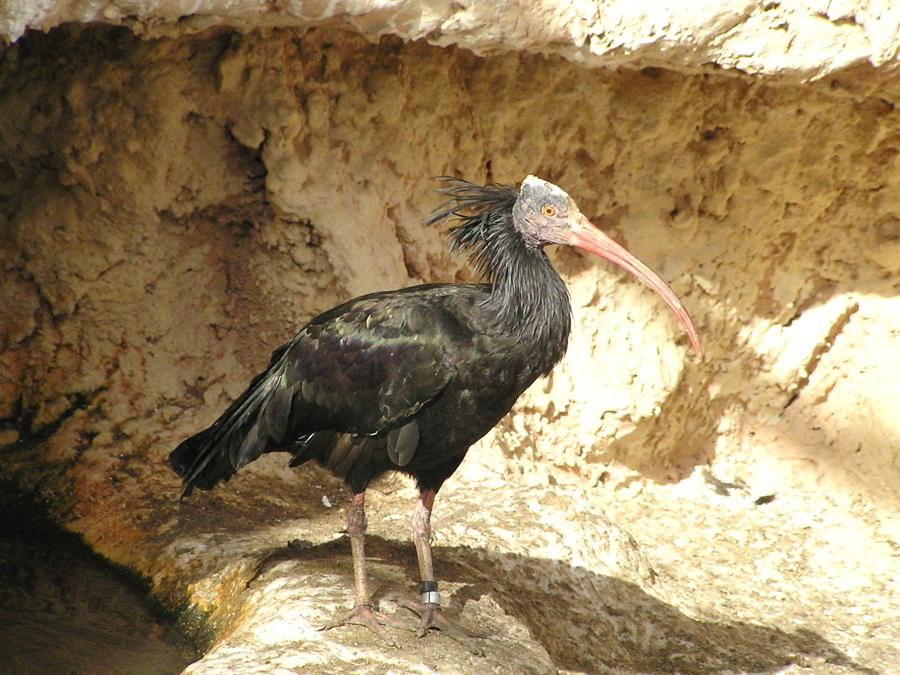
Saving the Northern Bald Ibis Through Guided Migration
by Kevin Chen, age 16
Migration is crucial for birds like the northern bald ibis. Almost completely wiped out in the 17th century, the birds have been saved from extinction through breeding programs and human support over the last two decades.
Although northern bald ibises no longer face the crisis of extinction, they still lack the instincts of migration routes, which in the past were learned from older generations. They now need more external support systems to survive.
To resolve this issue, a conservation team led by Johannes Fritz, a biologist, and the Waldrapp Team based in Austria developed a unique idea. They started relocating northern bald ibises from risky areas to safer locations. However, the result was that the birds were unfamiliar with the intended routes for migration.
Fritz and his team took on the role of foster parents, guiding the ibises toward their destination by flying microlight aircraft and using a bullhorn to shout encouragement, ensuring the birds stayed close. “We feed them, we clean them, we clean their nests. We take good care of them and see that they are healthy birds. But also we interact with them.” says Barbara Steininger, a Waldrapp team foster mother.
The first bird completed its migration to Bavaria in 2011. The team is hoping that by 2028, the population will reach more than 350 birds and become fully independent.
However, another issue threatens the northern bald ibis. Climate change has made migration more difficult, delaying the bird’s travel, so they now face colder and more dangerous conditions across the Alps. They no longer have access to warm air currents, known as thermals, which previously assisted them in flying without burning as much energy.
To counter this, the Waldrapp team has planned a new migration route from Bavaria to Andalusia in southern Spain, extending around 1,740 miles – 186 miles longer than the previous routes. This route might extend the migration time into early October, but Steininger remains hopeful. The Waldrap team’s work shows how dedicated efforts can help protect endangered species like the northern bald ibis. Their commitment to creating safer migration routes gives hope for the future of wildlife conservation even in the face of climate challenges.
[Source: The Wisconsin State Journal]











Loading Comments...