Learn About Cicadas, Nature’s Loudest Insects
by Mahalia Pearson, age 13
There are more than 3,000 different species of cicadas. These cicadas can be found in many different parts of the world. Cicadas normally fall into two groups: annual and periodical cicadas. The annual cicadas are found in many different places whereas the periodical cicadas are found mostly in the central and eastern regions of the United States.
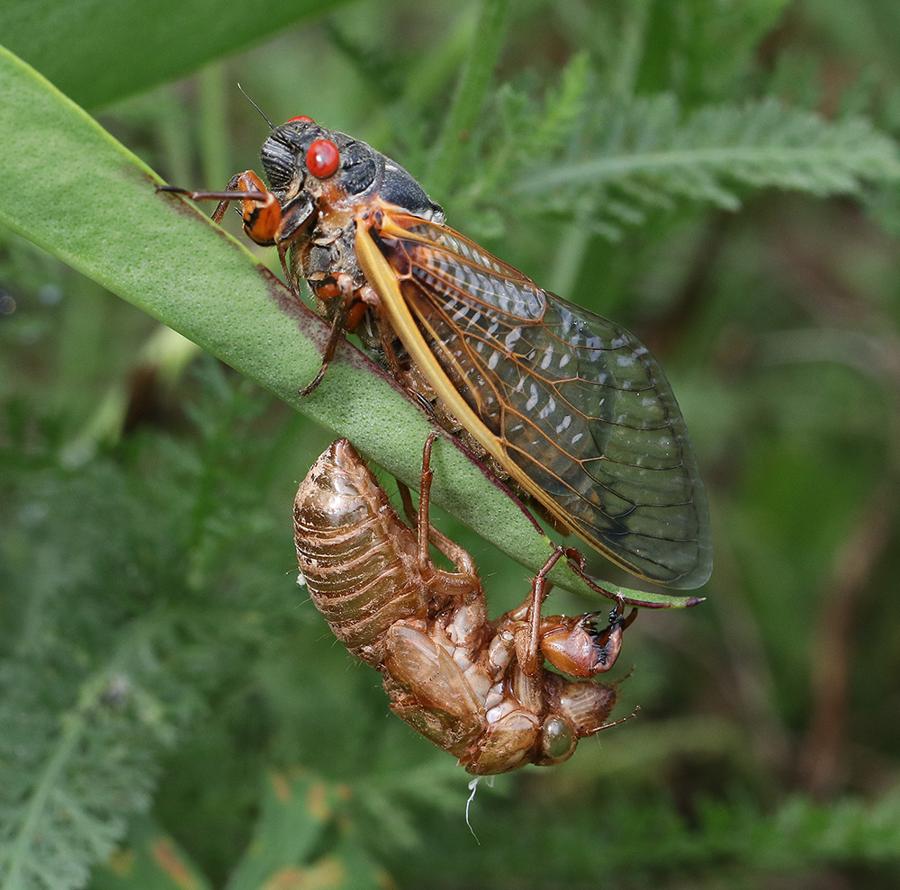
Cicadas have an interesting look. The periodical cicada grows between one to one and a half inches long. The wingspan of a cicada is twice its length. Its membranous wings are decorated with orange veins. Not only that, they have black bodies with large red-brown eyes.
Cicadas are loud insects that have a distinct buzzing sound. The noises that a person hears are coming from the male cicada trying to court the female cicadas. The cicada has a simple life cycle that consists of three stages. First, they start off as eggs, then nymphs, and lastly adults. The female lays around 400 eggs on twigs and branches. Once the female cicada lays the eggs, after six to ten weeks they will start to hatch into nymphs. After the nymphs hatch from the egg they will find a place to burrow themselves in the ground and feast off of liquid contained in plants and roots.
The periodical broods emerge at the same time depending on the year and soil temperature. Not only do they wait for the right temperature to emerge from the ground, but also to breed. The cicadas normally breed when the ground thaws to 65 degrees Fahrenheit in a designated area for the brood. Some species emerge every seven years, others emerge 11 or 13 years or more.
Cicadas can provide multiple benefits. For example, they are a good food source for birds and many other animals. They also improve water filtration in the ground, aerate lawns, and they add nutrients to the soil as they decompose. Periodical cicadas do not create destructive plagues like some locusts. They cause minimal damage as they drink the sap and liquid from trees and shrubs. Sometimes they will crowd in a single acre. However, they can damage small trees from the large swarms because they lay their eggs and are feeding off them.
Managing cicadas is quite simple because they do not stay above land for long periods of time. If a person were to see cicadas in their lawn, there would be no need to spray pesticide. Cicadas do not bite, sting, and are not poisonous. Spraying unnecessary pesticides can harm pets and people.
Trees that are only a couple months old can be harmed by cicadas, but there are simple steps a person can take to protect them. One step is to make a covering for the tree with mesh or netting containing holes no bigger than a quarter inch. This can prevent damages that cicadas make to the young tree when they lay their eggs. There is no need to take extra precautions on leaves, fruits, flowers, or garden produce. Pets can also consume cicadas, but if consumed in large amounts it may cause a temporary stomach ache or vomiting. If consumed in small amounts there is no need to worry.
Cicadas have been a fascination since ancient times. Multiple cultures see cicadas as powerful symbols of rebirth because of their unusual life cycle. With their unique life cycles and mesmerizing sounds, cicadas play an important role in their ecosystems and remind us of the intricacies of the natural world.
[Sources: National Geographic; EPA]











Loading Comments...