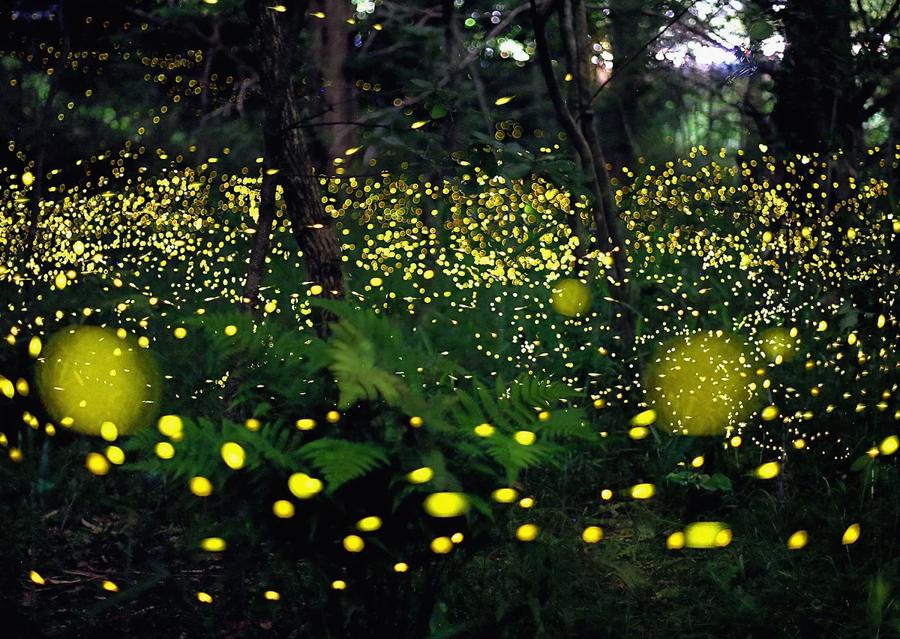
The Science Behind Fireflies and Their Glow
by Dellany Onyango, age 9
Fireflies are small insects that belong to the beetle family, Lampyridae. They are famous for their ability to produce light from specialized organs located in their hind segment. This bioluminescence is the result of a chemical reaction in their bodies, where energy is released in the form of light.
In North America, some species of female fireflies attract males by using false light patterns, a behavior unique to certain species. In parts of Asia, fireflies gather on trees and emit synchronized light patterns, creating a stunning visual effect where the trees seem to glow in unison.
Light patterns are crucial for communication among fireflies, as they use flashing signals to find mates. Fireflies have an oval, flat, and slim body shape, with light-producing organs located in their abdomen, specifically in the pygidium, the hindmost part of their body. These insects are typically brown or black, with yellow or orange markings.
The term "glow worm" is often used to refer to female fireflies that are unable to fly, or to firefly larvae. The larvae are carnivorous and prey on slugs and snails, using bioluminescence to attract and capture their food. Adult fireflies, however, feed primarily on nectar from flowers and do not consume meat.
Fireflies are extraordinary creatures with many fascinating traits. Their glowing bodies are easily recognized, especially during warm summer nights.
[Source: The Big Bug Book]











Loading Comments...