|
Discovery of Previously Unknown Life Form Stuns Scientists
by Annie Shao, age 17
 Of the 118 known elements, six are essential for life: carbon, hydrogen, nitrogen, oxygen, phosphorus and sulfur— or so scientists thought.
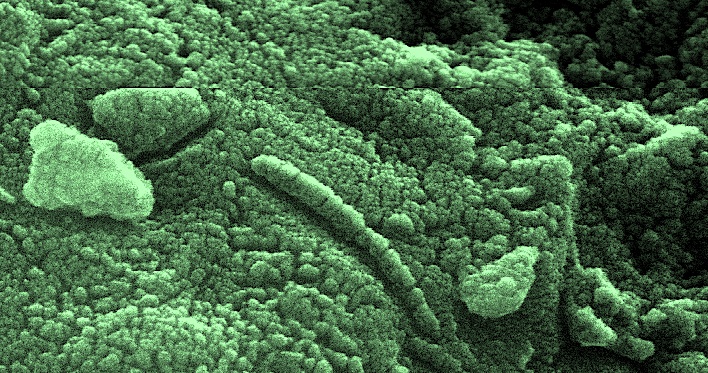
Recently, a NASA-funded research group discovered a new bacteria species called GFAJ-1 in Mono Lake, California. GFAJ-1 is the first organism known to survive without the presence of phosphorus. While other life forms on Earth use phosphorus to produce energy, this bacteria is able to continue growing after phosphorus is replaced with arsenic.
A report on this bacteria was released in the online edition of the journal Science. Although the species was found on Earth, the finding fueled Internet speculation about extra-terrestrial life forms. In an effort to clarify his findings professor Paul C.W. Davies of Arizona State University who co-authored the report says, “[the microbe] can grow with either phosphorus or arsenic. That makes it very peculiar, though it falls short of being some form of truly ‘alien’ life.”
Although the discovery of arsenic-based microbes does not directly indicate the presence of extra-terrestrial life, it does widen the range of elements known to participate in biochemical processes. Scientists can now broaden their search to planets that do not necessarily have the six basic elements. They now know it is possible for life to exist without at least one of these elements.
The discovery of arsenic-consuming bacteria is forcing scientists to reconsider what they long believed were the requirements for life.
[Sources: Associated Press; Science]
|