|
Ancient Trees Yield Clues from the Past
by Alex Lee, age 13
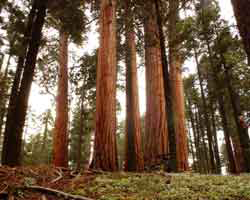 The rise and fall of cities, cultures and civilizations are often surrounded by mystery. History is like a giant puzzle, with gaps we don’t completely understand.
For example, scientists can often “read” tree rings and deduce the environmental circumstances surrounding the fall of some civilizations.
A group of researchers, led by Brendan Buckley from the Lamont-Doherty Earth Observatory of Columbia University, read tree rings to put together a highly detailed report of dry and wet seasons in Southeast Asia. Their research was funded by the National Science Foundation’s Paleoclimate Program.
Angkor was the capitol city of a large and powerful empire located in Southeast Asia between the ninth and 13th centuries. It was a city that relied heavily on water. During the mid-to late 1300’s, Angkor experienced extremely dry conditions for several decades, followed by intense rain for several years. Scientists believe that this may have caused damage to the city. A short but harsher drought in the 14th century has been cited as a possible factor contributing to the city’s final decline.
Buckley and his fellow researchers came to this conclusion by studying data from tree rings. Cypress tree (Fokienia hodinsii) rings can reveal information from time periods hundreds or even thousands of years ago.
Unfortunately, these trees are becoming increasingly rare because of an illicit timber trade. Trees are being chopped down at a very fast rate, which makes learning about Asia’s past civilizations more difficult. Without these trees, researchers may be unable to fill some of the holes in world history.
[Source: National Science Foundation]
|