|
|
Should Corn Be Used to make Fuel?
Debate Rages About the Future of Ethanol
by Aarushi Agni,
Assistant Editor
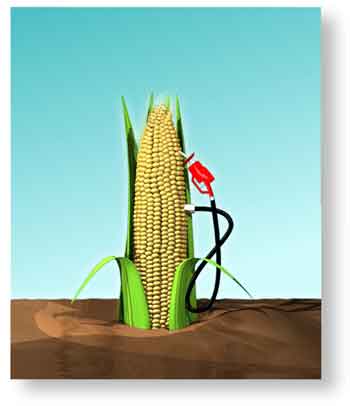 The debate about ethanol biofuel is getting particularly stormy in Wisconsin.
Wisconsin has long been an industry leader in producing ethanol as a fuel additive through the process of distilling corn into alcohol. While subsidies, tariffs on imported ethanol, and ethanol tax credits have supported the ethanol industry, this financial incentive and profit cushion is increasingly threatened by impending expiration of ethanol tax credits. These credits are set to end this year. The 2008 Farm Bill also reduced ethanol tax credits, by about 6 cents per gallon.
Some say these financial setbacks could not come at a worse time for the burgeoning biofuel industry. The uncertain fate of ethanol and similar biofuels renews doubts about its place in domestic fuel production.
Proponents of ethanol say developing biofuels will ultimately decrease our dependence on foreign oil. Many environmentalists avidly disagree. They say that ethanol is no better for the environment than regular fuel. They note big questions on both sides of the debate about whether ethanol is actually cheaper to produce than regular gas, and whether it requires more energy input to create what it outputs.
Even though biofuel developers acknowledge doubts regarding the efficiency of the production process, they argue that the industry as whole is moving toward more sustainable practices. They say this means ethanol and other biofuels will continue to play an important role within ongoing energy policy reforms.
[Sources: The Capital Times; Discover]
|
|