The Painted Dogs Fighting for Survival
by Andrew Huang, age 12
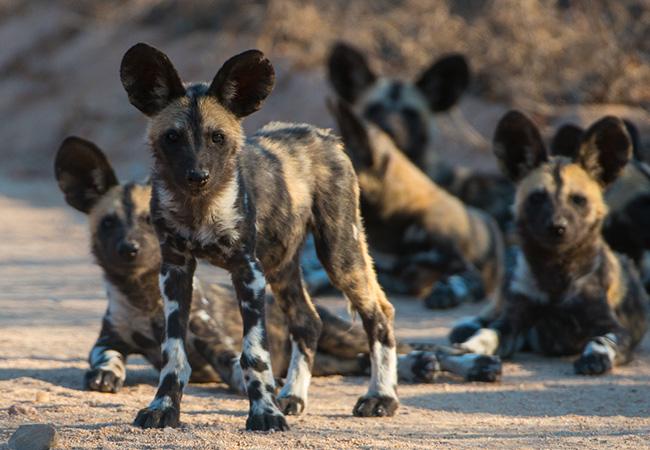
African wild dogs, also known as painted dogs, are critically endangered. Around 6,600 painted dogs remain according to the International Union for Conservation of Nature Red List, which provides scientific data on various species, habitats, and threats to both.
A key threat to painted dogs are humans, who both intentionally and accidentally kill them. Humans target painted dogs when they attack livestock. Humans also cause habitat loss as we expand our land use. This leads to decreased availability of food sources for painted dogs. Furthermore, African wild dogs require a vast amount of land. For example, the Greater London area with 8.8 million people could only sustain one or two painted dog packs.
In contrast, many things are being done to save these unique animals. The World Wildlife Fund (WWF) is working to help these dogs. They help create and protect animal corridors, which are connected pathways between natural habitats that allow for wildlife to find food, mates, and new territories. The WWF also works to prevent conflicts between wildlife and humans, especially considering when painted dogs attack livestock.
The painted dog has many characteristics that aid in its survival. They are extremely fast, being able to reach speeds of up to 44 miles per hour to hunt prey. Their fur is speckled with stripes and patches of red, brown, black, white, and yellow, which helps them camouflage in their natural habitats, including deserts, forests, and grasslands.
They usually live in packs ranging from around six to over 20 dogs to hunt prey such as antelopes, gazelles, and sometimes larger, more ambitious prey like wildebeests. They are extremely social and communicate with touch, action, and sound. Right before these dogs hunt, they often playfully circle each other and encourage one another by barking and yipping, similar to a sports team before a match. Painted dogs are also one of the few mammal species that nurture and care for their old, sick, and disabled.
African Wild Dogs are a unique species that was once abundant, but became critically endangered due to human activity. They have since been downlisted to endangered. Even though humans are still the leading cause of death for painted dogs, they are slowly bringing back the African Wild Dog to its former glory.
[Source: National Geographic, WWF]











Loading Comments...