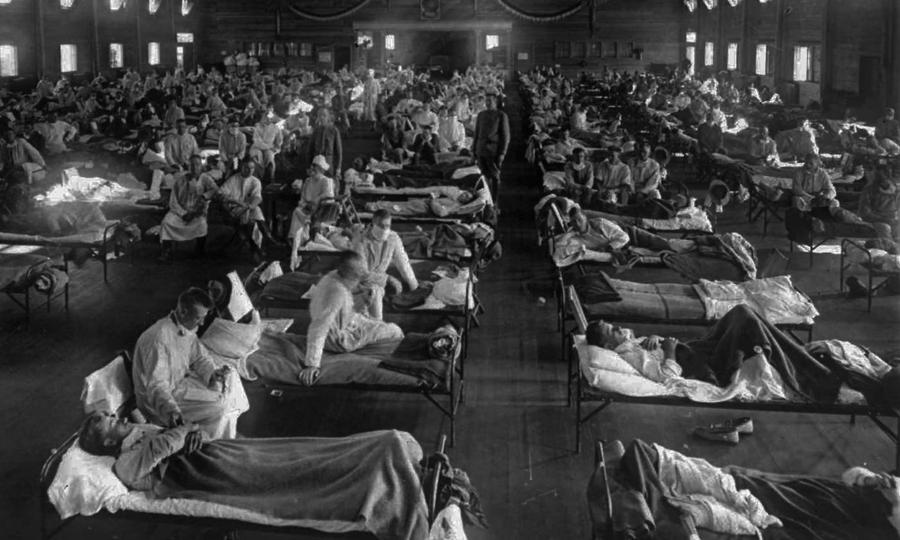
Lessons From the 1918 Spanish Influenza Pandemic
by Ruben Becerril, age 13
In the 20th century, there was a pandemic that infected a third of the world’s population: the Spanish influenza.
Spanish influenza was a pandemic caused by influenza A (H1N1). While the name may lead you to believe it originated in Spain, the exact origin is still debated, with cases first identified in the United States in early 1918. It was only called Spanish influenza because Spain, which was neutral during World War One and not subject to wartime press censorship, was one of the first countries to report openly about the pandemic. In contrast, other nations at war limited public discussion of the illness. This influenza A strain caused common flu-like symptoms, but also hemorrhaging, skin discoloration, and severe lung damage. The illness infected an estimated 500 million people worldwide and killed at least 50 million people, with deaths occurring on every continent.
Influenza spreads through the air from person to person, and the virus can last in a room for several hours. An infected person can “shed” the flu virus for up to a week. The pandemic quickly spread throughout the world, and with no antiviral medication, no influenza vaccine, and a shortage of doctors due to the war, the virus spread rapidly and killed easily. Unusually, most of the people who died were young adults. Some theories suggest that because young adults had not been exposed to a similar influenza strain, their immune systems were unable to defeat it. Another theory suggests that their immune systems overreacted to the virus, causing it to damage healthy tissue.
People attempted to stop the pandemic by staying at home, social distancing, and isolating the ill. Lessons learned from the 1918 pandemic shaped responses to later epidemics and pandemics. In the 1990s, scientists recovered samples of lung tissue from 1918 victims, and in 2005, researchers sequenced the full genome of the 1918 H1N1 virus. This research has improved the understanding of influenza, but it does not make a future flu pandemic impossible. Still, vaccines and antiviral medications developed since then provide much stronger defenses than people had in 1918. The flu pandemic of 1918 might have been less severe if people had been warned of the virus earlier, but wartime secrecy prevented early warnings.
The Spanish influenza was a pandemic that spread influenza A (H1N1) and was one of the deadliest pandemics in history. The experiences during this time helped shape science moving forward and guide practice in medicine and society for generations to come.
[Source: Cleveland Clinic]











Loading Comments...