Ancient Footprints Reveal How Humans Migrated out of Africa
by Dulce Vazquez, age 18
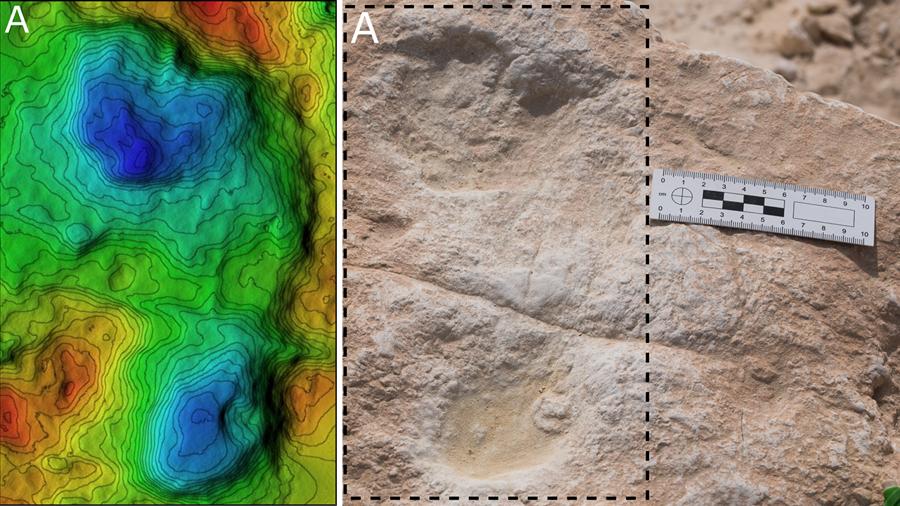
In 2017, human footprints were identified in a lakebed region of northern Saudi Arabia. Seven discrete footprints were spotted and identified as hominin.
Over 115,000 years ago, footprints were left behind by unknown individuals (humans) and prehistoric animals. Similar human footprints were found in other states. A special type of mud called ancient mud has helped observe non-hominin mammal tracks as it captures these footprints and preserves them for years to come.
In their research, scientists have identified a few factors that led to prehistoric human travel. No tool marks, knives, or animal bones used for hunting were found. When both human and animal footprints were found, scientists believe that humans and animals gathered together for sources, such as food and water. Homo sapiens (early humans) likely prioritized access to portable water over hunting.
Arabia was a gateway for early humans to explore Africa. This played a major role in migration. Arabia's resources helped humans survive and make a home while passing through the region between Africa and Eurasia, the combined continents of Europe and Asia. Despite the desert environment, early humans optimized their available resources to build communities in these areas.
There are many theories and details behind the presence of mysterious human footprints. These footprints may give insight into ancient times such as the Ice Age and much more!
[Sources: earthnews.com; Popular Mechanics]











Loading Comments...