Learn the History Behind the Black Hawk War
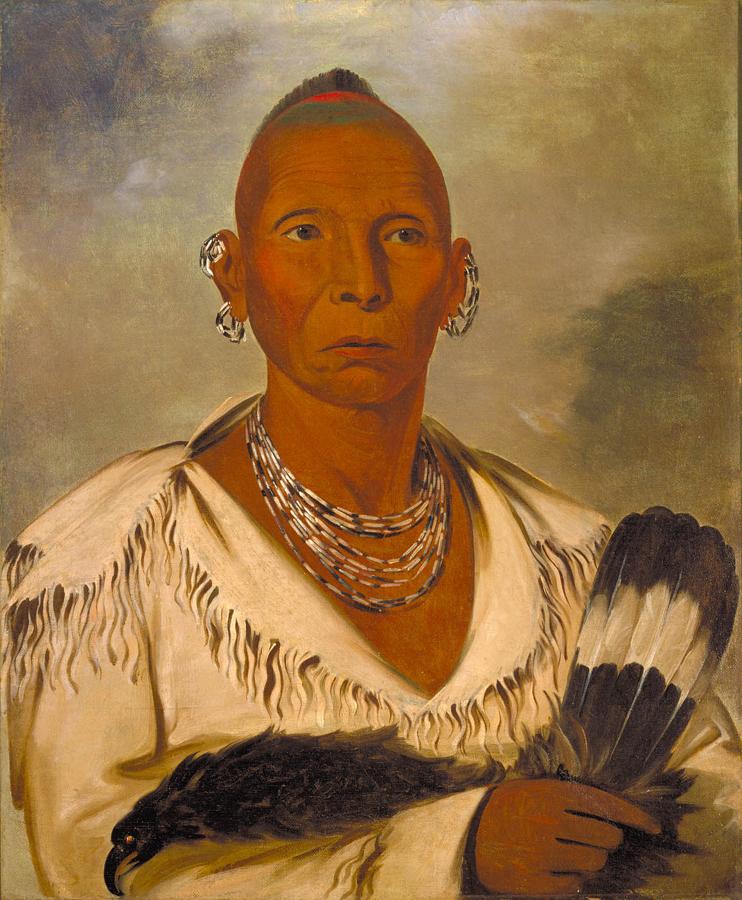
By Max Moreno, age 12
The Black Hawk War started on April 6, 1832, and was the result of a series of misunderstandings and broken promises, leading to a tragic massacre of hundreds of Native American men, women, and children.
In 1804, future president William Henry Harrison and two representatives of the Sauk Nation signed a controversial treaty that sold all the Sauk land east of the Mississippi for $2,500, a deal widely seen as unfair even at the time. Many Sauk chiefs in Illinois and Wisconsin did not agree to the treaty, so they considered it invalid and continued to live in their village of Saukenuk near the Rock River in western Illinois.
About 25 years later, lead mining became common in the area, and thousands of settlers crowded out the Sauk. The Sauk leaders believed it was pointless to resist since the settlers were backed by the American military. The U.S. government ordered the Sauk to move west of the Mississippi, promising them enough corn to survive the winter. However, when the Sauk moved west, the U.S. failed to deliver the promised supplies.
In desperation, a Sauk chief named Black Hawk led 1,200 Sauk back across the Mississippi to reoccupy their homes. Black Hawk hoped that the Ho-Chunk tribe and the British would join him in resisting the American forces, but no help came. The Illinois militia and U.S. Army troops pursued Black Hawk's group, forcing them to retreat north into what is now Wisconsin.
For 16 weeks, Black Hawk and his followers used guerrilla tactics, setting traps and dodging capture. They crossed the Wisconsin River, trying to return west, but the U.S. forces relentlessly pursued them. Despite repeated attempts to surrender, the Americans believed the Sauk were tricking them and continued the hunt.
On August 1, 1832, the exhausted and starving Sauk survivors reached the Mississippi River near the Bad Axe River. They tried to surrender once more, but the U.S. forces opened fire. Many Sauk tried to swim across the river, only to be shot down. In the end, only about 70 Sauk made it across, only to be attacked by their rivals, the Sioux. Those who didn't try to swim hid in the wilderness, waiting out the attack.
After the massacre, Black Hawk left his followers but was later captured and imprisoned. He was eventually released and sent back to his tribe, where he was blamed for the outcome of the war. Of the 1,500 Sauk who crossed the Mississippi, only 150 survived. Black Hawk died in 1838 at the age of 71.
[Source: Wisconsin Historical Society; Northern Illinois University; La Crosse Tribune]











Loading Comments...