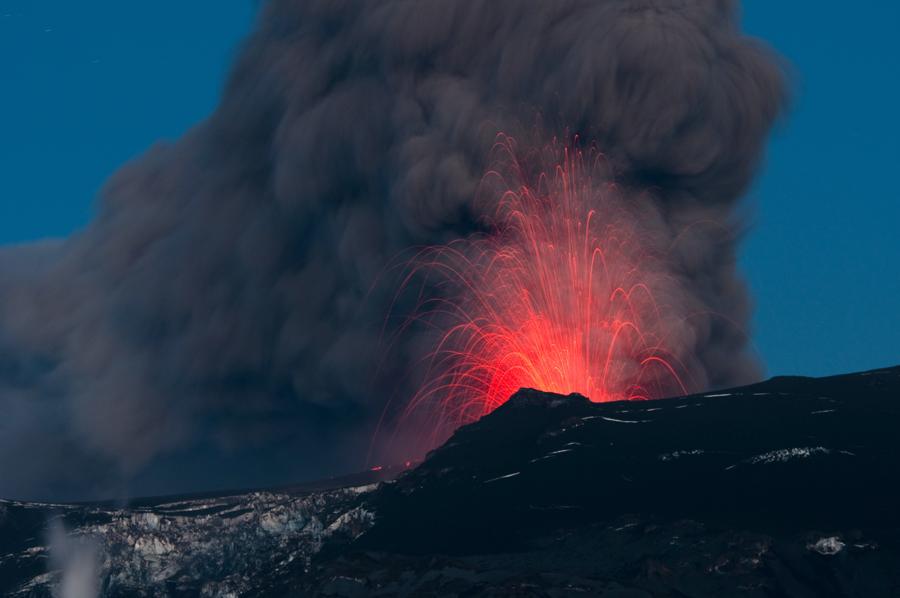
Iceland Is Full of Natural Wonders
by Delia Moreno, age 8
Iceland is extremely cold, making it largely uninhabited; when winter arrives, temperatures drop below freezing and conditions become almost unbearable.
The population of this island is only around 262,000, mostly concentrated in the capital, Reykjavik. Iceland is a volcanic island with no native building materials, but the land is still being built by nature. Lava continues to pile sheet after sheet of land around the island through the long eruptions. This provides a foundation for the active volcanoes today, even though 102,797 square kilometers, or 39,690 square miles, is covered by ice caps and glaciers, which is about 11.5 percent.
About 60 million years ago, Greenland began to separate from Scotland, giving rise to the territories that make up Iceland. The oldest rocks in Iceland are less than 60 million years old, but the island continues to grow. Although Iceland had a lot of heat, it was covered by a sheet of ice, and those remains form the icecaps and glaciers seen on the island today. In this country, almost all forms of vegetation are found on the southern coast. In the southeast of Iceland, Vatnajokull is the largest ice cap in Europe.
Iceland is a cold and interesting place; it is uninviting for people, and the weather can be extreme, but it is still one of the greatest natural wonders of the world.
[Source: 100 Great Wonders of the World]











Loading Comments...