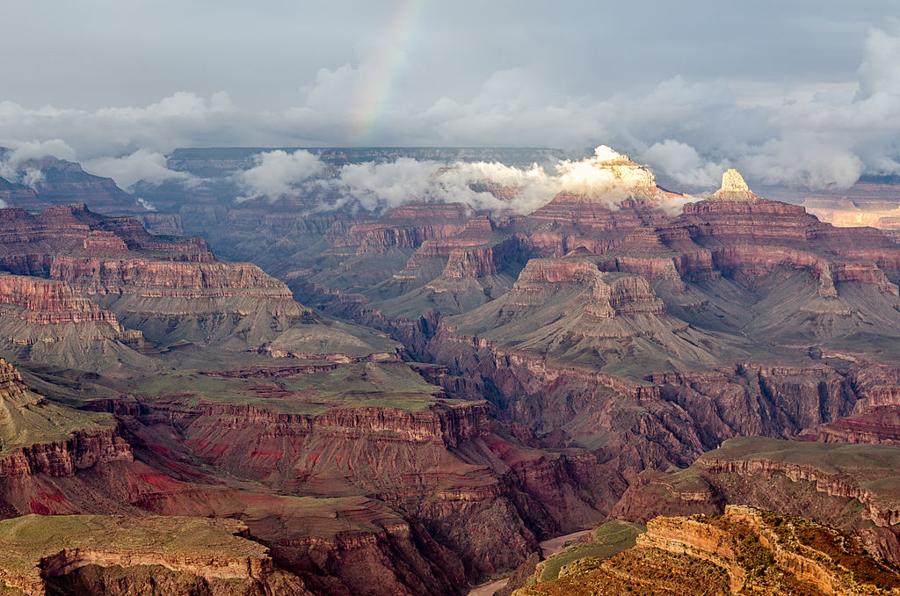
The Grand Canyon: A Natural Wonder Carved by Time
by Ermiyas Abiy, age 9
The Grand Canyon is a massive gorge located in southwestern North America. It is so vast that the main canyon is about 227 miles long and roughly 18 miles across at its widest point.
At the bottom of the Grand Canyon lies the Colorado River. The canyon was originally formed by the river's powerful erosive force. Over millions of years, the Colorado River cut through layers of rock, carving out the Grand Canyon we see today. This process began around 5 to 6 million years ago, influenced by the river’s flow, tectonic uplift, and natural weathering.
Before Europeans settled in North America, Native Americans knew about the Grand Canyon for thousands of years. Archaeologists have discovered ancient petroglyphs and pictographs on the walls of the Grand Canyon, created by Native American tribes such as the Ancestral Puebloans and Havasupai.
The Grand Canyon is not just a single gorge; many side canyons and gorges have formed along its length, contributing to its complex landscape. On the North Rim of the Grand Canyon lies Vulcan’s Throne, a volcanic cinder cone. This volcano last erupted between 100,000 and 200,000 years ago, with its most recent lava flows occurring around 10,000 years ago.
President Theodore Roosevelt was one of the most notable figures to visit the Grand Canyon. He helped honor the Grand Canyon by declaring it a national monument in 1908. Roosevelt sought to protect large areas of American wilderness, and the Grand Canyon was one of the many areas he aimed to preserve.
The Grand Canyon, carved over millions of years by the powerful force of the Colorado River, stands as a fascinating and stunning national park that many come to visit each year. Beyond its beauty, the Grand Canyon offers a landscape for exploration and learning, allowing visitors to gain a deeper appreciation for nature.
[Source: Great Wonders of the World]











Loading Comments...