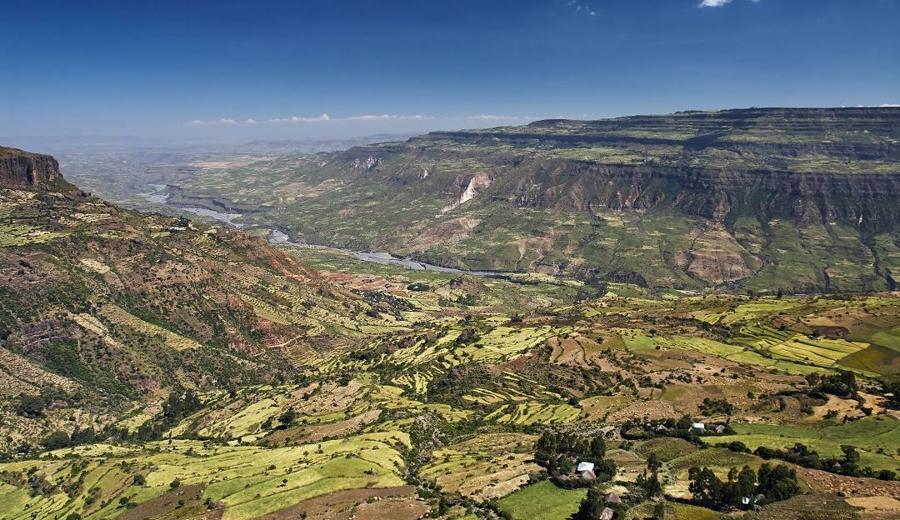
The Great Rift Valley of East Africa
by Iliyan Hoskins, age 11
The East African Rift is a beautiful and astonishing region, home to some of the most spectacular animals on Earth. It also offers a unique glimpse into human evolution.
The East African Rift System (EARS) is a geological feature where tectonic plates are moving apart, creating new land. Tectonic plates are massive sheets of rock that cover the Earth's surface. The Great Rift is a vast crack in the Earth's crust that has been widening over millions of years. The rift stretches across several countries, including Ethiopia, Uganda, Kenya, and Tanzania. This region features diverse landscapes such as grasslands, hills, and mountains, many of which are volcanic. The East African Rift System is approximately 4,000 miles long and 30–40 miles wide on average.
The rift system has a main branch, the Eastern Rift Valley (often called the Great Rift Valley), which runs the length of the rift. In the north, the rift includes the Jordan River, the Dead Sea, and the Gulf of Aqaba—part of the broader Syrian-African Rift. The rift continues southward through the Ethiopian Danakil Plain and includes notable lakes such as Lake Turkana, Lake Naivasha, and Lake Magadi in Kenya. The Nile River, which originates to the north of the rift, flows through Egypt but is not part of the East African Rift system.
This region is home to a wide variety of wildlife, including lions, cheetahs, buffalos, gazelles, giraffes, and more. The East African Rift also holds great significance in human history. Early human ancestors evolved in this part of Africa, and over time, humans migrated and spread across the globe. Fossils, such as the famous 3.2-million-year-old “Lucy”—an Australopithecus afarensis—have been discovered in the rift, providing key insights into human evolution.
As Africa continues to slowly split into two continents, the East African Rift remains a testament to the dynamic geological processes shaping the Earth's surface. This region offers a rich understanding of both Earth's geological evolution and the history of human life in East Africa.
[Sources: National Geographic Society; geology.com]











Loading Comments...