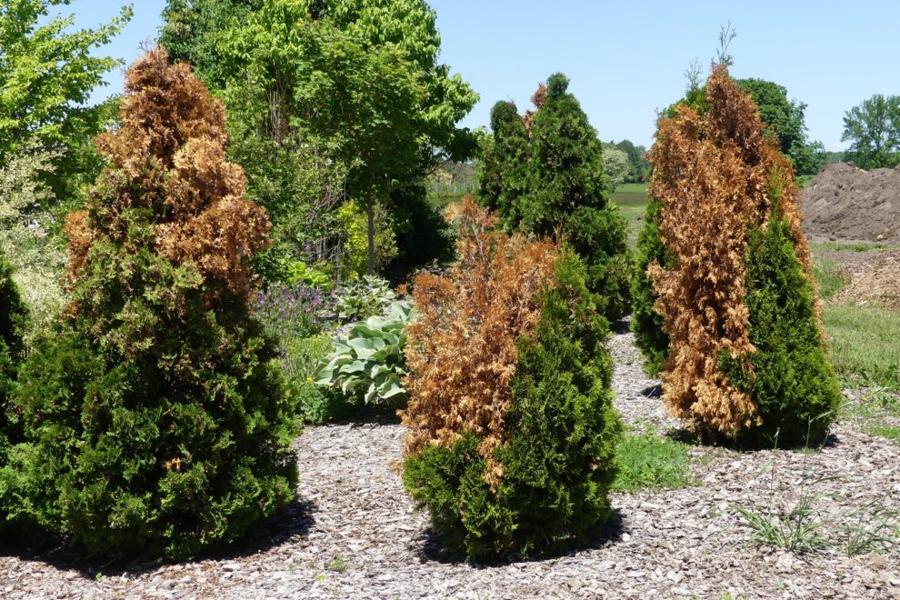
How to Protect Evergreens From Winter Burn
by Ian Kosharek, age 12
Winter burn is a common problem among evergreen trees. It is caused when evergreens lose more water than they can replenish and it can worsen in low temperatures. Boxwood and Rhododendron evergreens are the most prone to winter burn.
There aren't many symptoms of winter burn, however some of them include browning at branch tips, entirely browned leaves, or dead branches. Foliage facing southwest, west, and south are the most affected by winter burn.
For evergreens with winter burn, simply pruning the dead foliage in mid-spring after the growing season can allow healthy foliage growth.
Winter burn is inevitable, but it can be delayed by buying plants that are well adapted to soil conditions, planting evergreens in early spring, pruning in late summer or early autumn, and utilizing proper mulching techniques. Additionally, watering evergreens properly is essential for preventing winter burn.
For newly planted or transplanted evergreens, it is important to give approximately two inches of water a week. Established plants should be given approximately one inch of water a week. Other mentions to protect evergreens include using burlap snow fencing or other protective materials. The fencing can be installed by placing four to five stakes about two feet from the drip line where the foliage ends, then wrapping a protective material around the stake.
Communities with plenty of foliage should consider taking care of evergreens that experience winter burn since these trees can provide food and shelter to wildlife. It is important to manage evergreens as they are essential for maintaining healthy ecosystems; furthermore, proper watering, mulching and protective wraps can help ensure their longevity.
[Source: Division of Extension of the University of Wisconsin-Madison]











Loading Comments...