The Tiny Microbes Fighting Climate Change
by Evelyn Jakubczak, age 13
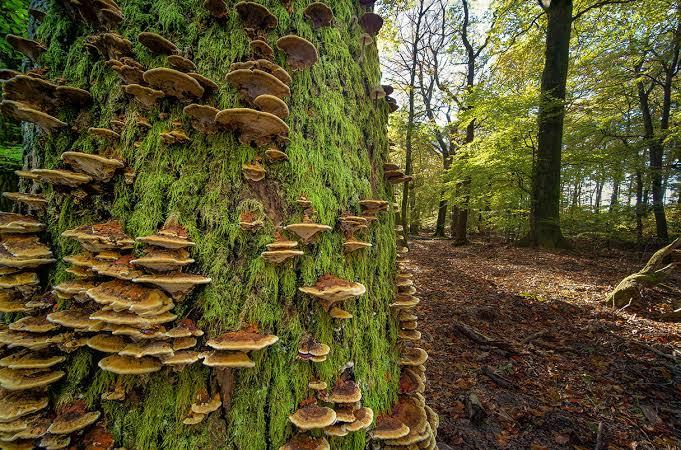
Trees are famous for absorbing carbon dioxide as they grow through photosynthesis, which also helps keep the environment clean. In reality, it is the tiny microbes in the bark that do most of the work.
Tree-bark microbes depend on hydrogen, methane, and carbon monoxide, in addition to carbon dioxide to survive. Around six trillion microbes occupy every square meter of tree bark. The amount of bark in the world is estimated at about 41 million square kilometers, roughly the area of North and South America combined.
Methane bubbles up from microbes in waterlogged areas of lakes. In a 100-year period, methane's climate-warming potential is 28 percent higher than carbon dioxide's. Over the years, scientists have measured methane emissions from lakes. The amount leaving the ground was half of what they expected. In 2017, several scientists realized that methane was seeping from the trees. People thought the trees were like chimneys, but in 2021, Luke Jeffrey and Chris Greening discovered the theory was incorrect. Together, they worked with broad-leaf paper-bark trees and discovered they were emitting 35 percent less carbon than they were taking up, which means the trees must be using some of it for energy.
Jeffrey, a biogeochemist from Australia, says that getting rid of these gases “is a hidden benefit of trees.” Until now, scientists didn’t know the bark was breaking down these gases. Greening is a microbiologist in Australia who works alongside Jeffrey. They were the scientists who tested the tree bark and found that there were around six trillion microbes per square meter. This whole time it was “hidden in plain sight,” says Jonathan Gewirtzman, a forest ecologist. Methane is responsible for around one-third of human-caused climate change.
Jeffrey and Greening tested seven other common Australian trees to see whether they also picked up and used other gases as energy sources. The most common microbes were those that consumed hydrogen, but plenty also consumed carbon monoxide. They suck the gases right out of the air, not only the ground. Scientists estimated that trees consume 25 to 50 million tons of methane worldwide.
Fighting climate change is helping rebuild forests. The new bark microbiome data can help even more. The eight tree species host different mixes of microbes in their bark. This helps restoration scientists rebuild forests even faster than before. Greening says, “You’re not just thinking about the tree you’re planting, but also the microbes within the tree.” Doing this also removes three or four climate gases with one action.
These microbiomes show us how small and intricate parts of our environment serve a vital role in protecting our ecosystems and influence our climate.
[Source: Science News Explores]











Loading Comments...