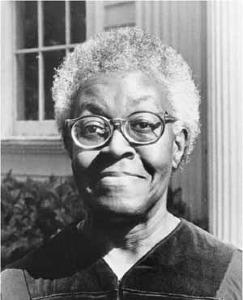
by Katina Maclin, age 15
Amanda Gorman is a well-known poet, scholar and activist in America today. But before there was a young, powerful, Amanda Gorman, there was Gwendolyn Brooks.
Gwendolyn Brooks used her passion and command of language to advocate for change during the Civil Rights movement. She experienced many changes of American history in her lifetime, Gwendolyn Brooks found her voice, and her voice as a Black women, through writing.
Today, Brooks is remembered as one of the most respected writers of the 20th century. She was a Poet Laureate and a Pulitzer Prize winner.
[read more]
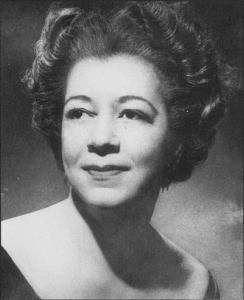
by Hanna Eyobed, age 16
Born in 1901, Marvel Jackson Cooke was a pioneer in the world of journalism. As the only African-American woman in most of the positions she held, she broke barriers throughout her life, pushing for radical change and social justice. Cooke drew outside the lines and wasn’t afraid of controversy. She focused on creating jobs for people who were considered different, specifically, Black people, in positions where only White men seemed to belong.
Marvel Jackson Cooke was one of the first African American students to attend the predominantly white Sydney Pratt Elementary School in Minnesota. In a 1989 interview Cooke stated, “It didn’t bother me at all. I’m by nature an outgoing person, and I had a lot of friends.” She majored in English at the University of Minnesota. While there, Cooke noticed that a friend she had had all her life sometimes pretended not to know her while on campus. Apparently, the friend was uncomfortable explaining her inter-racial friendships to her new boyfriend.
It was that moment that Cooke decided Minnesota wasn’t where she wanted to spend her life. She expressed her excitement about moving to Harlem stating, “It wasn’t south, but it was black, and I decided I wanted to come to Harlem.”
[read more]
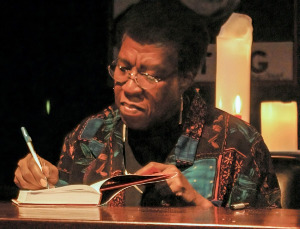
by Elim Eyobed, age 11
Who is your favorite writer? Hemingway? Shakespeare? Well, one great writer you may have never heard of is Octavia E. Butler. Butler was an esteemed African American author who was recently recognized by NASA for her groundbreaking talents. NASA scientists even named a Mars landing site after her.
Butler was raised by her mother and grandmother and was extremely shy as a child. When she was 12 years old, Butler started to read fantasy books, and later wrote science fiction when she was a teenager. The science fiction she wrote helped make her a very strong writer. In fact, she became such a powerful writer that her books won the New York Times Notable Book of the Year award, The Nebula award for the best science fiction novel published in that year, and the Macarthur Genius Grant.
During the 1960’s, Butler attended college at Pasadena City College, California State University, and the University of California. She wasn't a good student in particular, but an avid one. While in Washington, Butler participated in the Black Power movement. She became familiar with The Clarion West Workshop, which was a well-known place for writers.
[read more]
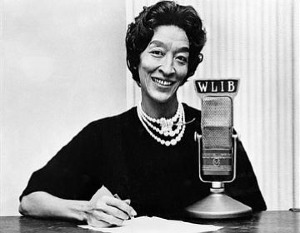
by Yoanna Hoskins, age 16
Evelyn Cunningham was in her lifetime a well-known journalist, civil rights activist, women's rights activist, and an inspiration for many. However, she is not well known today.
Evelyn Cunningham was born on January 2, 1916. When she was young, she moved with her family from Elizabeth City, North Carolina to New York City. She attended public schools in New York, graduating from Hunter High School in 1934. She attended four universities including the Columbia University School of Journalism, and received her Bachelor’s degree in social science from Long Island University in 1943.
Evelyn’s professional journalism career started when she wrote for the Pittsburgh Courier, a well-known Black newspaper, from the 1940’s until the 1960’s. During that time, she reported about social justice issues and the Civil Rights Movement. She documented many lynchings, which earned her the name, “the lynching editor.” In 1961, she hosted her own radio show, titled At Home with Evelyn Cunningham, aired on WLIB Radio. On the show, she spoke about social and racial issues with well-known leaders like Martin Luther King Jr. and Malcolm X.
[read more]
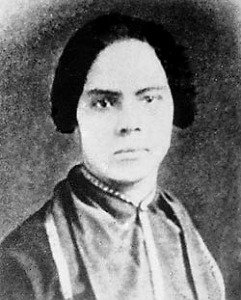
by Hanna Eyobed, age 16
Mary Ann Shadd Cary was born on October 9th, 1823, in Wilmington, Delaware. She attended a quaker school in Pennsylvania and was the eldest of 13 children. Her father worked for a newspaper run by a famous abolitionist named William Lloyd Garrison, called the Liberator. Shadd Cary’s father was a radical, and she followed right in his footsteps.
The “Fugitive Slave Law,” which stated that previously enslaved peoples were to be returned to their former owners, even if they were in a free state, caused outrage. This led Shadd Cary to move to Canada with one of her brothers, and soon after, the rest of her family followed. In hopes to save other black people from this fate, Shadd Cary wrote a report in 1852 to let others know of the freedom that lay in Canada.
Inspired by her father, Shadd Cary decided to start her own newspaper. She titled it The Provincial Freemen, and wrote most of the articles herself. Her newspaper was mostly directed towards black communities and was being distributed once a week. Shadd Cary devoted her life to “antislavery, temperance and general literature.” Along with the paper, Shadd Cary decided to open up a Canadian school focused on diversity and inclusion. She was dedicated to new ideas and changing the status quo.
[read more]
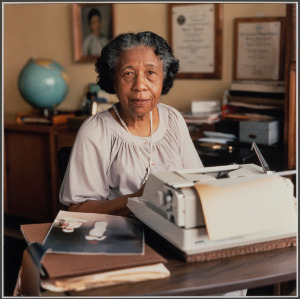
by Katina Maclin, age 15
Imagine going to college, though being denied housing (in the dorm). Or, imagine cleaning toilets for a living even though you have earned a college degree. Or, just imagine graduating from college as a black woman just two generations away from slavery.
Era Bell Thompson had to face each of those challenges on her way to becoming an acclaimed journalist and author. She made history with her outstanding writing, journalism, and eventually earned global recognition. Her journey meant overcoming obstacles on her path to success, which made her an inspiring public figure.
Era Bell Thompson was born in Des Moines, Iowa in 1905. She and family moved back and forth between Iowa and North Dakota during her youth. The challenges she faced during this period helped build her character. She had a difficult time in school because she was one of the few black children in the schools she attended. Her mother’s death while she was a student and dealing with racial prejudice and bullying were additional challenges. Despite this adversity and oppression, she persisted and graduated from Bismarck Highschool in North Dakota in 1924.
[read more]

by Josepha da Costa, age 15
Ida B. Wells is one of the most famous and respected journalists in American history. As a strong and
influential Black women, she changed the field of journalism in many important and lasting ways. One thing that
makes the story of Ida B. Wells so inspirational, even to this day, is that she began life as a slave.
Persevering through racism, sexism, and violence, Ida B. Wells used her writing skills and her platform as a
well-respected journalist to shed light on the struggles of African American people—especially in the South. She
was noted for her careful research, which contributed to her credibility on the national stage. As a journalist
and activist during the late 19th and early 20th centuries, Ida B. Wells inspired many to speak out against
inequality and discrimination.
Ida Bell Wells-Barnett was born into slavery on July 16, 1862, in Holly Springs, Mississippi. Later, after the
Civil War, her parents became politically active during the Reconstruction Era. Her father James Wells, was
involved with the Freedman's Aid Society and helped to found Shaw University (renamed Rust College) where
Wells-Barnett received her early schooling.
[read more]
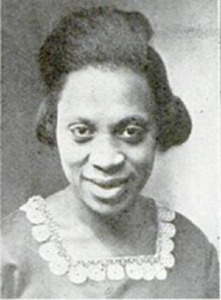
by Yani Thoronka, age 15
Lucy Wilmot Smith was born on November 16, 1861, in Lexington, Kentucky. She was one of seven children, raised
by her widowed mother, Margaret, who worked as a housemaid. In spite of her humble beginnings, and although she
died at a young age, Lucy Wilmot Smith grew to become an influential writer, educator, speaker, and journalist.
From an early age, Smith was subjected to the hardships her mother experienced being the sole provider of a
Black household in the south. Opportunities to generate income for the family were limited. Recognizing her
daughter’s obvious intelligence, Margaret worked hard to provide the best possible education for Lucy. Margaret
herself was not able to read or write, but she valued education and hoped for a better future for her daughter.
[read more]
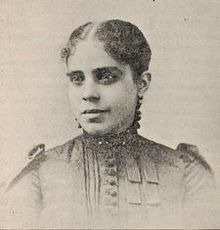
by Hanna Eyobed, age 15
Mary Virginia Cook-Parrish was born in 1862 in Bowling Green, Kentucky. During this period in history slavery
was ending, but it was not at all forgotten. It was a time of very little justice for Black Americans. Hence, it
was a terrible time to be Black. And it was usually even worse to be a Black woman.
As a young girl, Mary Virginia Cook-Parrish was a bright and goal-oriented spirit. She took advantage of every
educational opportunity that presented itself. Her reputation of winning spelling bee and reading contests
earned her a spot at State University. After graduating as valedictorian, Cook-Parrish went on to become a
teacher, and then principal of the teacher training school at State University. That is where Cook-Parrish and
Lucy Smith –- a fellow Black female principal -- started their lifelong friendship.
Smith and Cook-Parrish both had a passion about advocating for the rights of women. They believed women should
be able to lead in the church and in society. Both these strong women were involved with National Baptist
Convention, whose activities were very important at the time. They were motivated to empower women’s voices and
always strove to create equality. Cook-Parrish eventually became vice president of the Baptists’ Women’s
Educational Convention. She was a very determined women and Cook-Parrish implored others to join the cause of
freedom. She was not afraid to challenge her counterparts.
[read more]
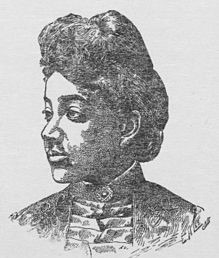
by Yoanna Hoskins, age 15
Katherine Davis Chapman Tillman was born in Mound City, Illinois on February 19, 1870. Although Tillman’s mother
was teacher and taught her to read, the family didn’t have money for Katharine to attend a formal school until
1882, when she was 12-years old. That’s when her family decided to move to Yankton, South Dakota. It was during
this time that her writing skills started to emerge. And from there, things just took off as Davis Chapman
quickly decided she had found her calling--writing.
Tillman fell in love with poetry and at the age of 18 and she published her first poem in the Christian Recorder
newspaper. As her love of writing grew, she published essays and poems in Black newspapers and other press
outlets. She even published written work in the Indianapolis Freeman, one of the leading Black
publications in America at that time.
And that’s where Lillian Parker Thomas Fox, another accomplished Black writer, most likely saw the work of
Tillman. The poems and essays of Katharine Davis Chapman Tillman were often confrontational. She did not mince
words and she was not afraid to challenge the bad things she saw in society at the time.
[read more]
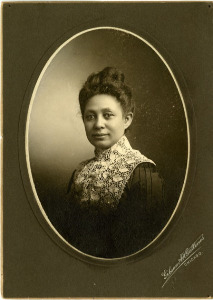
by Leilani McNeal, age 15
When Mary Ellen Britton addressed the Eighth Annual State Association of Colored Teachers Convention in 1887,
she started with a confession. The theme of her speech was women’s suffrage—a right, she admitted, she had not
always believed in. Britton explained that the South she grew up in neither condoned nor supported equal rights
for women. Human rights, not women’s rights, was the cause for which she had always felt compelled to agitate.
By 1887, Britton was already well known for writing articles about racial injustice in local newspapers. Mary
Ellen Britton was deemed a “strong-minded” woman because of her opinions and her willingness to voice those
opinions.
Born and raised in antebellum Kentucky, Britton enjoyed the privileges that her parents’ relatively comfortable
status afforded the family, attending good schools and eventually enrolling at Berea College in 1871. But three
years later, both of Britton’s parents died suddenly, forcing her to drop out of school to support herself.
Britton spent this next period of her life learning how to navigate a world that treated women—particularly
Black women—as a separate and decidedly unequal class within the labor force.
[read more]
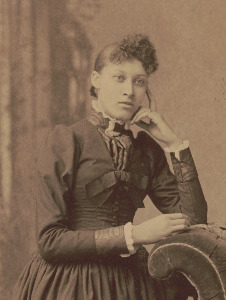
by Kadjata Bah, age 15
Described as a “majestic” and “luminous” journalist, Lillian Parker Thomas Fox is one of many Black women who
were pioneers in the field of journalism during the 19th century. Publishing her sharp and poignant writing
across the Midwest, Fox aspired to direct “human thought forward.”
Born in Chicago, Fox moved to Oshkosh, Wisconsin with her family soon after her birth in 1854. She was known to
be an avid reader and devoted student until her studies ended abruptly during her third year of high school when
she became engaged and married.
Nonetheless, Fox continued her intellectual pursuits. She wrote many articles for Wisconsin’s Black press, one
of which fiercely called out American hypocrisy after the repeal of the Civil Rights Act of 1875. Fox wrote “You
pity England with her Lords and Commons; Russia with its Czar and subjects, and yet practically acknowledge that
you have a people among you of American birth whom you consider by God created for your servants, your inferiors
by nature rather than by condition.”
[read more]
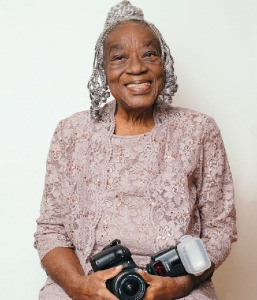
by Sydney Steidl, age 14
The staff at Falk Elementary School and other community members have announced a proposal to rename the school
in honor of the late Milele Chikasa Anana.
This effort began in April of 2018 when it was discovered Philip Falk, a former Madison schools superintendent,
at one time belonged to a student-run organization at the University of Wisconsin-Madison that had possible
connections to the Ku Klux Klan. While the UW student group was not a chapter of the official Klan, this
discovery called for a reevaluation of the values Falk Elementary School stands for.
Milele Chikasa Anana moved to Madison in 1970, and despite Madison’s reputation for being a liberal and
accepting community, she immediately faced discrimination. When she and her husband moved to Hillcrest Drive, a
burning cross was thrown at their home, along with a note saying that they “shouldn’t live with whites,” and
calling them the ‘n’ word. Five years later, when she took the position of City of Madison Affirmative Action
Officer, another burning cross was placed on her lawn.
[read more]





 Like Us On Facebook
 Follow Us on Twitter
 Watch the SSFP YouTube Channel
  Read Our Online Publications