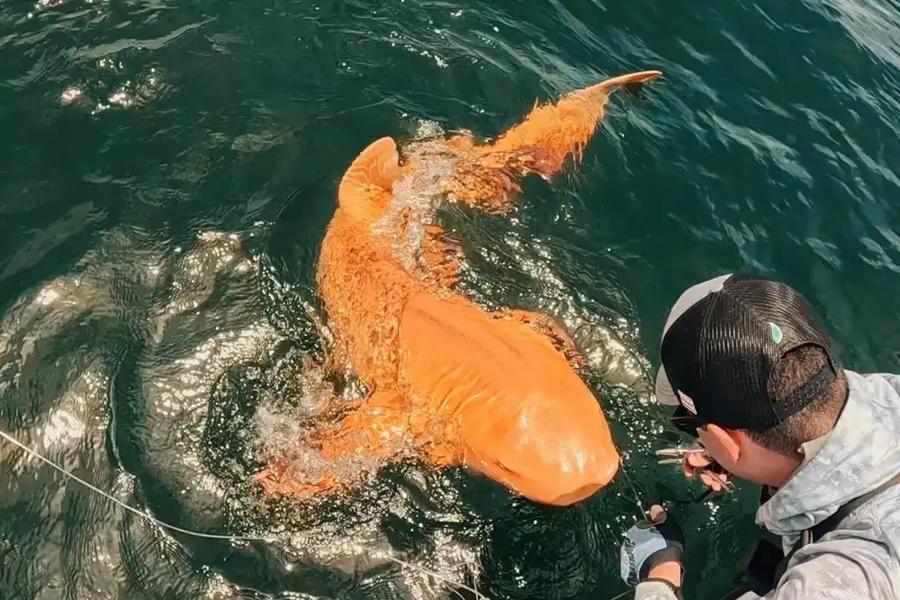
Unusual Orange Shark Discovered Near Costa Rica
by Ruben Becerril, age 13
On the coast of Costa Rica, a group of sport fishers caught a nurse shark, but there was something off about this shark: it was orange.
Nurse sharks are gray-brown, slow-moving, bottom-dwelling fish found in warm, shallow waters of the western Atlantic and eastern Pacific oceans. Nurse sharks typically range between 7.5 and 9.75 feet long, but in rare cases, they can reach up to 14 feet long. These sharks weigh between 200 and 330 pounds. They also have barbels, fleshy appendages that hang below their nostrils, helping them hunt for prey. Unlike normal fish, they don’t need to constantly swim to breathe. Nurse sharks also don’t have typical shark teeth. Instead, they have a jaw and small teeth that allow them to generate suction to capture prey, and the ability to crunch on hard shells like crustaceans.
While nurse sharks are fairly common in the Caribbean Sea, the oddity of an orange shark intrigued scientists. The shade of orange was an obvious sign of xanthism, a rare condition that increases yellow pigmentation in the skin. Marioxis Macías-Cuyare, the study lead author at the Federal University of Rio Grande, said researchers were intrigued to see evidence of xanthism in this species. The shark also showed signs of albinism, which may have contributed to its bright color.
Scientists are still investigating to figure out what causes the pigmentation changes in sharks. Genetics is likely the largest contributor, but other factors, such as environmental stress, elevated temperatures, or hormonal imbalances, can be major contributors. Although bright colors usually make survival harder, as animals evolve to blend their color, this shark has reached adulthood, showing it could survive despite being more noticeable.
[Source: LiveScience; National Geographic]











Loading Comments...