Don't Judge a Naked Mole Rat by Its Looks
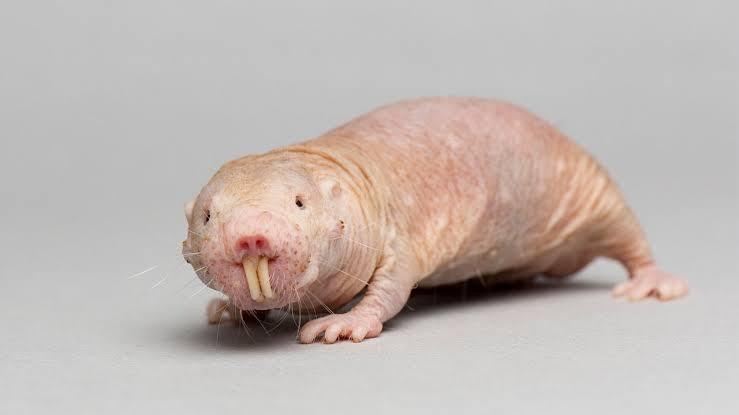
by Coraline Esme Simkins, age 10
Naked mole rats are not a mole mixed with a rat; they are a unique subspecies of mole. These creatures have unique features and survival tactics to adapt to their environment. They can be found in eastern African countries, including Kenya, Djibouti, Somalia, and Ethiopia. They typically live in dry grassy areas. Naked mole rats have wrinkled, pinkish-gray skin, beady eyes, and lizard-like ears with no outer covering. Naked mole rats have big front teeth that are located in front of their mouths. Since these creatures are blind, they rely on their sense of smell, ground vibrations, and touch for survival.
Naked mole rats eat large roots and tubers. They also consume their own feces for extra nutrients; they digest their food with tiny organisms living in their gut. A group of naked mole rats is called a colony, and they can have up to 300 naked mole rats. These can grow up to 30 years old and can weigh up to 1-1.5 ounces. A member of the colony is called a soldier and is usually heavier. The queen is the biggest one; she is not a naked mole rat with a mini crown, but rather the only naked mole rat that can produce babies. The queen naked mole rat can have a litter of 12 to 30 pups. The queen can reproduce up to five times a year. Naked mole rat pups weigh less than 0.07 ounces. The pups nurse for about a month, then start eating solid foods and are fed special feces that help with their digestion. By the time they are three to four weeks old, the pups will start to help dig the tunnels.
Naked mole rats dig tunnels with their big front teeth, closing their mouths behind their front teeth to prevent eating dirt. They usually dig after the rainy season because the soil is softer. These tunnels are about a mile long, maybe even more. The tunnels have a food chamber, a bathroom chamber, and a nest for the queen and the pups.
Naked mole rats may look strange, but their unique behaviors and underground lifestyle make them one of the animal kingdom's most fascinating creatures!
[Sources: Smithsonian; National Zoo; Conservation Biology Institute]











Loading Comments...