Small Jellyfish Invade California Coastline
by Bridgett Park, age 12
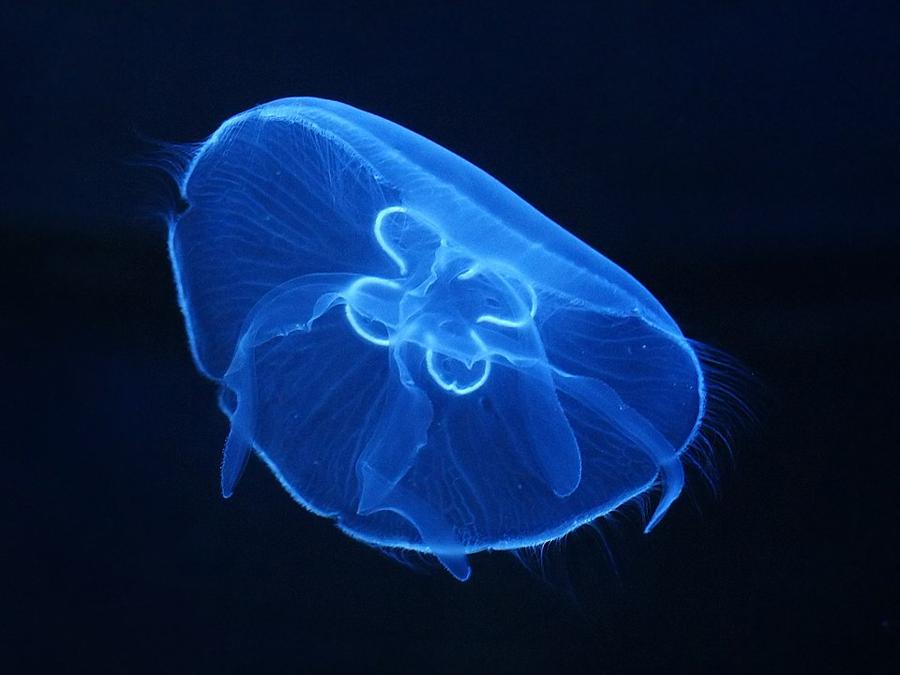
Moon jellies are small, vibrant jellyfish that live in the epipelagic zone, the shallowest layer of the ocean. However, these small jellyfish are posing issues for the sea.
Moon jellies are found along coasts and in areas where nutrients, such as exoplankton, are abundant. Moon jellies are not very strong swimmers, so they rely on the tides after storms to travel. They are found worldwide in temperate and tropical waters. During the summer, they are found primarily on the lower Chesapeake Bay off the coast of Virginia.
Their life cycles are a combination of sexual and asexual reproduction, which is very common for jellyfish. After fertilization, a larva hatches and searches for a suitable place to attach itself to grow into a polyp. During the polyp phase, it reproduces asexually by cloning itself. Each clone eventually detaches, then becomes a medusae, and grows into a sexually mature moon jelly.
Although the moon jelly’s bodies are fragile, they can attack small fish using their tentacles. They paralyze prey and eat them with their manubria, which serve as their mouths. Although they appear poisonous, these jellyfish are harmless to humans but may cause a mild sting or rash. Many people consider these creatures more like plankton rather than jellyfish due to their unique characteristics.
Moon jellies and other jellyfish actually thrive better in environments affected by human activity like overfishing, climate change, and pollution. This is because their predators, such as sea turtles, are more affected by pollution. The lack of predators has led to large jelly blooms. As people continue to grow their ocean activities, the moon jelly is one of the most successful living species, but on the downside, this has caused imbalances in the ocean.
Moon jellies are a wonder of the surface ocean and survive more than their own predators. Even if they might be strange in some parts, like them being more plankton-like than jellyfish, they are still crucial to the ecosystem.
[Source: National Aquarium]











Loading Comments...