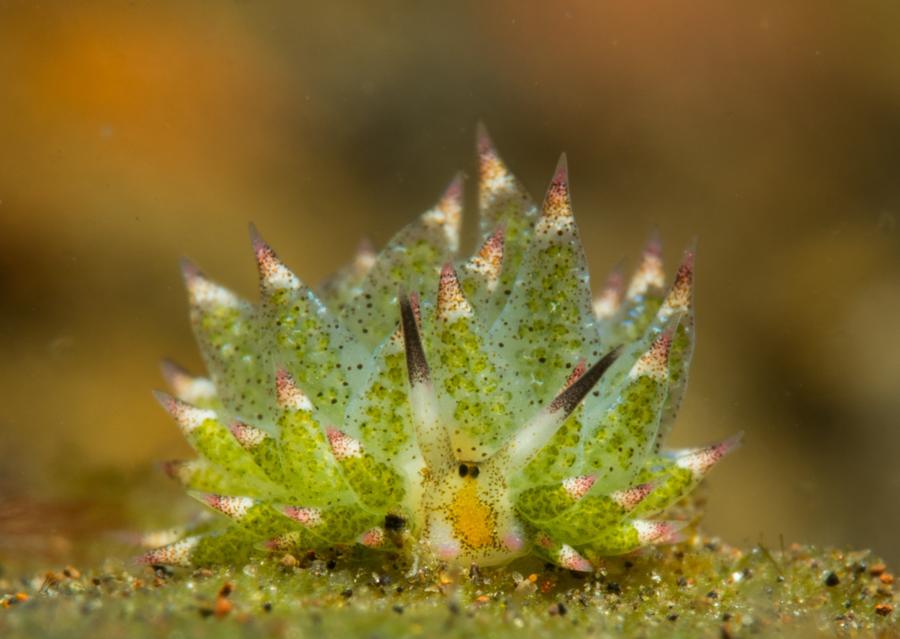
The Unique Sea Slug Eats Sunlight for Breakfast
by Evelyn Jakubczak, age 13
The leaf slug, also known as a sea sheep or sea slug, is one of the very few animals to photosynthesize – a process in which plants or in this case, animals, convert light into glucose.
As a species of the sacoglossa, the sea sheep feeds on algae. It does a process called kleptoplasty, this occurs when animals embed chloroplasts from food into their bodies, and keeps the chloroplasts from plants in the tissues of its cerata for up to ten days. The sea sheep gets these chloroplasts from a type of algae called avrainvilla, a paddle-shaped seaweed with a silky texture. Avrainvilla is found in areas with soft surfaces, such as silt or sand. This is not only the sea sheep’s food, but also its home. This plant is found just outside coral reefs.
Sea sheep are known to have beady black eyes and rhinophores, a nose used to detect chemicals, food, and potential mates in the water, with black tips like sheep ears. Cerata are leaflike appendages, sort of like an aloe vera plant, on the back of the sea sheep. The sea sheep stores chloroplast, received by munching on Avrainvillea, in its body. It lets the sea sheep’s body soak up sunlight, turning it into energy, also giving the sea sheep its green color.
The cerata are typically pink, purple, or white tips, which contain branches of digestive gland rhinophores that help pick up chemical signals in the water. This gives the sea sheep its sense of smell and enables it to find food sources. The sea sheep can grow up to seven to eight millimeters in adulthood and they typically live between six to twelve months.
According to senior curator of invertebrate zoology and geology at the California Academy of Sciences, leaf sheep are considered to be hermaphrodites. The eggs from sea sheep hatch into shelled larva and after only two weeks they get rid of the shells and begin their lives.
The sea sheep was discovered in 1993, and even though the sea sheep is not yet an endangered species, they face potential threats from habitat loss due to climate change, ocean warming, and destructive fishing practices that affect their food source.
[Sources: BBC Wildlife; Encyclopedia of Animals]











Loading Comments...