Twinkle Twinkle Little Comet?
Moon and Stars Not Earth’s Only Nighttime Lights
by Cinthia Diaz, age 12
The
moon and stars are not the Earth’s only natural nightlights.
Comets, asteroids, and meteors travel through space and shine
brightly, too. It is the distinct ways in which comets, asteroids,
and meteors move that make them each unique.
Mixtures
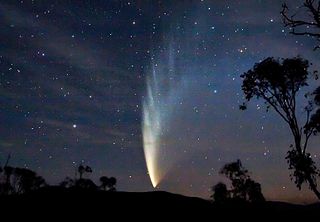
of dust and ice, comets resemble and are often called “dirty
snowballs.” Some comets circle the Sun and loop beyond even the
farthest planets. Others, like Halley’s comet, travel back to the
Sun regularly. The Sun’s hot rays melt part of a comet, causing gas
and dust to stream away from it. This stream looks like a tail and is
the glow that one might see on a clear night.
Meteors
also illuminate the sky. Nicknamed “shooting stars,” meteors are
actually just streaks of light, not stars. These flying flashes of
light form when pebbles move through space at such high speeds that
they hit the air above the Earth. The pebbles become so hot that they
burst into flames. These flames are what one might see for a few
seconds in the night sky. During certain times of the year, meteor
showers occur and more shooting stars can be seen than usual.
Asteroids
are a third source of nighttime light. Chunks of rock that failed to
form planets, asteroids typically travel in a ring around the Sun.
This loop, called the “Asteroid Belt,” is found between Mars and
Jupiter. Millions of asteroids exist; some are the size of a car
while others are as large as a mountain.
Many
interesting sources of light brighten our Solar System. Next time the
night sky is clear, see if you can spot comets, meteors, and
asteroids!
[Source:
100 Things You
Should Know About Space
]
|