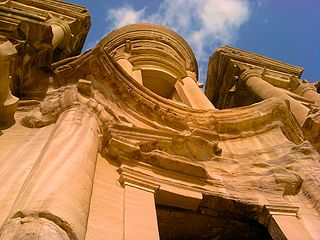
Petra - Ancient Center of Trade and Architecture
by Virginia Quach, age 13
The city of Petra is located
in the Middle Eastern country of Jordan. Before the first temples and
tombs were built in 300 B.C. E. thick layers of rock surrounded the
area. The city is the namesake of this rocky terrain,
petra
meaning rock.
Although the ancient Edomites
were the first people to discover the region, it was the Nabataen
people who built the city. Built at the intersection of a few
bustling trade routes, Petra soon became wealthy. It was always busy
with merchants from nearby lands like Egypt, Damascus, Arabia, and
the Mediterranean. These trade relationships were crucial to the
city's success and survival.
The city’s architecture
reflected a mixture of Egyptian, Assyrian, Greek, and Roman styles,
and was conveniently built of mostly rock. Along with the
architecture, designers of Petra installed a complex water system.
Petra's prosperity was at its
peak in the centuries leading up to and just after the beginning of
our common era. Up to 20,000 people lived in the city when it was at
its peak. Petra eventually became part of the Roman province of
Arabia in 106 A.C.E.
Even today, Roman
architecture still characterizes the city. This includes a theater
that can hold up to 3,000 people and the Colonnade Road. The
Colonnade Road was lined with markets and public drinking fountains.
In the fourth century A.C.E. the Christian Byzantine Empire took over
Petra.
Today, we can still see the
remnants of ancient life in Petra. Looking into the past, we can gain
insight into how the world works today.
[Source:
Simpson Street Free Press
]
|