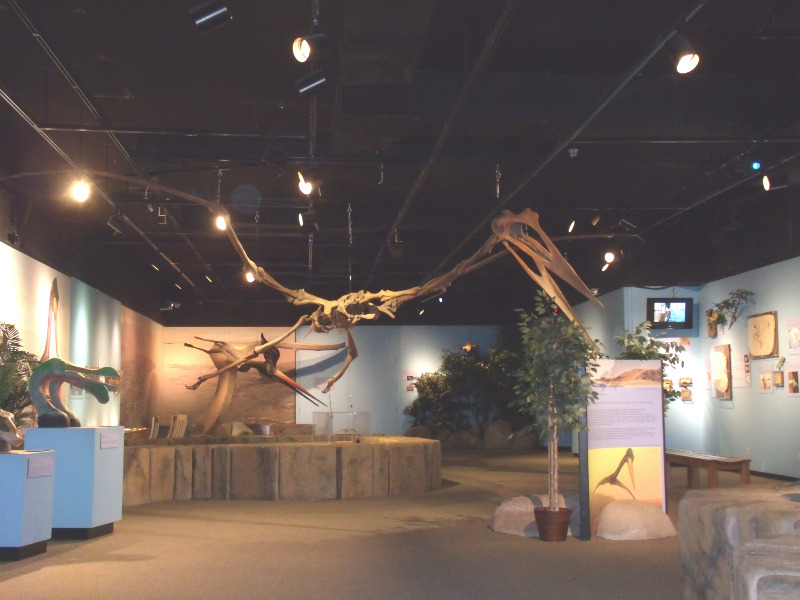
Could Baby Pterosaurs Fly? Some Scientists Think So
by Melanie Bautista, age 16
Pterosaurs were a diverse group of ancient flying reptiles. Pterosaurs emerged 228 million years ago, lived among other dinosaurs and died off 66 million years ago. Until recently, it was a mystery whether these birds could actually get off the ground during their early stages of life.
Darren Naish, a paleontologist at the University of Southampton in England, decided to take on this mystery of whether or not baby pterosaurs could fly at an early age. Naish and his team of researchers studied the fossilized remains of the humerus bone, found in the wing of the pterosaur. The humerus bone helped the pterosaurs take flight. Knowing this, researchers could hypothesize whether baby pterosaurs could carry themselves off the ground.
The scientists measured the length of the humerus and the birds’ wingspan, and determined how much weight each wing could carry. They discovered that baby pterosaurs wings were stronger than those of an adult, suggesting they could fly rather than just glide. They also found the humerus bone to be shorter and broader. This helped the birds quickly change direction with greater speed, but not for long distances.
This is an important finding due to the fact that almost no modern birds can fly shortly after their hatching and it gave the pterosaurs a huge advantage. This allowed for easy escape from their predators and better hunting skills, as well as helping them better navigate the dense vegetation in their habitat.
Even though pterosaurs lived 66 million years ago, we can still learn things about them just by studying their fossils. By studying their remains, paleontologists most likely solved the mystery of whether baby pterosaurs could fly or not.
[Source:
Science News for Students
]