Playful Gibbons Spend Their Time High in the Treetops
by Juanes Palma, age 9
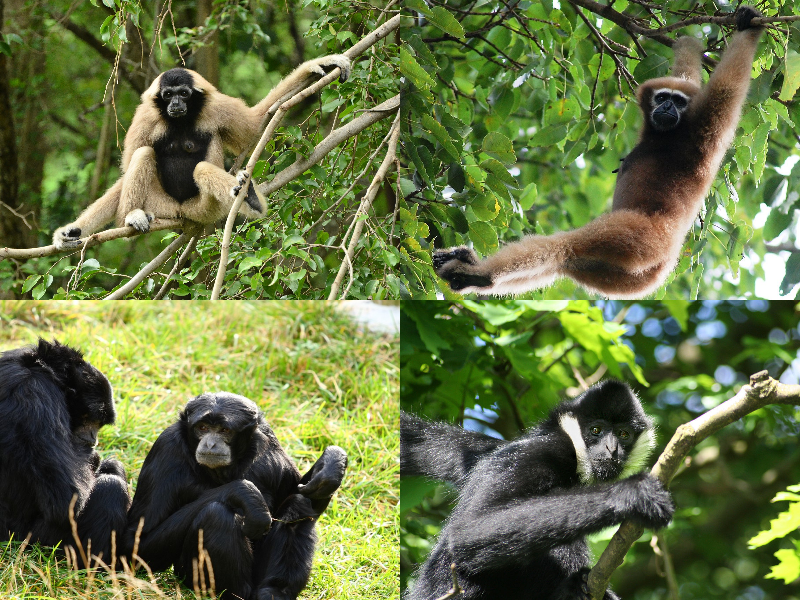
There are various small apes species in the world, the typical gibbon is one great example. Gibbons are an adventurous type of animal. Like gorillas and other similar primates, gibbons don't have tails and they share other features. Gibbons are the animals that people typically imagine when they think of primates swinging joyfully through the rain forest.
Gibbons have a variety of thick hair colors that range from black to light brown. They are known to have very long arms that allow them to grab objects easily. They are omnivores, which means they eat fruit, insects, and small birds or eggs.
These apes spend much of their time in the trees of the Southeast Asian forest. They are described as arboreals, which means they live in trees. Gibbons have been observed sleeping upright on tree branches alone or in bunches. Along with being in trees, gibbons spend much of their days looking for food.
Gibbons have various ways of communicating using their body language and voices. Usually, they use calls when they want to warn others of danger, attract mates, and even defend their homes. A gibbon’s lifespan is usually 25 to 30 years in the wild if they successfully protect themselves and learn crucial survival skills.
Although gibbons can reach 30 years, they are being threatened by hunters who hunt gibbons for sport, food, or even to gain money. Because of this, the rainforest is also being destroyed and these apes will eventually become extinct. Gibbons are wonderful animals that should not be hunted, but instead protected.
[Source:
Rourke Discovery Library
]