|
|
New Stem Cell Types May Not be as Useful as Embryonic Stem Cells
by Moises Diaz, age 17
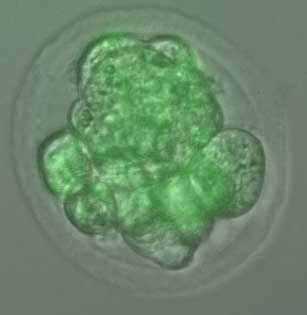 Ever since the discovery of the induced pluripotent stem cell by Japanese Researcher Shinya Yamanaka and a UW research team led by James Thomson and Junying Yu, researchers have applauded the fact that controversial embryonic cells are no longer the only paths to medical progress.
Unfortunately, a new study by UW researcher and neuroscientist Su-Chan Zhang shows that induced stem cells don’t perform as well as embryonic cells in brain cell production.
Zhang points out that using induced stem cells for disease research and developing cell therapies may not be as effective as using embryonic cells.
Induced pluripotent stem cells are very useful for two reasons. First, since induced stem cells are created out of reprogrammed skin or other cells, they do not require the destruction or creation of embryos, removing the ethical dilemma. Second, since these stem cells can be extracted from a patient rather than an embryo, the risk of rejection is reduced.
Zhang’s study of 12 groups of induced cells and five embryonic cells shows that embryonic cells produced better results in developing brain cells.
“It tells us the techniques for generating induced pluripotent stem cells are still not optimal,” Zhang points out. “There is room for improvement.”
[Source: Wisconsin State Journal]
|
|