|
|
|
Why Did Early Modern Humans Prosper, While Neanderthals Went Extinct?
by Alex Lee, age 14
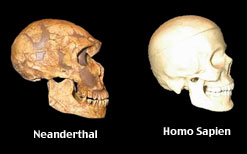
A recent study conducted by Dr. Erik Trinkaus, an anthropologist at Washington University in St. Louis, gives scientists new reasons to question which factors are most responsible for the population growth of early modern humans. Scientists previously believed that a long lifespan helped early modern humans thrive, and that Neanderthals went extinct due to a shorter life span. However, this study’s findings suggest that both groups had relatively similar life spans, which means other factors will need to be examined.
Dr. Trinkaus reported his findings, in the Proceedings of the National Academy of Sciences.
He focused on areas across Eurasia, examining the human fossil records of both early modern humans and Neanderthals. Dr. Trinkaus found similar numbers of the adults in the 20 to 40 age group, and of elders over 40 years of age, among both species. Within both early modern humans and Neanderthals, about the same number of individuals lived long lives. Roughly an equal percentage (25%) of their population survived past 40 years of age.
Now, scientists may need to review fertility and infant mortality rates to gain a better understanding of why early modern human populations expanded, while Neanderthals were driven to extinction.
“It means that we need to look for the reasons elsewhere, of which survival rates for children may be one answer,” Dr. Trinkaus said in his report.
[Sources: The New York Times; USA Today]
|
|